Eupatorium compositifolium
Family: Asteraceae
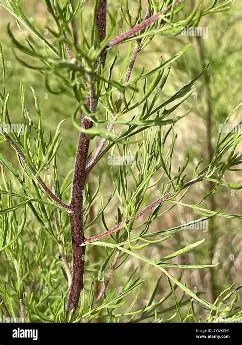


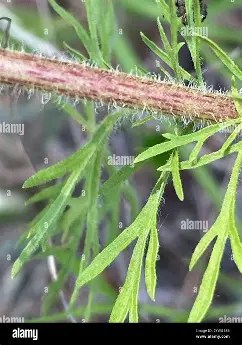
Description: Perennial to 75 cm high with linear to narrowly lobed leaves. Heads in spicate panicles, 5-6 mm high, discoid. Corolla white. Leaves are lobed and compound, with lower leaves being more divided. The upper leaves are less compound and often entire. They are usually grayish-green and hairy. Leaves opposite (proximal) or alternate (lateral buds dormant or producing 1 pair of leaves); sessile; blades (often pinnately or ternately lobed) or lobes pinnately nerved. Heads in paniculiform arrays. Phyllaries 7–10 in 2–3 series, (sometimes purple) elliptic to oblong. Florets 5; corollas (sometimes with purple throats) 2.5–3 mm.
Field Identification:
Plant Trivia: While considered undesirable in pastures due to its toxicity to livestock, Serves as a host for certain pollinators, particularly small bees. It is also an indicator of soil disturbance.
Occurrence: Frequent damp sand in openings or on dunes, mostly along the coast. Found primarily in the southern United States, from North Carolina to Florida and Texas. It thrives in sandy soil and is often found in disturbed areas, such as overgrazed pastures, dunes, and roadsides. Native range is Eastern N. America.
Bloom Period: Oct-Dec
Plant Use: The entire plant is applied externally as a remedy for the bites of reptiles and insects. Benefit to many pollinators.
Propagation: Seeds (sow spring in a cold frame and only just cover the seed) and underground rhizomes, often dominating disturbed sites.
Dichotomous Key to the Genus Eupatorium:
- Heads in spicate panicles…………E. compositifolium
Heads corymbos……………………………………….………………2
2. Leaves mostly 1.5-5 cm long…………..E. glaucescens
Leaves mostly 5-15 cm long ……………E. serotinum

