Lactuca serriola
Family: Asteraceae
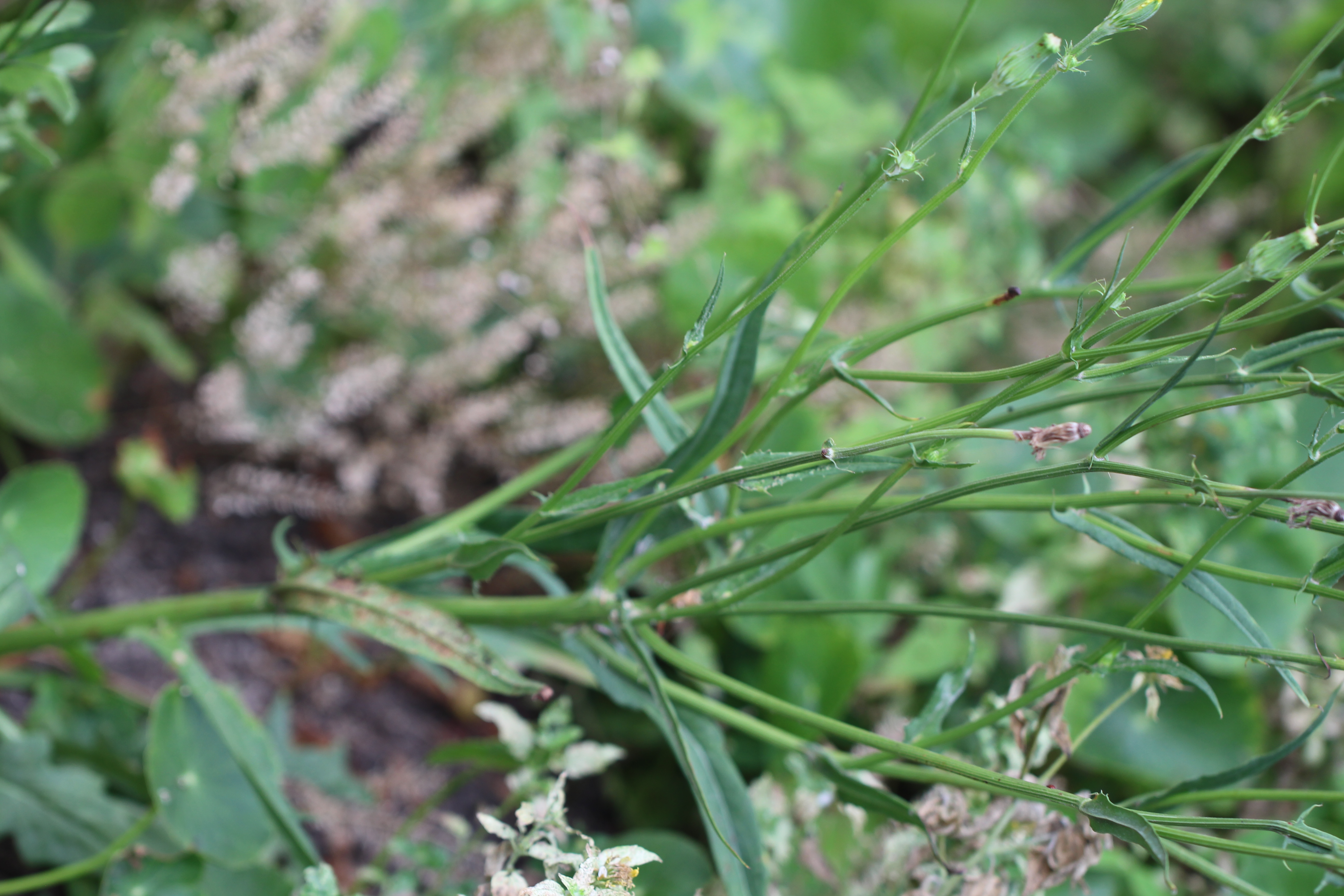

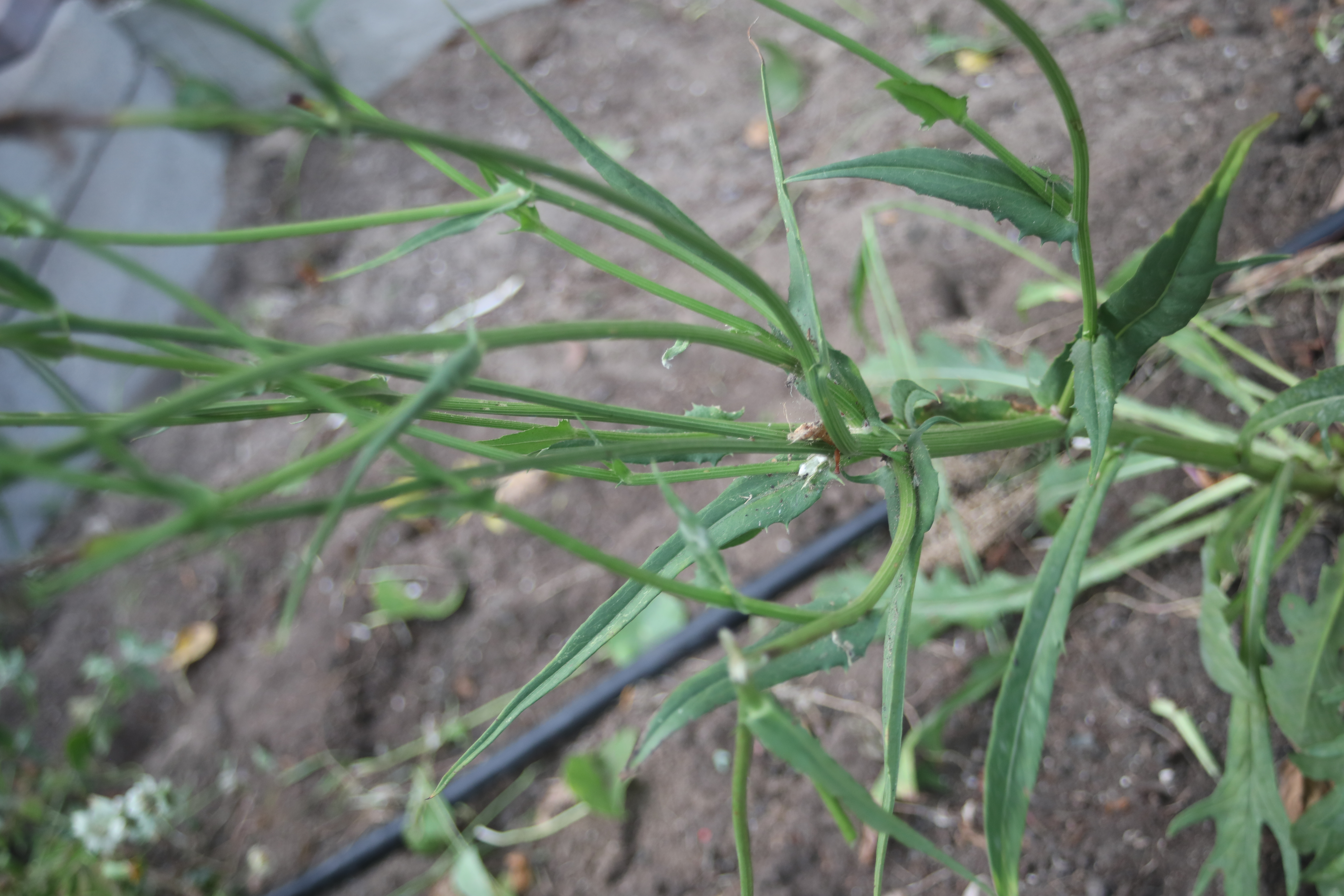


Description: An annual or biennial to 70 cm tall or higher, growing from a taproot; with mostly pinnately lobed alterrnate leaves that are slightly spiny-toothed with upper leaves becoming deltoid. Leaves are light green, terete, sometimes glaucous, with a brown late. In its first year, it forms a rosette of spreading to ascending basal leaves up to 30 cm (1 ft) wide; in the second year, it produces an erect central stem up to 150 cm (2–5 ft) tall, often branched above. Basal leaves elliptic- to obovate, up to (15 cm 6 in) long and 5 cm (2 in) wide, with unlobed to pinnatifid margins and fine prickles along the lower midrib.
Field Identification: Dandelion-like yellow flower with toothed petal ends. Wind dispersion is like dandelions. Leaves are not edible; extremely bitter.
Plant Trivia: Lactuca from Latin for “milk,” referring to the milky latex sap; ludoviciana from “Ludoviciana,” named after the Louisiana region after King Louis XIV of France. Flowerheads often fail to open but are self-fertile. Present throughout the plant, milky white sap containing lactucarium
Occurrence: Native across central and western Canada (Ontario to British Columbia) and the western and central U.S., from Texas to California and south to Louisiana. Fields, roadsides, mesic forests, and prairies.
Bloom Period: Spring-Summer
Plant Use: Related wild lettuce species were used as mild sedatives; L. ludoviciana is weak.
Dichotomous Key the Genus Lactuca:
-
Upper leaves never clasping, narrowed to base.L. hirsuta

