Ambrosia psilostachya
Family: Asteraceae
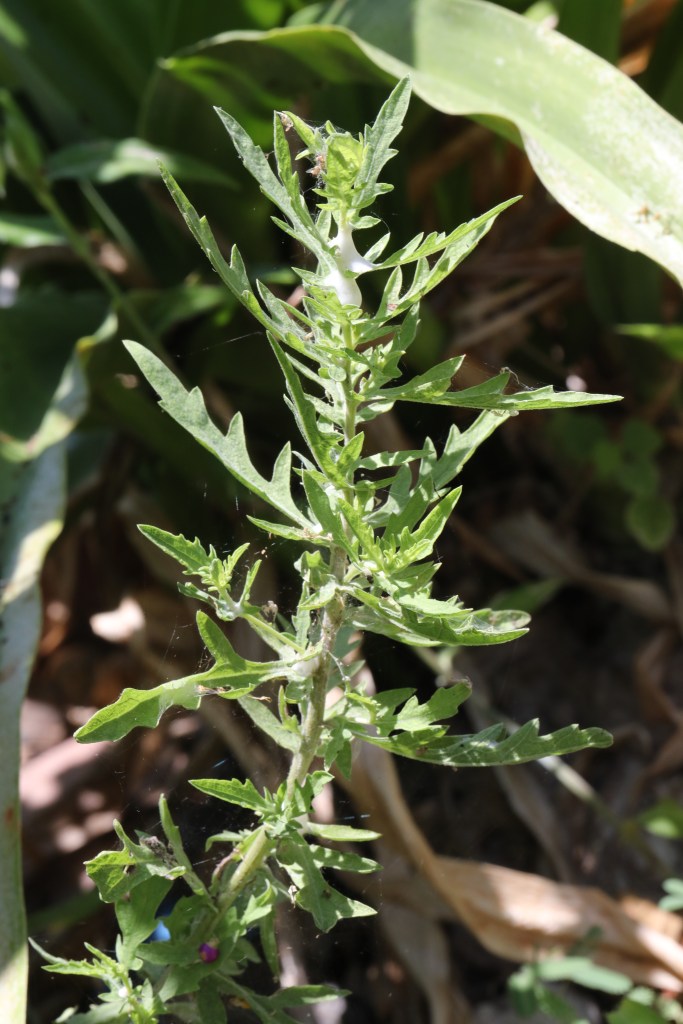
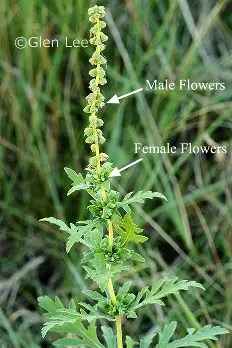
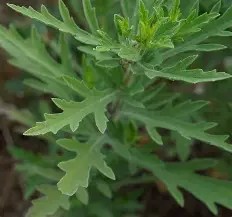
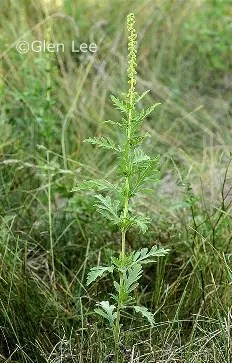
Plant Description: The plant is an erect perennial herb. Scented and resinous perennials to 120 cm high with pinnatifid leaves 3-6 cm long, leaves opposite below, alternate above, blades 3.5 inches or longer, lobed only one time; forming colonies. Male and female flowers without corollas, in separate heads (clustered on single receptacles). Male heads hanging downward, about 1/8 inches broad, only the anthers emerging from the enclosing bract; female heads hanging downward, about 1/8 inches tall, the enclosing bracts with a single row of spines around the top and central beak.
Plant Trivia: Pollen is a known allergen; plants are very aggressive. Seeds are edible.
Field Identification: Typically, a colonial plant. Erect, deeply lobed leaves, flowers male and female. Propagates by both seeds and rhizomes.
Occurrence: Common on most soils in pastures, woods, stream bottoms, and waste places.
Bloom Period: June-December
Plant Use: Several Native American tribes, including the Cheyenne, Kumeyaay, Kiowa, and Chumash, used Ambrosia psilostachya for medicinal purposes. Applications included treating digestive issues, fevers, dandruff, swelling, vomiting, bowel cramps, and skin sores. Preparations ranged from teas made from leaves to salves and mashes of stems and leaves. The plant contains psilostachyins, a group of phytochemicals with potential bioactive properties.
Key to the Genus Ambrosia:
- Leaves gray, mostly entire……...A. cheiranthifolia
Leaves green…………………………………………………………….2
2. Leaves palmately lobed…………………………..A. trifida
Leaves not palmately lobed………………………………….3
3. Leaves pinnatifid………………………….A. psilostachya
Leaves 2-pinnatifid……………………...A. confertijlora
 stxflora