Washingtonia robusta
Family: Arecacaceae
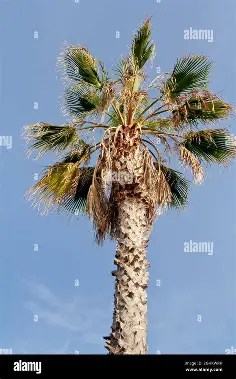
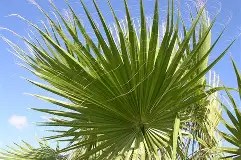
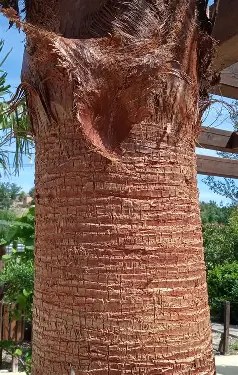
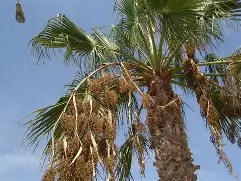
Description: This is a fast-growing, tall palm native to northwestern Mexico, widely cultivated for its elegant fan-shaped fronds and towering presence This palm is notable for its slender, columnar trunk and fan-shaped, palmate leaves that are 3–5 feet (0.9–1.5 m) long with sharply toothed petioles. The trunk is smooth, grayish-brown, and often develops a skirt of dead fronds that provides habitat for wildlife. The palm produces small, cream-colored, slightly fragrant flowers in large, drooping panicles up to 10 feet (3 m) long, followed by black, pea-sized fruits that are edible but thin-fleshed. This species is fast-growing, often reaching 40–80 feet (12–24 m) in height, with a trunk diameter of about 12 inches (30 cm) and a narrow spread of 8–10 feet (2.5–3 m). Leaves are fan-shaped, drooping tips, glossy green, 3–5 feet long. The trunk is slender, smooth, grayish-brown, often with a skirt of dead fronds. Flowers are cream-colored, slightly fragrant, in large panicles. The fruit are small, black, edible drupes, 6–8 mm in diameter.
Field Identification: Tapered stem, roughly twice as wide at the base as the crown, and bright green leaves forming a dense crown
Plant Trivia: It is drought tolerance, resilience to wind and salt, and striking appearance.
Occurrence: Washingtonia robusta is native to the Baja California Peninsula and a small region of Sonora, Mexico. It has been widely cultivated and naturalized in the southern United States, including California,
Florida, Texas, and parts of the Gulf Coast, as well as in the Mediterranean and Middle East
Bloom Period: Spring-Summer
Plant Use: Landscaping especially along roadsides. Some parts of the tree are used in traditional medicine.
Propagation: Propagated by seeds. Best to sow seeds fresh in the spring. It will take around 4 weeks for germination to occur. Seedlings grow fast having 4 little leaves only after 6 months.

