Eragrostis sessilispica
Family: Poaceae
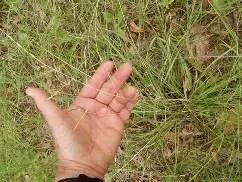
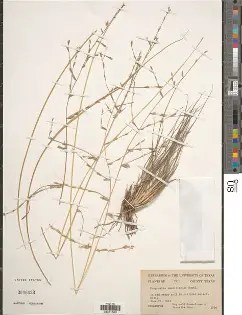
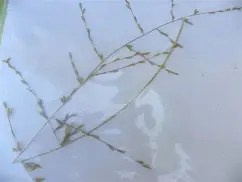
Description: Cespitose perennial without rhizomes. Tufted, low-growing, dense clumps of fine foliage. Inflorescence breaking off intact and acting as a tumbleweed. Glumes persistent. Culms 30-90 cm, erect or decumbent, glabrous below the nodes. Sheaths hairy at the apices and on the collars, sometimes also on the distal portion of the margins, hairs to 5 mm; ligules 0.4-0.5 mm; blades 5-30 cm long, 1-3 mm wide, usually involute, sometimes flat, abaxial surfaces glabrous or sparsely pilose, hairs to 5 mm, adaxial surfaces scaberulous. Panicles 20-65 cm long, 10-35 cm wide, ovate, open; primary branches 2-20 cm, widely spaced, diverging 20-100° from the rachises, not rebranched, naked basally.
Location: Found on sandy soils in prairies, limestone hills, and mesquite and oak woodland openings. Native to Central U.S.A. to northeastern Mexico, including Kansas, Oklahoma, Texas, New Mexico, and parts of Mexico (Chihuahua, Tamaulipas, Veracruz).
Soil Type: Sandy soil.
Trivia: Inflorescences breaks off and acts as “tumbleweed” (Russian Thistle.
Bloom: May-Oct
Importance: Supports birds and small mammals; deer-resistant. Habitat restoration and native landscaping for its fine texture and seedhead. Prairie restoration and open habitat projects due to drought tolerance and fire adaptation.

