Urtica chamaedryoides
Family: Urticaceae
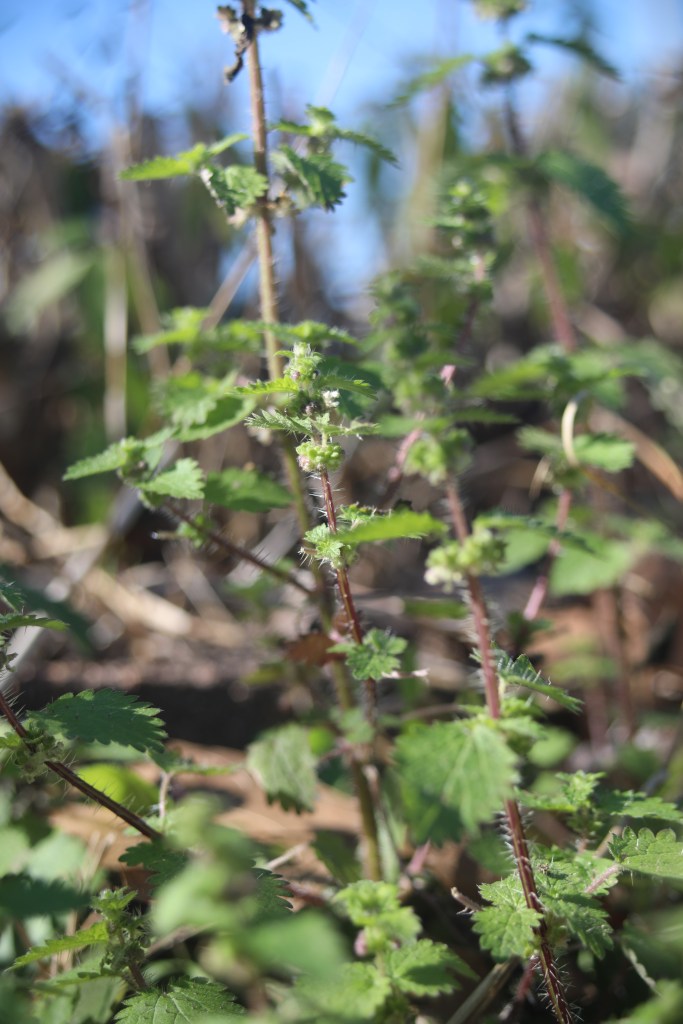
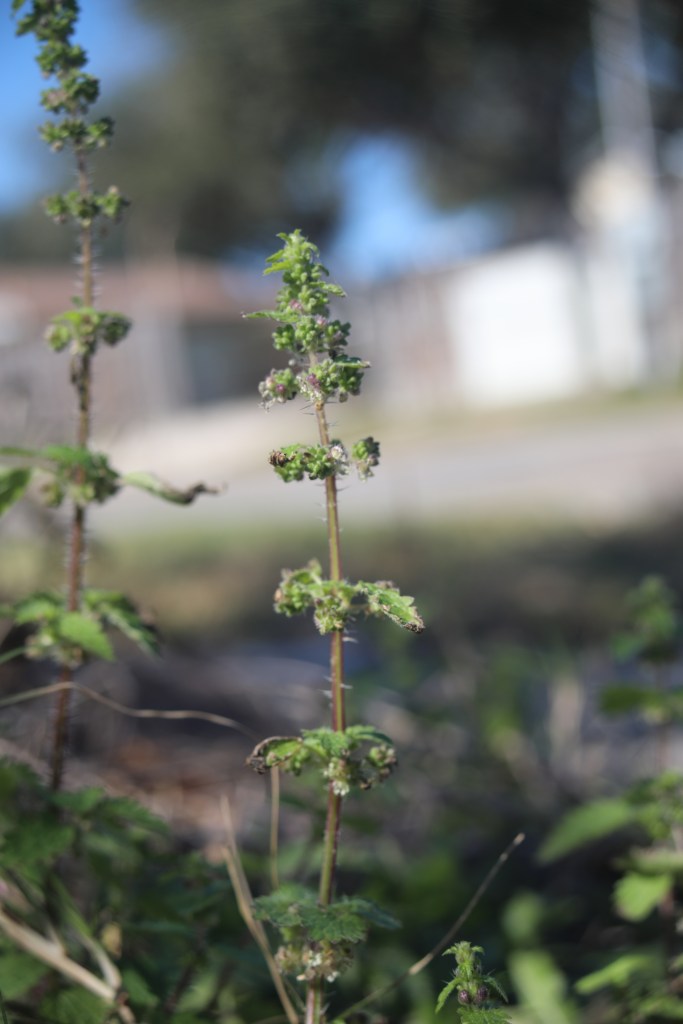
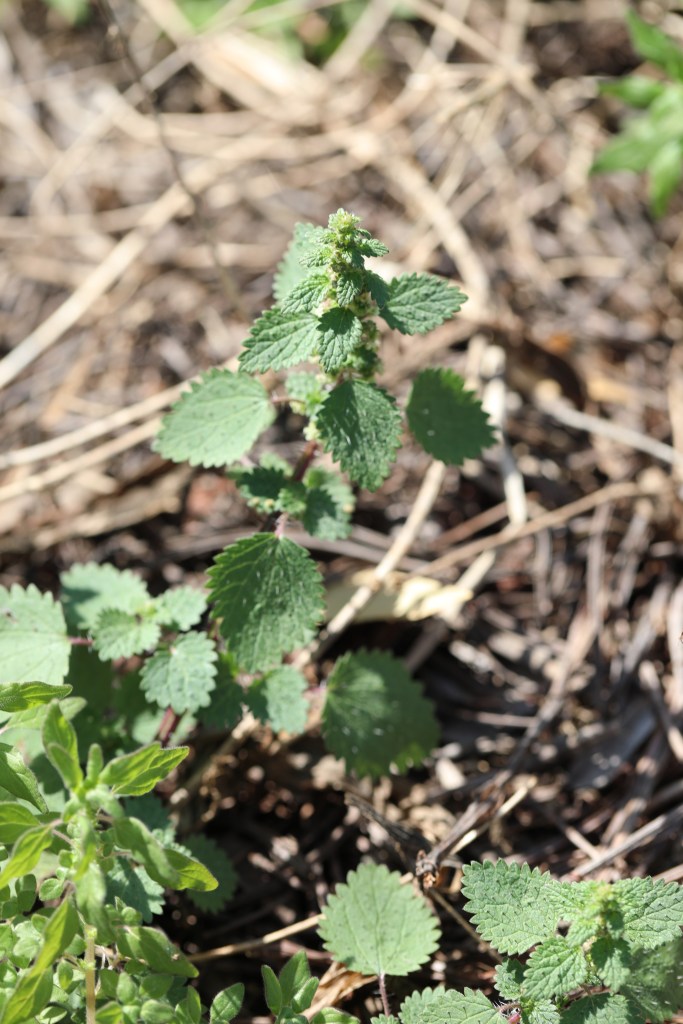
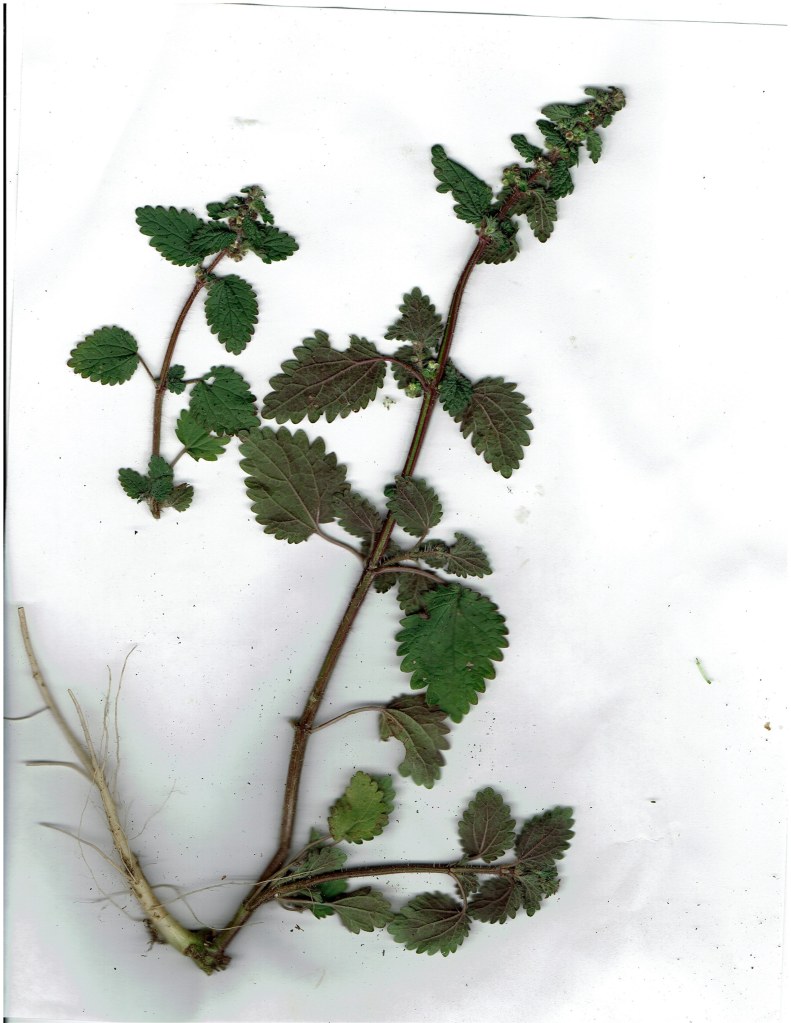
Plant Description: Annual with erect stems to 60 cm high and ovate to lanceolate leaves 1-6 cm long, opposite. Entire plant with stinging hairs. Flowers tiny in axillary or terminal clusters. Perianth about 2 mm long, greenish.
Field Identification: Plant covered with small prickles that sting upon touch. It is our only stinging plant.
Plant Trivia: Hairs all over the plant act as tiny hypodermic needles ready to inject irritating material into human flesh. The venom is a mixture of histamine, acetylcholine, and serotonin.
Occurrence: Common on various soils in pastures, woods, waste places and along roadsides.
Bloom Period: December – June
Plant Use: Members of these genus have been cooked and eaten as greens. Host plant for the red admiral butterfly.
Key to the Genus Urtica:
-
Upper leaves much smaller than lower ones, teeth ovate-elliptic…………………………………………………………….U. chamaedryoides
Upper leaves same size and shape as lower ones, teeth triangular…………………………………………………………………………………………U. urens

