Calyophus berlandier
Family: Onagraceae
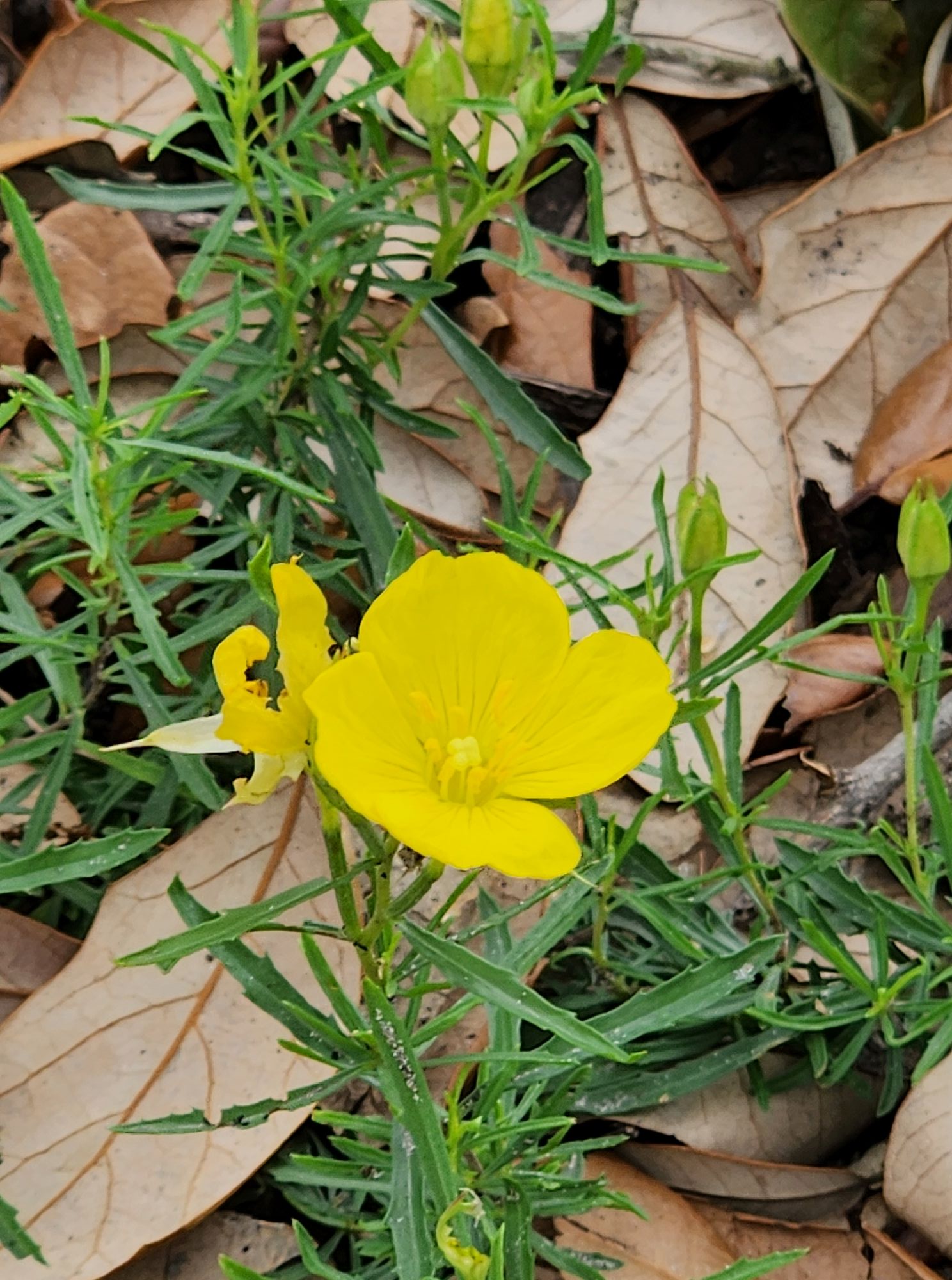
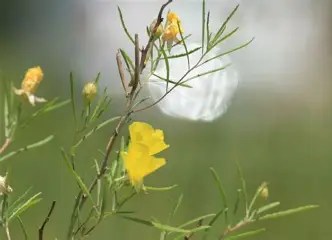
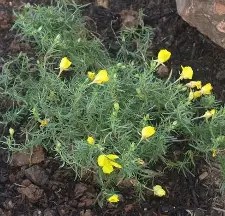
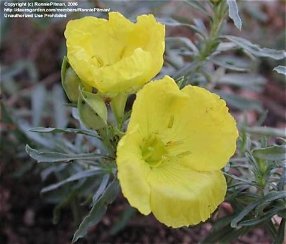
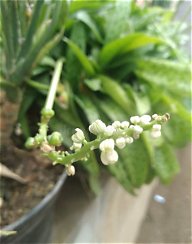
Description: The showy, yellow flowers of Berlandier’s sundrops are 2 in. across with four, broad, crinkled petals. It is a bushy plant that sometimes becomes woody near the base. Its leaves are narrow and spiny-toothed. A long living evergreen, low-growing woody-based perennial that grows to 1 foot tall and spreads to nearly 3 feet wide with dark green narrow fine-textured soft foliage and bright yellow 1 to 2 inch wide flowers. Though often listed differently the current correct name according to The Plant List for this species is Calylophus berlandieri, a name honoring the French naturalist Jean-Louis Berlandier (1801-1851).
Field Identification: perennial plant native to North America with bright yellow blooms that exude a delicate appeal. Its elongated flowers open primarily during the late afternoon and are known for their crepe-like texture. A distinguishing feature is their ability to fade to an orange or pink hue as they age, adding a subtle shift in color to gardens. This is an excellent rock garden plant. thrives in well-drained soil and is widely recognized for its drought tolerance, making it an excellent choice for xeriscaping or low-water gardens. The plant is resilient under extreme conditions, including heat and poor, rocky soils. Calylophus is not prone to invasiveness and poses no significant threats in terms of toxicity, as it is non-toxic to both humans and pets. Superficially the Calylophus resemble evening primroses in the genus Oenothera, but if you look closely there are recognizable differences. The defining feature is the stigma, the receptive area for receiving pollen. In the larger genus Oenothera the stigma is divided into four pronounced filaments but in Calylophus it is a round nubbin.
Plant Trivia: Named after: French-Swiss physician and botanist Jean-Louis Berlandier (1805–1851), who collected plants in Texas and northern Mexico Lady Bird Johnson Wildflower Center. Prune plants back to near their base in early spring and tip back after flowering to regenerate growth and flowers – flowering also corresponds with rain or irrigation so plants can rebloom later with some irrigation. A great plant for containers and dry gardens, particularly hot spots in the garden and on slopes. The name is from the Greek words ‘caly’ for “calyx” and ‘lophos’ meaning the “the back of the neck”, “a crest of a hill” or “helmet” to describe the unique crested lobes on the sepals.
Occurrence: . American native that comes from the grasslands of New Mexico, Oklahoma, Texas and south into Mexico. Plant in full sun or half day sun in a well-drained soils with occasional to infrequent irrigation. This plant is evergreen in frost-free areas but cold hardy with only tip damage in most frosts and returning from its woody base after a hard freeze and root hardy to at least 0°F. It will drape over and cascade down a couple feet from a container lip or wall. Frequent on sandy and rocky soils.
Bloom Period: Spring to Fall
Plant Use:: Willdlife food and ; ornamental
Dichotomous Key to the Genus Calylophus:
-
Sepals without sharply raised midrib…………………………………C. hartwegii
Sepals with sharply raised midrib………………………………………………………………….2
2. Stigma usually raised above anthers at time of opening…..C. berlandieri
Stigma not raised above anthers……………………………………………C. serralatus

