Celtis pallida
Family: Ulmaceae

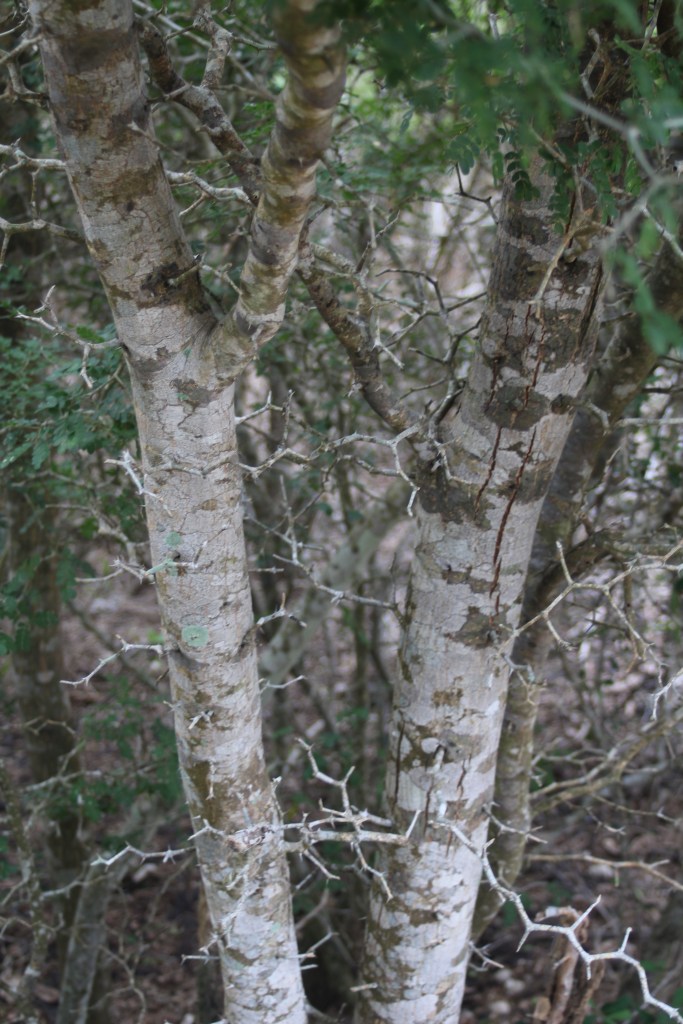
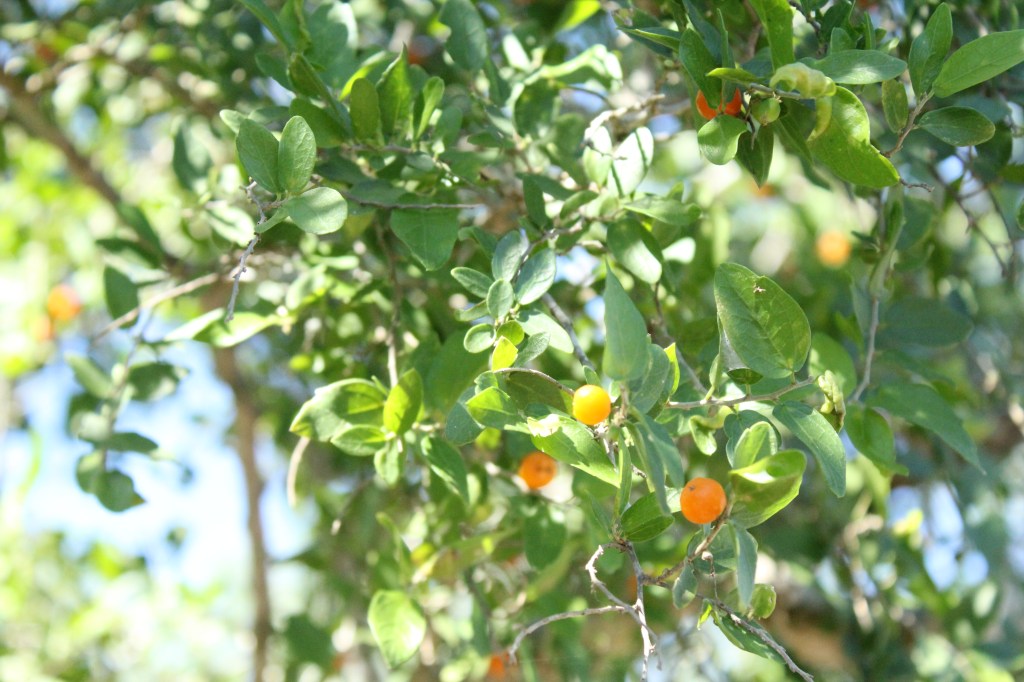
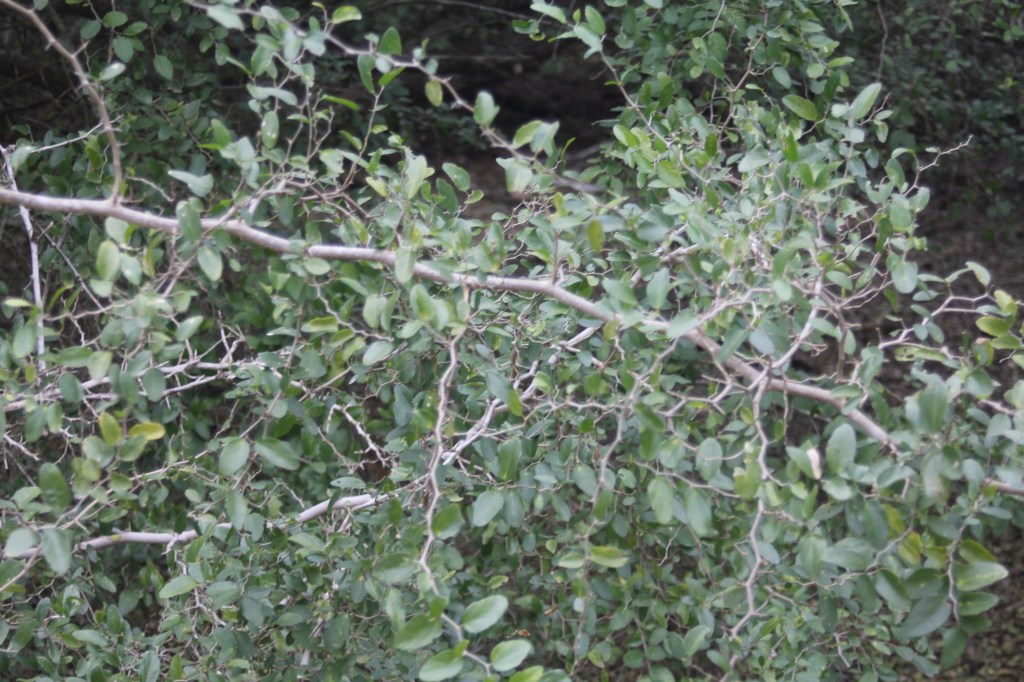
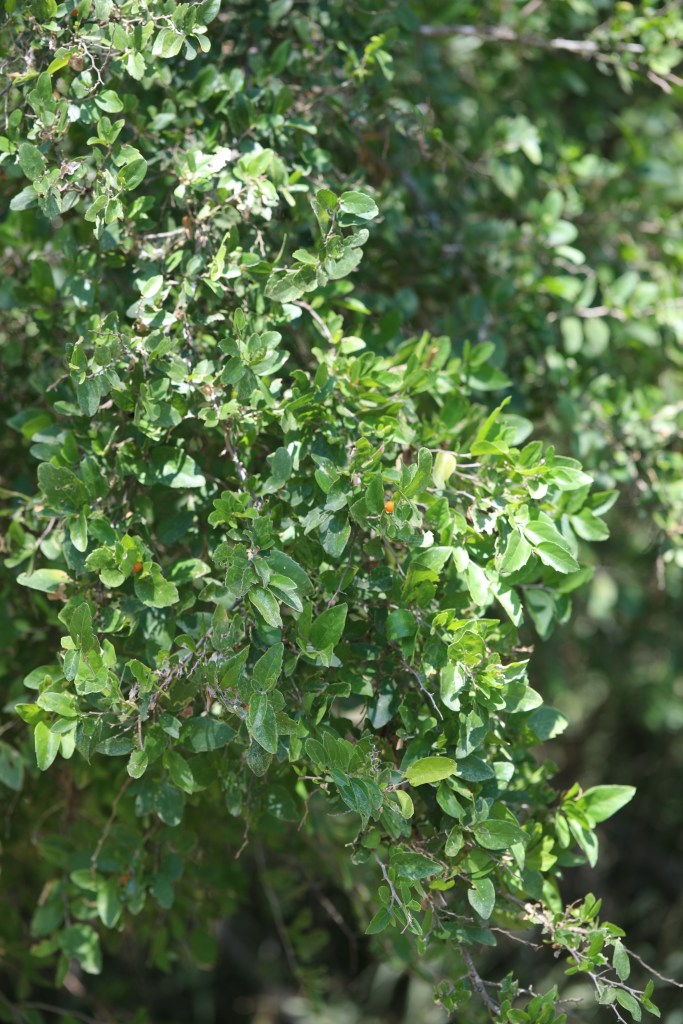
Plant Description: A medium sized evergreen shrub with strongly zigzagged smooth, gray branches and stout, paired thorns. The simple, alternate, green leaves are oblong with tooted margins. It has inconspicuous, greenish white axillary flowers and small round orange berries.
Plant Trivia:
Field Identification:
Occurrence: This is an important component of the thorn-shrub communities and occurs in a variety of soils and habitat types.
Bloom Period: Spring
Plant Use: It is an important wildlife cover and food source. Provides nesting, loafing and roosting sites for bids. Provides food for many butterfly species especially the Mexican Snout butterfly. Leaves are edible. Native Americans ground the fruit and ate it with fat or parched corn. Wood has been used for fence posts.
Key to the species of Celtis:
- Branches not spiny…………………………………………………………………C. laevigata
Branches spiny……………………………………………………………………………C. pallida
We have two varieties of C. laevigata both of which highly intergrade:
C. laevigata laevigata (Sugar Hackberry)
C. laevigata reticulata (Net-leaf Hackberry) has harshly roughened above leaf surface and not only “felty” but with prominently raised veins beneath. Both have asymmetrical leaf structure.
 stxflora