Yucca treculeana
Family: Agavaceae
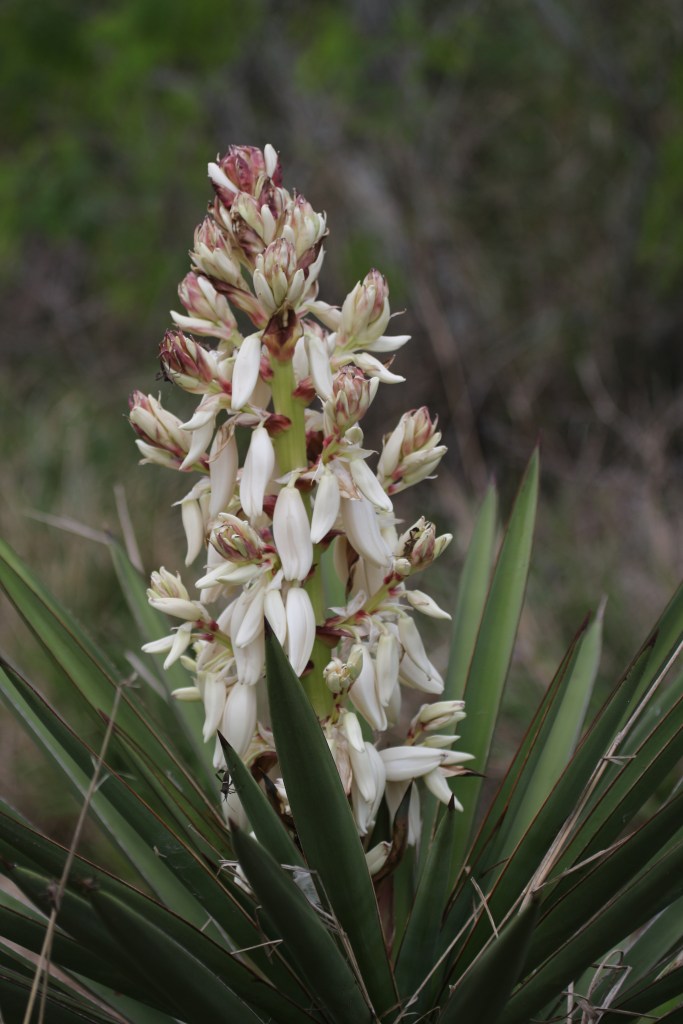

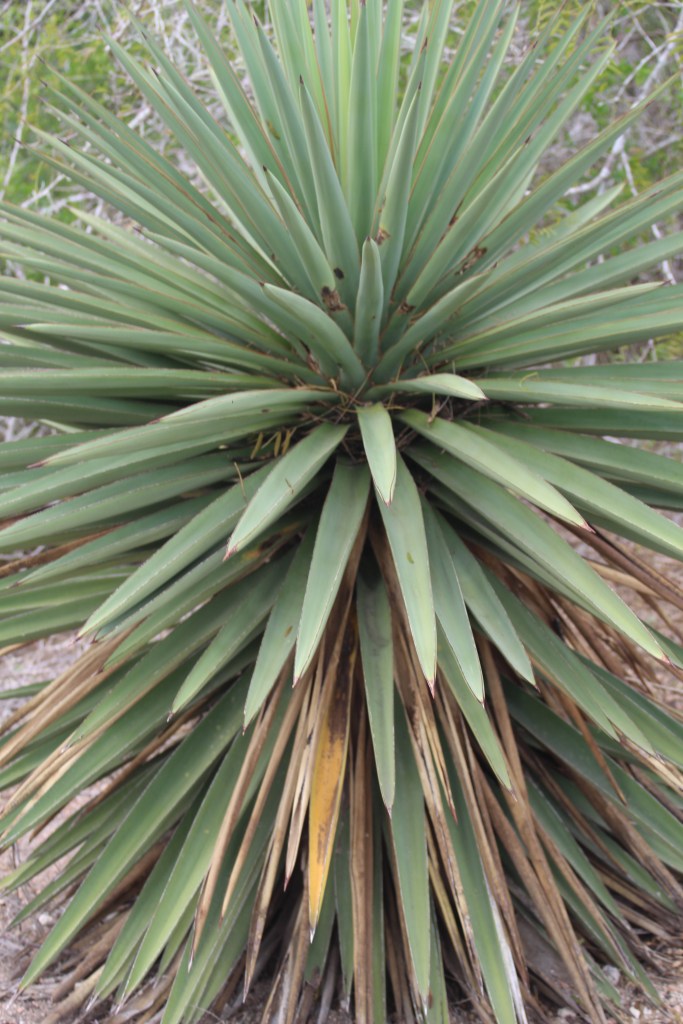
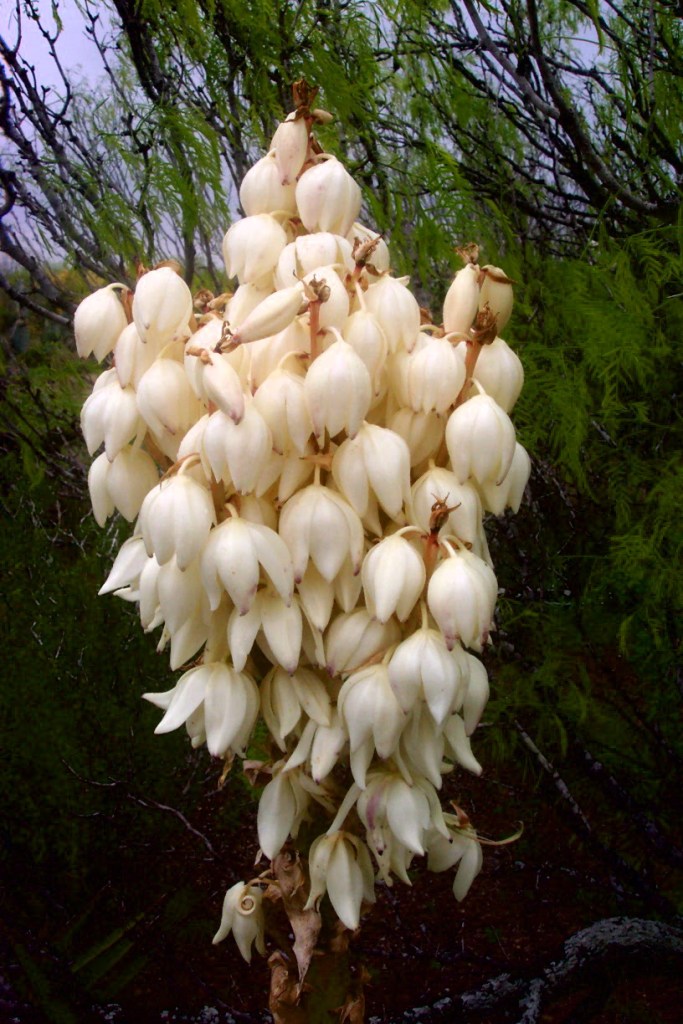
Plant Description: Woody, branched and tree-like, evergreen shrub or small tree to 5 m high, the ridge spine-tipped leaves 30-75 cm long, crowned on the trunk or branches in spirals. Flowers in an upward terminal panicle that is fragrant and waxy. Tepals 3-6 cm long, white or ivory. Flowers are produced in Spring and Summer of alternate years. Fruit in capsules up to about 9 cm long.
Plant Trivia: Yucca pollination depends on an unusual relationship with a small yucca moth, (Tegeticula sp.) of which there are four species. After she is fertilized, the female moth collects pollen from on flower and goes to another flower, where she lays her eggs on the flower’s ovary and then rubs the pollen on the stigma of the same flower. the young larvae feed on the developing seed, but there are plenty left over to produce mature seeds. At a certain age, the moth larvae spin a web and lowers itself to the ground, buries itself for about a year and metamorphoses into a new moth in the Spring. Effectively the yucca pays a fee of a few seeds in order to be pollinated. Rhinoceros beetles feed inside the roots and stems, causing them to collapse.
Field Identification: Narrower and more flexible leaves separate Y. constricta from Y. treculeama.
Occurrence: Frequent on better-drained soils in pastures and woods; also, on shell-deposits along the coast.
Bloom Period:
Plant Use: Attractive and utilized in parks and gardens. In Mexico, flowers are harvested and eaten as a delicacy. The tuberous roots are sold in markets as soap. Nesting site for Inca Dove, Ground Dove, Harris’ Hawk and Mockingbird. Native Americans used the plant as a source of food and of fiber for ropes, mats, baskets, and sandals; leaves were use for thatching huts and as primitive tools. Seeds are considered to have laxative properties.
Key to the species Yucca:
- Leaves mostly 1-2 cm wide; ovary constricted……………………..Y. constricta
Leaves 3.5- 7 cm wide; ovary not constricted…………………….Y. treculeana
 stxflora