Sonchus oleraceus
Family: Asteraceae

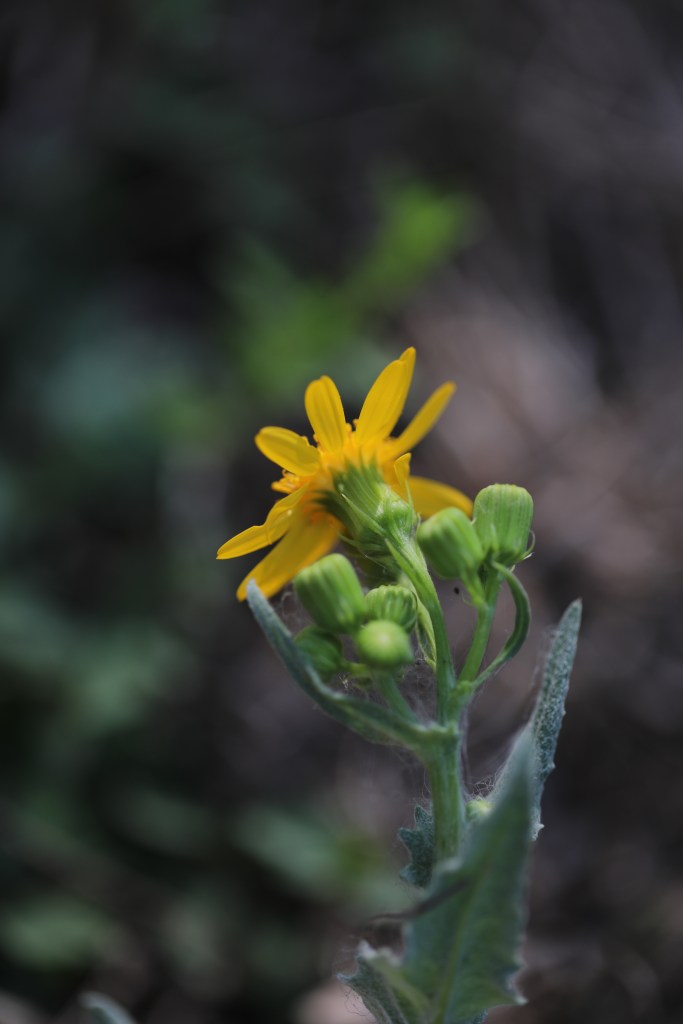
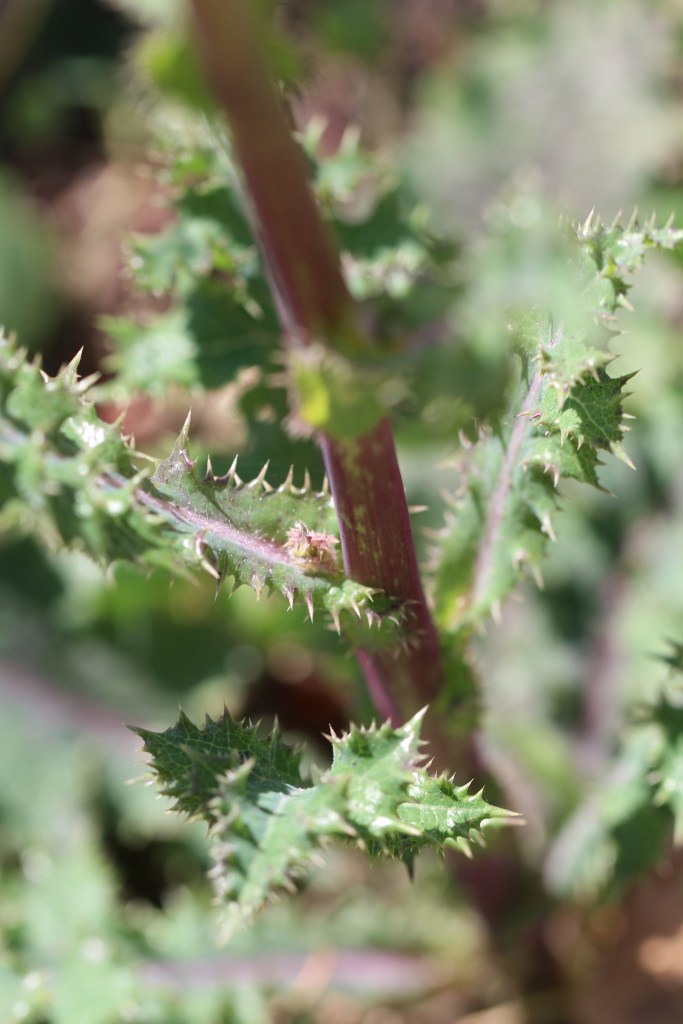
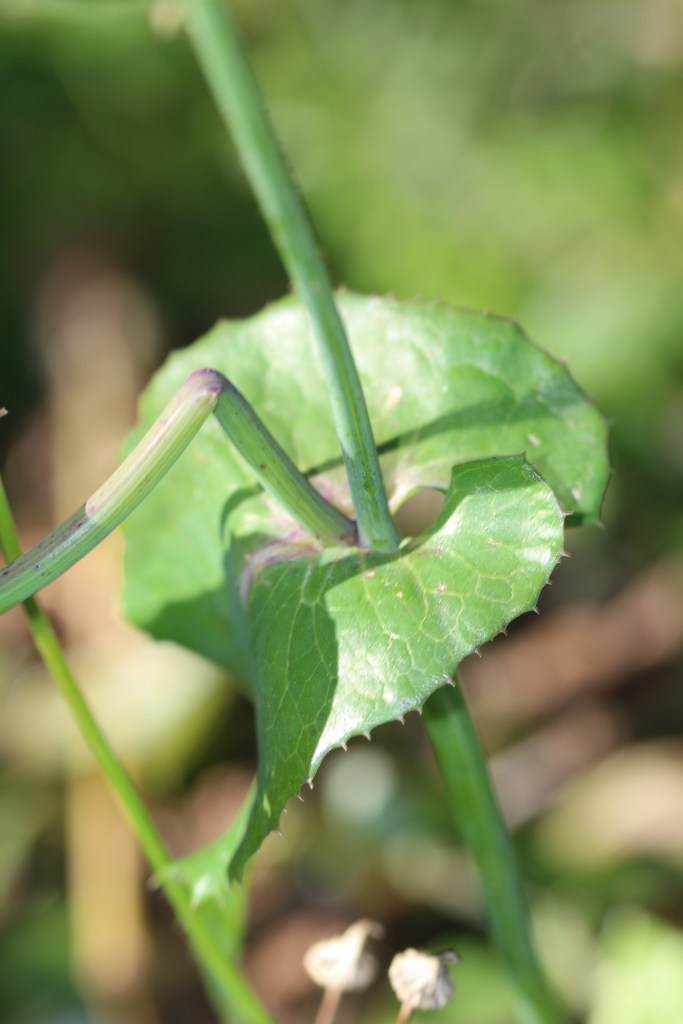
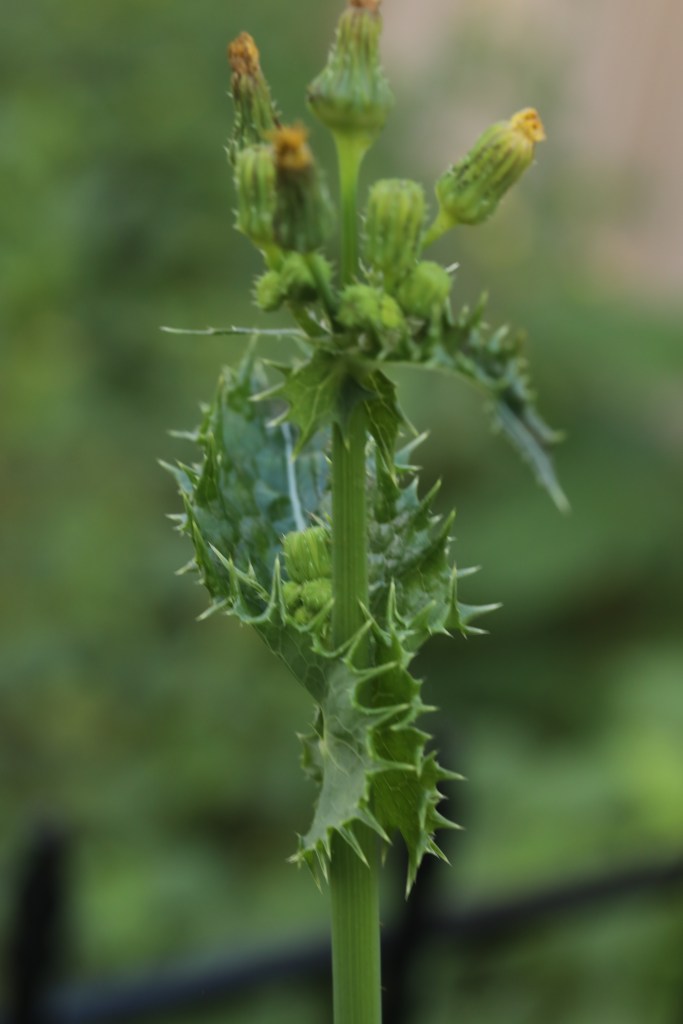

Plant Description: Annual with hollow stems and milky sap, to 120 cm high with spiny-toothed leaves 7-20 cm long, alternate. Petioles (leaf stalks) with a pair of pointed basal “ears,” margins lobed and sharp-toothed. All flowers look like ray flowers, yellow, but with five lobes. Heads corymbose clustered, 1.5-2.8 cm wide, ligulate.
Field Identification: Has the typical puffball seedpod most associated with dandelions. The two sow thistle species are distinguished by their achenes (seeds). Also, petiole base pairs on S. asper are more or less rounded, whereas those of S. oleraceus are pointed.
Plant Trivia: Native of Europe. The genus name Sonchus comes from the ancient Greek word for “hollow” which refers to the hollow stems of the plant. Both species are native to Europe. Two species are very similar and are difficult to distinguish. They share similar characteristics and habitat.
Occurrence: Frequent on various soils in fields, waste places, prairies, and open areas. Considered a pest weed in yards and fields. Native of Europe.
Bloom Period: Year-round, but peaks during Spring and Summer.
Plant Use: Goldfinches eat the seeds.
Key to the Genus Sonchus:
- Achenes smooth…………………………………………S. asper
Achenes cross-wrinkled……………………..S. oleraceus

