Rumex crispus
Family: Polygonaceae
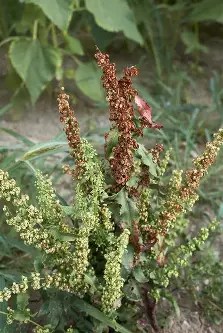
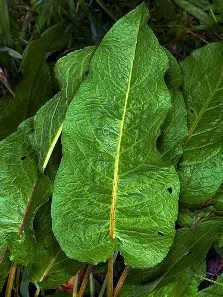
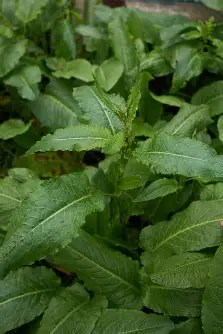
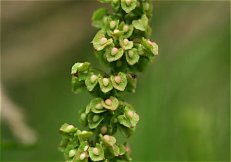
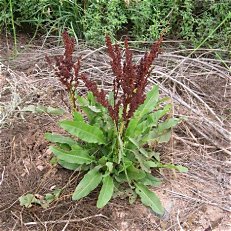
Description: Perennial to 120 cm high with lanceolate or elliptic wavy leaves 15-30 cm long. Plant habit erect. Fruiting perianth 4-6 mm long. The plant has a large basal rosette of leaves, typically 10–35 cm long and 2–7 cm wide, with strongly wavy or curled margins and an acute apex. Stems may be simple or branched and are glabrous and ribbed. The root system consists of a large, yellow, forking taproot, which is notable for its size. The inflorescence is a terminal, narrow panicle with erect or ascending branches, producing clusters of small, bisexual flowers with yellowish-green, three-winged sepals that turn brown at maturity and lack petals.
Field Identification: Erect, wavy-leaved plant with alternate, entire leaves usually with sheathing membranous stipules.
Plant Trivia: The seeds are dark brown, shiny, ovoid, and trigonous, approximately 2 mm long, encased in the calyx, which aids in dispersal by water, wind, and animal fur. This perennial is toxic to livestock and poultry. Seeds can remain viable for 50-to 80 years and each plant can produce up to 60,000 of them.
Occurrence: Frequent in ditches, along streams, and in other damp grounds. Native of Europe. The plant tolerates a wide range of soil types, moisture conditions, drought, temporary flooding, and occasional mowing.
Bloom Period: Mar-May
Plant Use: Used historically as animal fodder, medicine, and food, and also has environmental applications.
Dichotomous Key to the Genus Rumex:
- Leaves with spreading lobes at base………R. hastatulus
Leavers not lobed………………………………………………….…….2
2. Pedicels longer than fruiting tepals…………..…R. crispus
Pedicels equaling fruiting tepals or shorter……….…….3
3. Flower clusters leafy-bracted……………….……R. pulcher
Flower clusters not bracted……………………….……….……4
4. Fruiting perianth about 4 mm long…R. hrysocarpus
Fruiting perianth 6-7 mm long………….…….R. spiralis

