Croton argyranthemus
Family: Euphorbiaceae
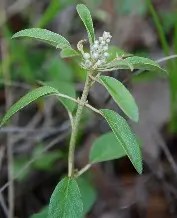
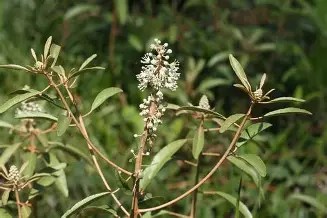
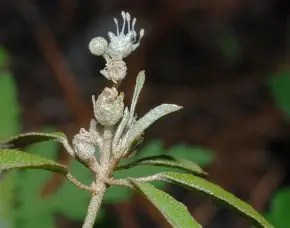
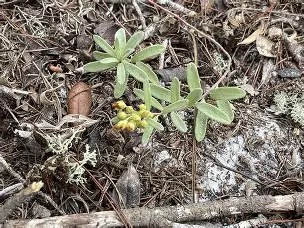
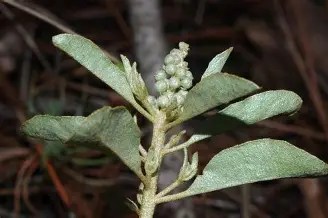
Description: Woody-based perennial to 65 cm tall. Leaves 1-5 cm long, elliptic or oval, silver beneath. Racemes wit female flowers below the male. Covered in reddish-brown scales. Leaves are alternate, petiolate, oval to lance-shaped (1–5 cm long), with smooth edges and blunt tips. Upper surface is dark green; lower surface is silvery-white due to dense scales. In terminal racemes (3/4–2 in long) with male (higher) and female (lower) flowers separate. Male flowers have 5 white petals and 10 stamens; female flowers have 5 greenish sepals and no petals
Field Identification: Are best distinguished by familiarity of their growth habits. The former is a perennial, and the latter is an annual.
Plant Trivia: Relies on native ants (via elaiosomes) and explosive dehiscence. Some Croton species have medicinal uses, but the oil can cause skin blistering and is toxic to dogs. All parts are toxic if ingested; sap can irritate skin and eyes. Croton argyranthemus is closely related to C. coryi. Although they have very different kinds of vegetative epidermal covering, the staminate petals are characteristically silvery-lepidote (covered with small, scruffy scales) in both species.
Occurrence: Frequent on coastal sands from Aransas Refuge to Baffin Bay and inland in Goliad County. Native from central Georgia and southern Alabama south to central peninsular Florida, west to Louisiana and southwest to Oklahoma, and south through east and central Texas to Nuevo León and Tamaulipas.
Bloom Period: April-Sept
Plant Use: Croton seeds are eaten by many birds and small mammals.
Dichotomous Key the Genus Croton:
Plants of the Texas Coastal Bend by Roy L. Lehman, Ruth O’Brien & Tammy White.
 stxflora