Sesbania herbacea (syn. S. exalata)
Family: Fabaceae
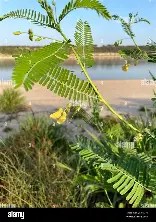
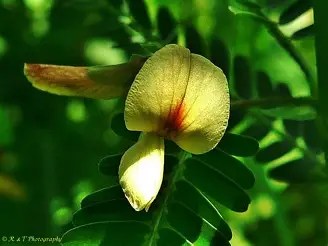
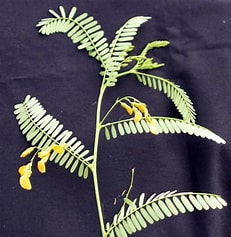
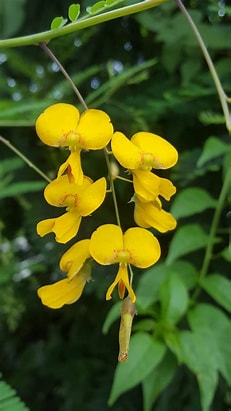
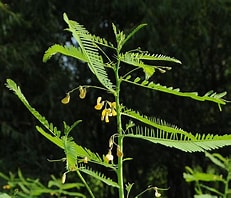
Description: Annual to 2 m high. Leaves alternate, pinnate with leaflets 1-4 cm long. Green, bright green; large leaves up to 1 foot (.3 m) long, pinnately compound, leaflets, oblong. Semi-woody, stems glabrous branches. Flowers in racemes, the upper petal 12-15 m long, yellow. Fruit is yellow or yellow-orange with flecks of purple or brown; pea-like flower, 2 to 6 bell shaped flowers; fruit is a linear pod.
Field Identification: Erect, large, succulent-stemmed, open-branched herb or perennial/subshrub. Branches extend perpendicularly from the main stem. Foliage rather rarefied. This plant is erect, large, succulent-stemmed, open-branched plant with few, wide-spreading branches, it can grow 70 – 400 cm tall.
Plant Trivia:
Occurrence: Frequent in swales, depressions, ditches, and other moist low grounds. native to the southeastern United States and parts of tropical/subtropical America. Potentially hazardous to helivestock. Saponins may harm ruminants; high Ca:P ratio during flowering can also be toxic.
Bloom Period: Sum-Fall
Plant Use: Palatable to cattle, especially when other forage is scarce; high crude protein (31%) in vegetative stage. Grown to improve soil structure and reduce erosion Produces 2–3 tons/acre in 75 days, fixing 90–130 lbs/acre Nitrogen; used in citrus groves cotton, and truck crops. Attracts beneficial insects like lady beetles and parasitic wasps. Seeds are a food source for quail, turkeys, mallards, limpkins, and doves.
Dichotomous Key:
- Fruits winged…………………..S. drummondii
Fruits not winged………………..S. herbacea
 stxflora