Solidago sempervirens
Family: Asteraceae
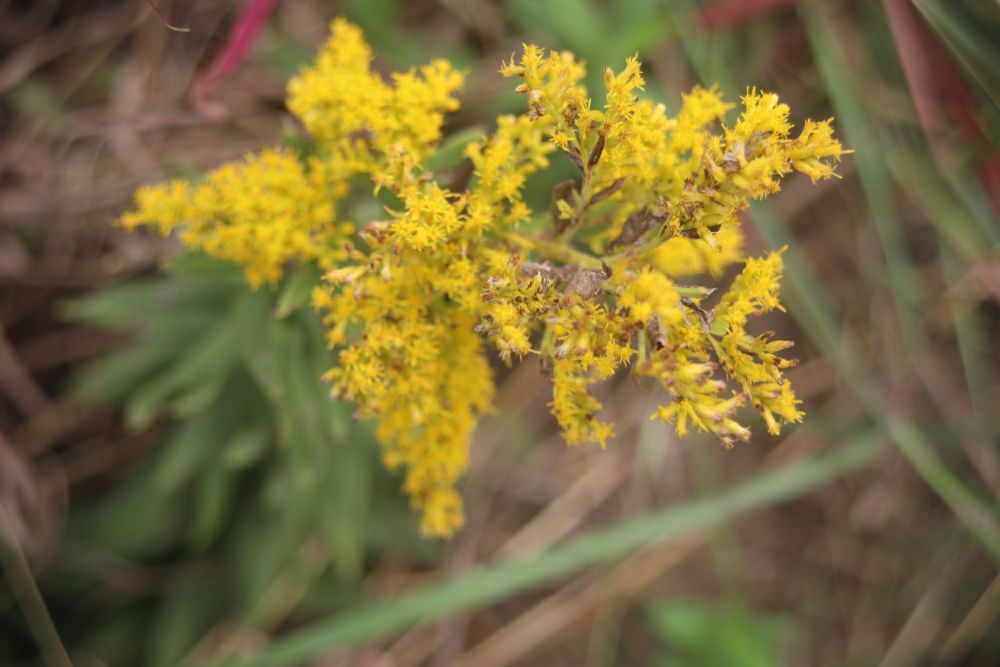
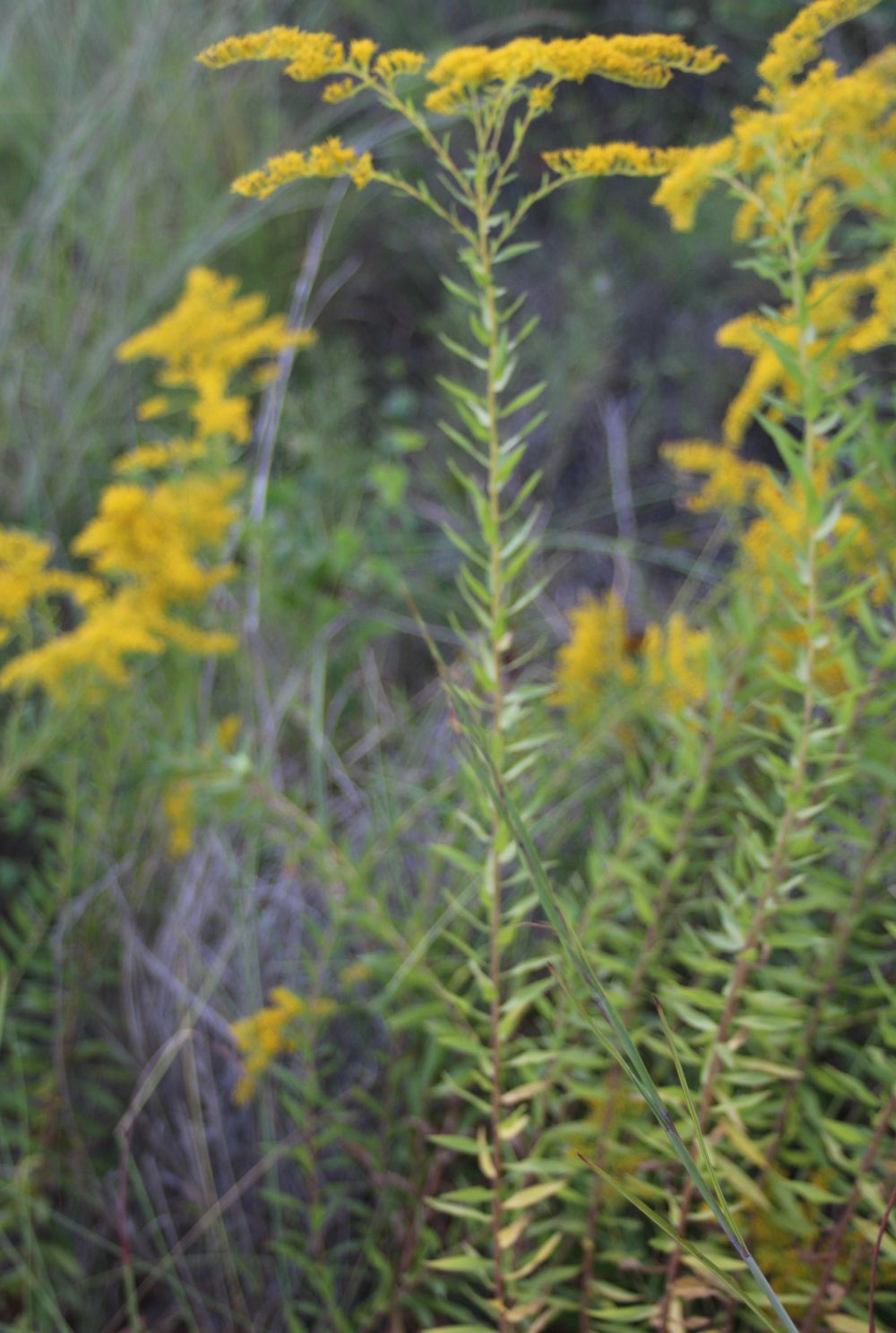
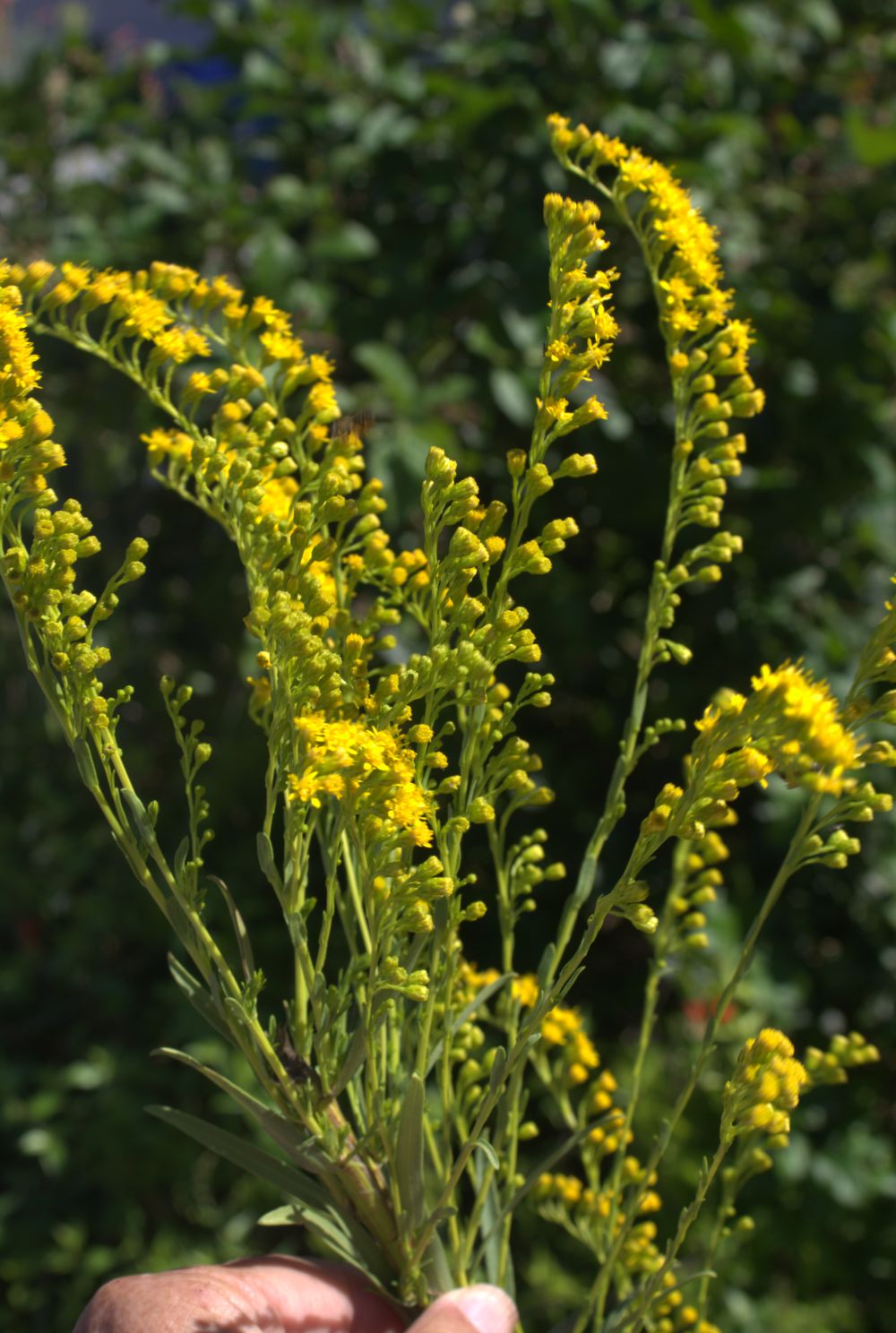
Plant Description: Perennial halophyte. Erect stem growing up to 1.5 meter tall. Leaves are alternate and succulent -like, blades linear or elliptic up to 12 cm long. Fowers compacted into small heads, the branch tips curling. Heads about 1 dm tall. Ray flowers yellow, but not noticeable; disc flowers yellow. Achene fruit to 2 mm wide with pappus bristles about 12 mm long.
Field Identification: When blooming it is a dramatic inflorescence of curled, drooping yellow. Distinguished from closely related S. canadensis, whose leaves are covered with fine hairs, and S. odora which has highly aromatic leaves and a more pyramidal panicle.
Occurrence: Sandy soil, native of Atlantic and gulf coast (locally along sandy coastlines. Full light and well drained sandy soil.
Bloom Time: Summer/Fall
Plant Use: Strong nectar source (major monarch food); garden landscapes and erosion control. It also provides food shelter and protection for many animals including insects, birds and small mammals
Plant Trivia: Small was galls serve as food for wintering birds such as chickadees and woodpeckers.
Key to genus if needed
 stxflora