Suaeda linearis
Family: Amaranthaceae
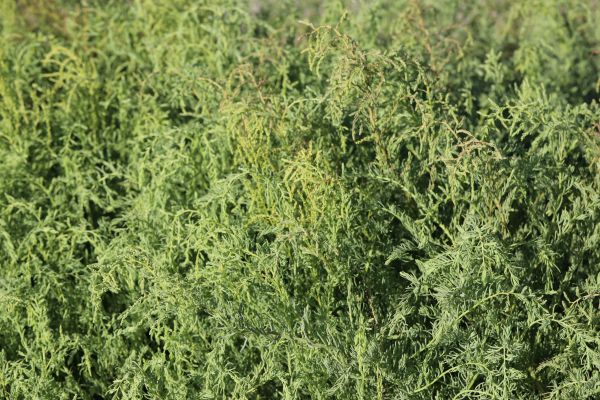
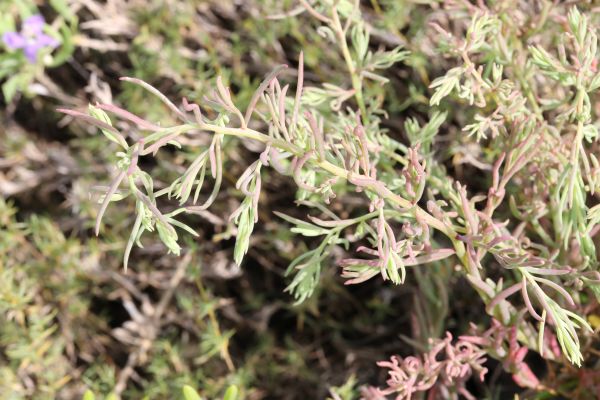
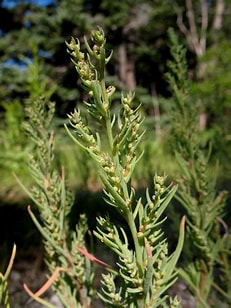
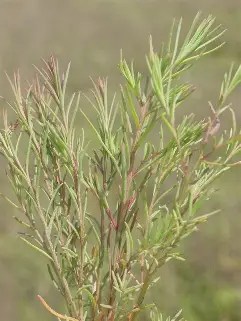
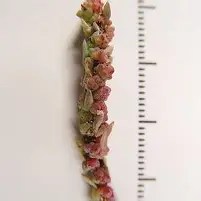
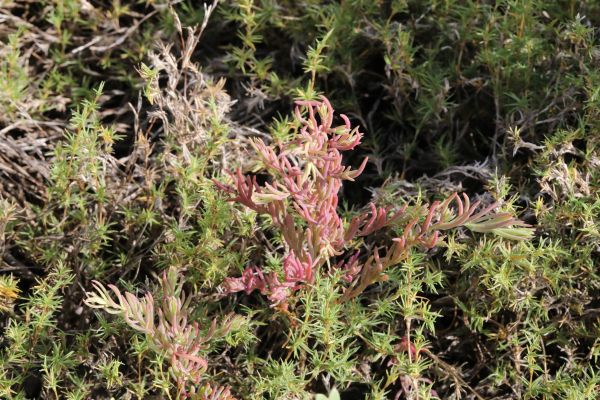
Description: Hairless annual to 75 cm high, often forming dense lumps. Leaves alternate 1-4 cm long, fleshy, narrowly linear. Flowers in spicate panicles, the greenish perianth 1-2 mm high, fleshy.
Field Identification: Erect or ascending, profusely branched, woody at the base. Densely leaved habit. Leaves simple, sessile, linear, sharp-pointed.
Plant Trivia: Indicator of brackish/saline wetland conditions.
Occurrence: Common along bay beaches or on salt flats. Native, found in coastal wetlands and intertidal zones along the eastern and Gulf coasts of North America. Coastal areas from Maine to Florida, west to Texas, and south to southern Mexico (Yucatán, Quintana Roo), the West Indies, Jamaica, and the Bahamas.
Bloom Period: May-Dec
Plant Use: Provides habitat and food for coastal invertebrates and birds. The plant is harvested from the wild for local use as a food. Leaf tips – cooked and also used as a flavoring. A salty flavor. Of good food quality. Seed – raw or cooked. They are ground into a meal and used as a mush or added to cereals and used in making bread
Dichotomous Key to the Genus Suaeda:
- Perennial, leaves 5-15 mm……………………….S. conferta
Annual, linear leaves 1-4 cm……………………S. linearis
 stxflora