Ipomoea sagittate
Family: Convolvulaceae
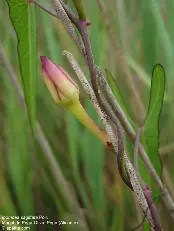
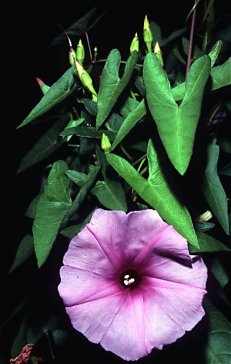
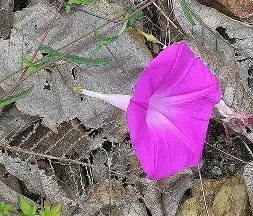
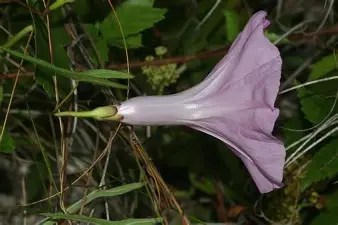
Description: Perennial vine with twining stems to 1.7 m or longer. Leaves 3-10 cm long, sagittate (arrow shape). Corolla 7-8 cm long, rose-purple.
Field Identification: Its growth habit of clinging vine and its large rose lavender trumpet flower are similar to the standard Morning glory, but its narrow, spear-shaped leaves are distinctive to this species. It is a deciduous perennial vine with a long bloom time of mid-summer through fall. Leaves are sagittate, or arrowhead-shaped, with narrow points extending to both the front and rear. The leaves are simple, arranged alternately along the stem, and have a smooth, glabrous texture without any hairs. Plant it in the full sun in moist sandy soil and give it a fence or trellis to climb up.
Plant Trivia: Introduced in the Mediterranean Basin at least since the 17th century because of seeds transported in ship ballast soil, the ornamental trade or its uses in medicine. The leaves of this southern vine resemble those of the Arrowheads; both derive their names from the Latin word sagitta (“arrow”).
Occurrence: Occasional along bay and island beaches or more frequent along river and creek banks and in coastal marshes. It is native to the Caribbean, Mexico and the Southeastern United States. Found in sandy, moist, even brackish soil.
Bloom Period: May-Sept
Plant Use: Its flowers are a valuable source of nectar for pollinators, and it contributes to the biodiversity of native gardens. This plant grows well in coastal areas due to its salt tolerance.
Dichotomous Key to the Genus Ipomoea: Plants of the Texas Coastal Bend by Roy L. Lehman, Ruth O’Brien & Tammy White

