Symphyotrichum tenuifolium (Aster tenuifolius)
Family: Asteraceae
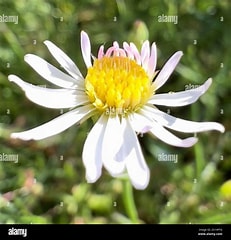

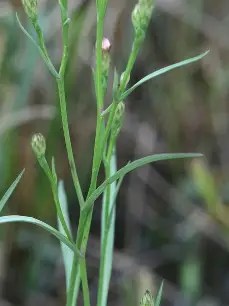
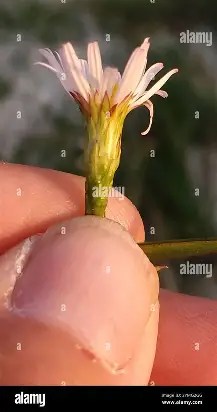
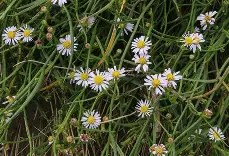
Description: Perennial, herbaceous plant forming dense clumps or mats. Stems are flexuous and typically glabrous. Linear, fleshy leaves 3-13 cm long are simple, alternately arranged, narrowly lanceolate, soft, and often appear pointed at the tips, with entire margins, to 60 cm high. Heads are about 2 cm wide, solitary or in open clusters. Disks yellow, rays white to lavender.
Field Identification: This plant is confined to salt marshes and brackish river shores. Although it has few flowers compared to other asters, it is conspicuous in these habitats because they feature few other large-flowered species.
Plant Trivia: Symphyotrichum derives from Greek, meaning “growing together” and “hair,” referring to basal pappi in some species, though this feature is absent in most modern members. The species epithet tenuifolium means “slender leaves,” describing its narrow, lanceolate foliage. It can be distinguished from related species like S. subulatum by its taproot, fewer disc florets, and narrower ray florets. Along the Gulf of Mexico Coast in central and northern peninsular Florida,vars. tenuifolium and aphyllum intergrade in nearly all characteristics.
Occurrence: Known only from bay beach at Austwell, Texas in the Texas Coastal Bend. Native to eastern North America, commonly found in salt marshes and brackish river shores
Bloom Period: June-Nov.
Plant Use: This plant plays a key ecological role in salt marshes by providing nectar for native bees and contributing to the biodiversity of wetland plant communities. Its dense mats can also help stabilize soil in marsh environments.
Dichotomous Key to the Genus Symphyotrichum:
- Leaves thick-fleshy………………………………S. tenuifolium
Leaves not thick or fleshy……………………S. subulatum
 stxflora