Kosteletzkya virginica
Family: Malvaceae
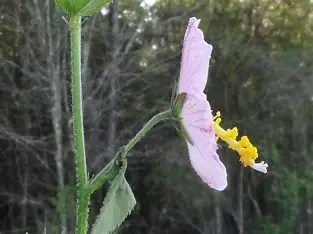
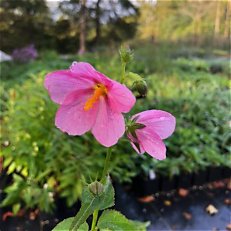
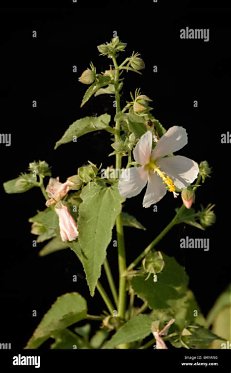
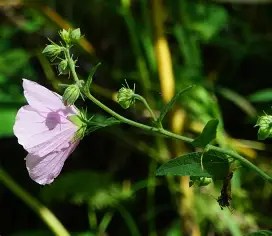
Description: Is a native, perennial, non‑rhizomatous plant to 1.5 m or higher with mostly triangular-ovate leaves 3-15 cm long, coarsely to finely toothed; lower leaves may be lobed. Flowers in a leafy panicle, the petals 2-3.5 cm long, pink. Flowers 5‑petaled, 1.5–3 in wide, deep pink to pale pink or white; open for one day.
Field Identification: Pollination by insects and self‑pollination. is an erect, branching, herbaceous perennial or subshrub that typically grows to 3-4’ tall often with coarse hairy foliage. It is noted for its small hibiscus-like pink flowers that bloom from late June to September. appear solitary in leaf axils or in terminal panicles. Numerous stamens form a distinctive tubular column around the pistil. Flowers open for one day. Fruit is a flattened, 5-segmented capsule with one seed per segment. Leaves 5-15.5 cm (2-6” long) are gray-green and toothed. Lower leaves are maple-like with 3-5 lobes. Smaller upper leaves are triangular-hastate.
Plant Trivia: First described by Linnaeus in 1753 as Hibiscus virginica; later moved to Kosteletzkya.Genus name honors Vincenz Franz Kosteletzky (1801-1887) of Prague, writer on medical botany.
Occurrence: Occurring on moist soils in ditches and marshes and along shorelines. Known from NE of Tivoli, Aransas Refuge, north of Rockport, Mustang Island. Nationally native to salt, brackish, and nearly fresh marshes, bogs, and swamp edges along the Atlantic and Gulf coasts from New York and Delaware south to Florida, and west to east Texas.
Bloom Period: June-Nov
Plant Use: Provides nectar for pollinators such as butterflies. Native plant gardens, naturalized areas, around water bodies or low spots or in border
Dichotomous Key: This is the only species of this genus in our area.

