Parkinsonia aculeata
Family: Fabaceae

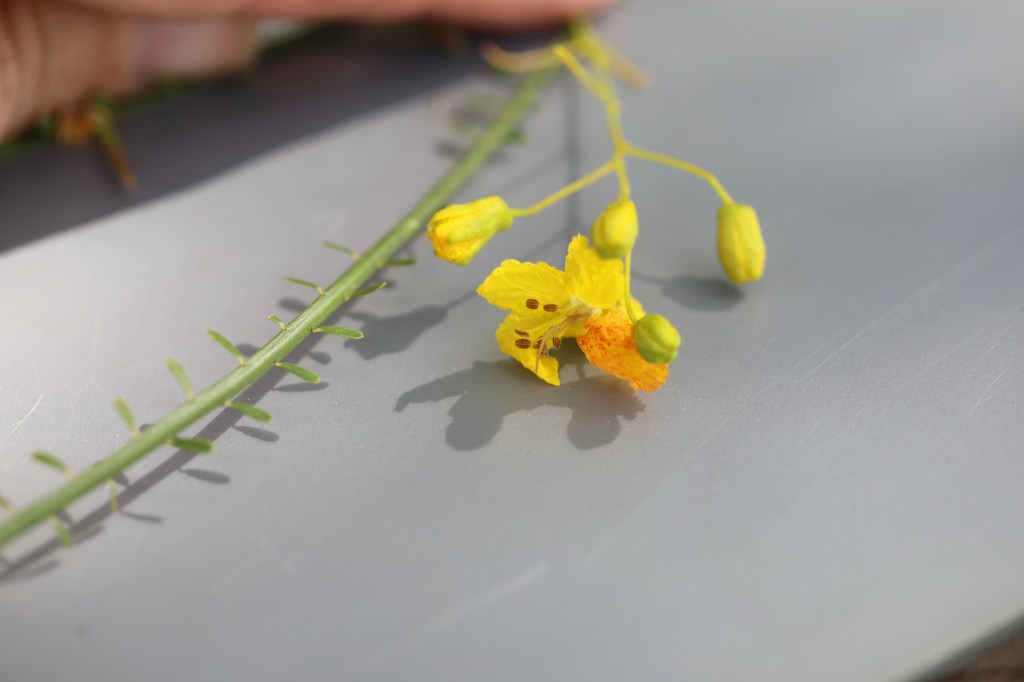
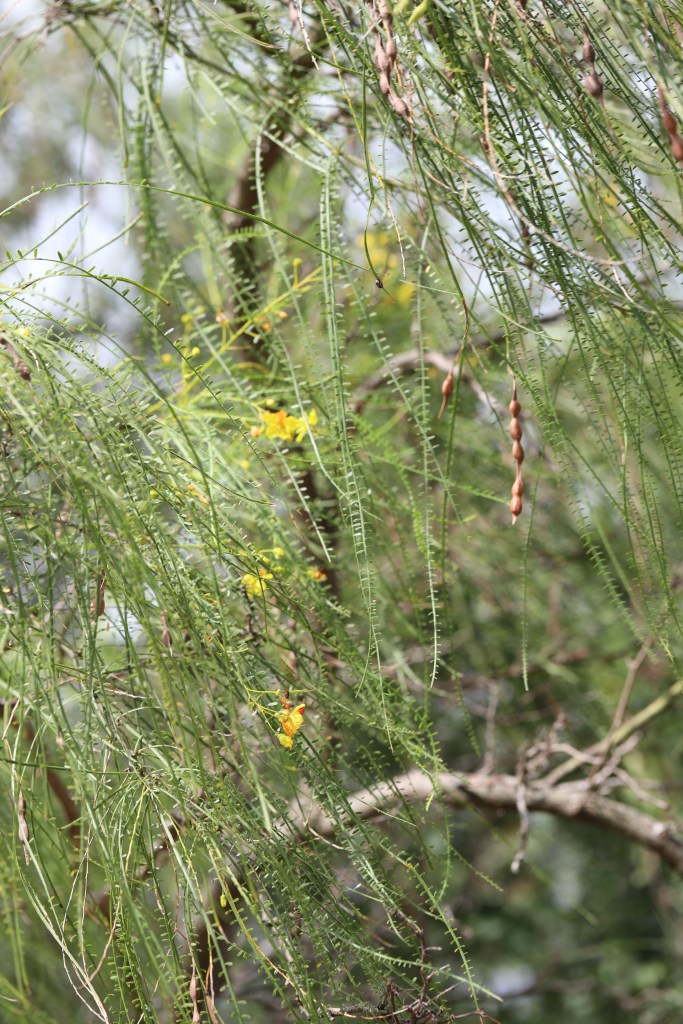
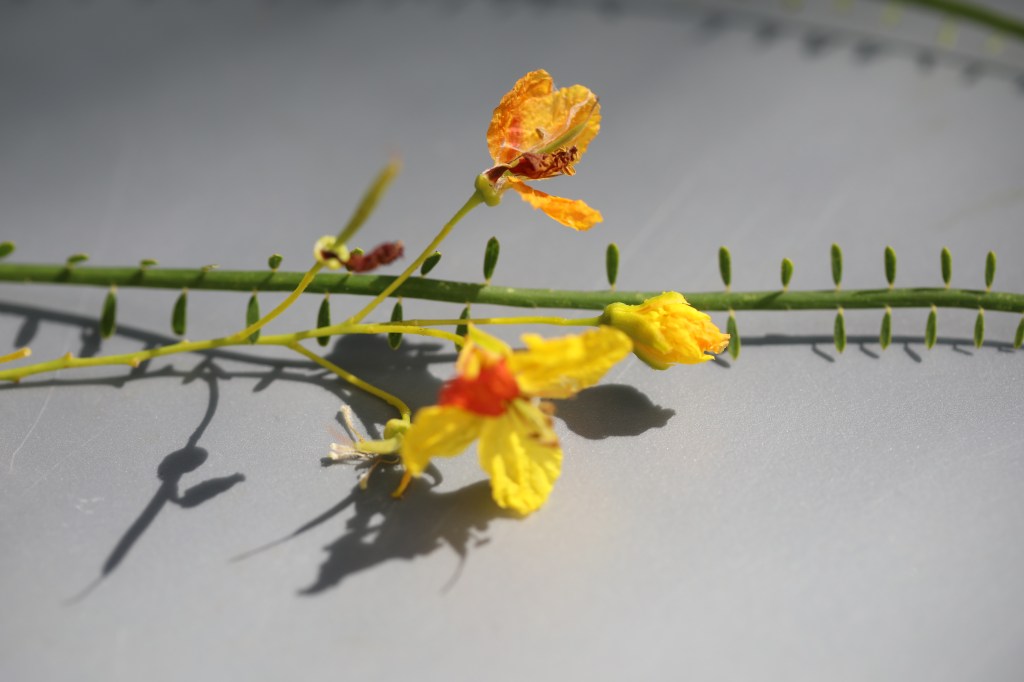
Plant Description: Spiny deciduous tree to about 10 m high. Leaves bipinnate with leaflets 6-10 mm long, alternate and numerous leaflets per pinnae. Racemes loosely flowered, the petals 12-15 mm long, yellow. Green-barked, thorny shrub with slender, spreading limbs forming a rounded crown.
Plant Trivia: Official tree of Corpus Christi; Central Library is La Retama Library. This plant may shed all or most of its leaflets during droughts yet can continue conducting photosynthesis with its green bark.
Field Identification: Feathery foliage and a drooping rounded crown flat rachis with many tiny leaflets; fragrant blooms.
Occurrence: Common in stream bottoms, swales, and other low places. Grows well in moist, poorly drained or disturbed sandy or limestone soils.
Bloom Period: April -November
Plant Use: Leaves occasionally eaten by White-tailed deer, seeds by Bobwhites. Native Americans made a coarse flower from seeds for food, and in Mexico the branches and leaves were made into a medicinal tea to treat diabetes and fever. Has been used as a hedge plant and as an ornamental or landscape tree.
Key to the species of Parkinsonia:
- Pinnae to10-30 cm long, leaflets numerous…………………………..P. aculeata
Pinnae 1-3 cm long, leaflets few pairs……………………………………….P. texana
 stxflora