Cercis canadensis texensi
Family: Fabaceae
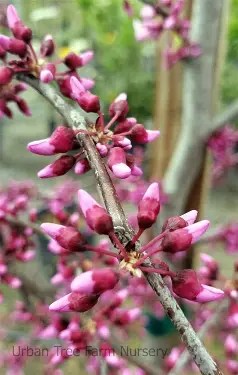
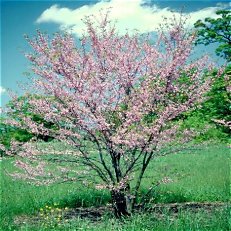
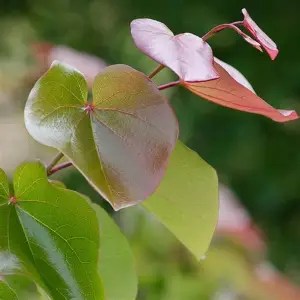
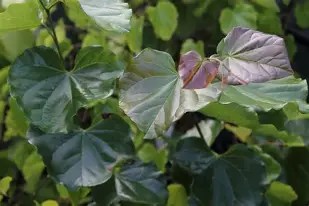
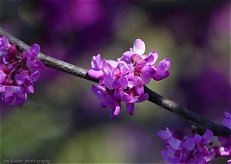
Description: Typically, 20–30 ft tall with a 25–35 ft spread. Bark: Red-brown, with deep fissures and scaly surface. Branchlets at first lustrous brown, later become darker. Leaves are alternate, simple, heart-shaped or broadly ovate, two to five inches long, five to seven-nerved, cordate or truncate at the base, entire, acute. They come out of the bud folded along the line of the midrib, tawny green; when they are full grown, they become smooth, dark green above, paler beneath. In autumn they turn bright clear yellow. Petioles are slender, terete, and enlarged at the base. Stipules caducous (falling of earlier than most plants).
Field Identification: Heart‑shaped, emerging reddish and maturing to green. Flowers pink to lavender pea‑like blossoms appearing on bare branches in early spring. Fruit flat, brown, pea‑like pods maturing late summer to fall.
Plant Trivia: State tree of Oklahoma. This plant hybridizes easily, therefore allowing many cultivars and “iffy” subspecies)
Occurrence: This tree does not grow native in Corpus Christi or the Rio Grand Valley. Native to eastern North America. Grows in woodlands, forest edges, and river valleys. Native to eastern North America from southern Michigan south to central Mexico, west to New Mexico, but able to thrive as far west as California and as far north as southern Ontario. It is the state tree of Oklahoma and the official city tree of Huntington Beach.
Bloom Period: Feb-Mar
Plant Use: Early nectar source for bees and butterflies. Seeds are eaten by birds; leaves host several Lepidoptera larvae. Foliar food for many caterpillar species. It is planted as an ornamental in our area.

