Eragrostis secundiflora
Family: Poaceae
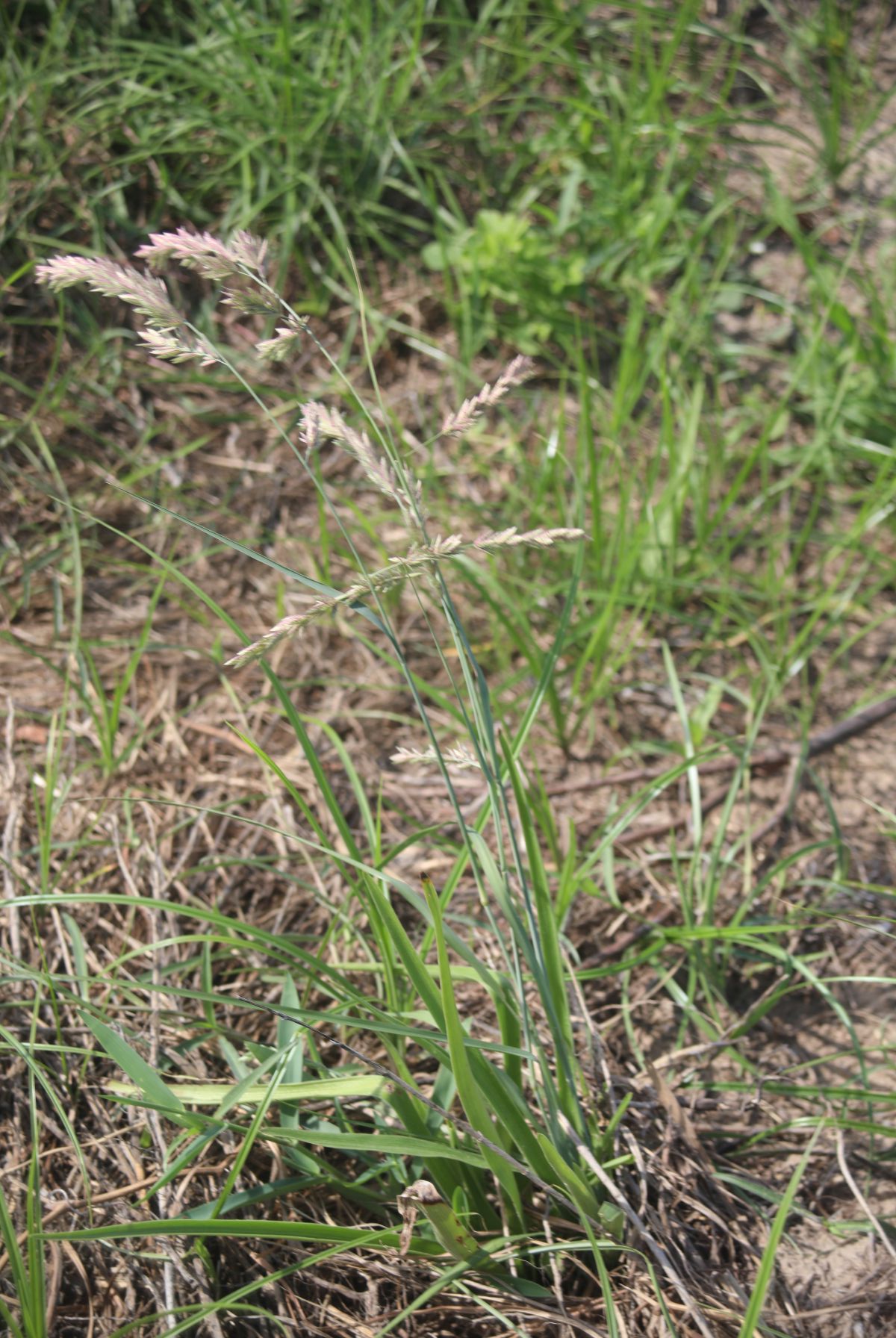
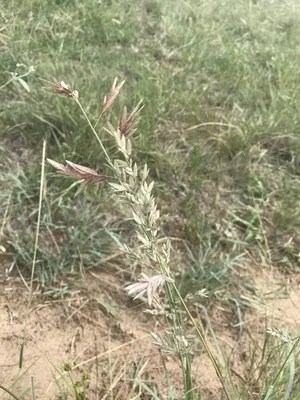
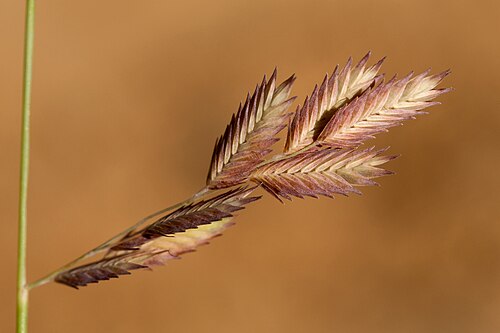
Description: Cespitose perennial, tufted, bunch grass. Culms 30-70 cm, erect, often branching near bases. Reddish purple spikelets are distinctive. Blades 2-2.5 mm wide, rolled, glabrous, green or greenish purple. Without rhizomes. Warm season, native. Florets falling intact before the glumes. Florets laterally. flattened. Seeds larger than other Eragrostis species. Blades are flat with long hairs above. Caryopses are dark red to brown.
Location: Barrier and other South Texas sandy areas. Blooms throughout the year.
Soil Type: Common to sandy soils.
Trivia: Larval host: paradoxical grass moth. Popular with insect herbivores such as leafhoppers.
Economic, Environmental Importance: Poor for wildlife and livestock. Red lovegrass is recommended for use in range seeding mixtures, upland wildlife plantings, roadside plantings, and conservation plantings. Red lovegrass is an early successional plant well adapted to colonizing openings.

