Dalea purpurea purpurea
Family : Asteraceae
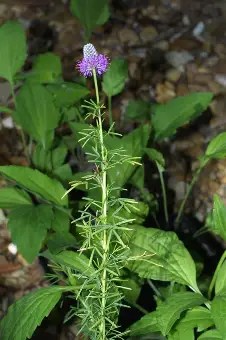
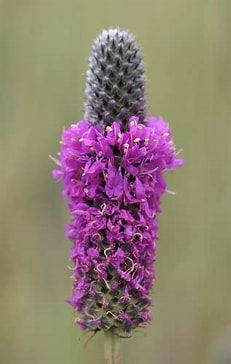
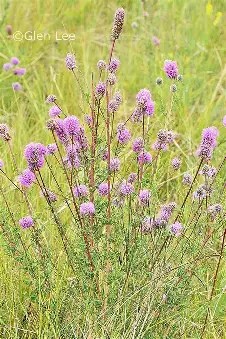
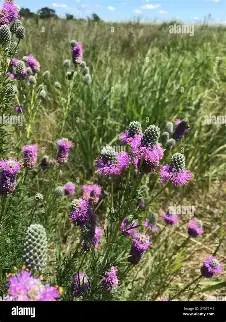
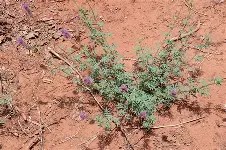
Description: Perennial, compound, alternate, odd-pinnate leaves, with 3-5 narrow linear leaflets. Flowers form collective along a cylindrical cone from bottom to top.
Field Identification: Striking purple cone of tiny purple flowers. Compound leaves with 3–5 narrow leaflets, giving it a delicate. This plant will not be confused with any other plant in our area. The flowers bloom from the bottom of each cylindrical head upward.
Plant Trivia: The specific epithet “purpurea” refers to its purple flowers. grows between 20 to 90 cm (8 to 35 inches) tall. It features a large taproot that can reach depths of 1.7 to 2.0 meters (5.5 to 6.5 feet). The plant has woody stems with several branches and narrow leaves divided into 3 to 7 leaflets. The inflorescence consists of dense spikes of bright purple flowers that bloom in the summer. Genus name honors 17-18th century English botanist, Samuel Dale. Specific epithet means purple.
Occurrence: Habitats include prairies, glades, riverbanks, and floodplains. Native to central North America. Primarily Central North America, From Alberta to Ontario, and South to Georgia-New Mexico. This plant is not native to the Texas Coastal Bend. However, its presence does occur from garden planting and escape into the wild in some instances.
Bloom Period: June-August
Plant Use: Is a vital nectar source for various pollinators, including bees, butterflies, and other insects. It also contributes to soil health by fixing nitrogen, making it beneficial for surrounding flora. Flower is nectar and pollens source for insects. Seeds are eaten by prairie seed eating birds. Like alle Fabaceae species, it fixes atmospheric nitrogen into nitrates that are utilized by itself and neighboring plants.
 stxflora