Chamesyce prostrata (Sym. Euphorbia prostrata)
Family: Euphorbaceae
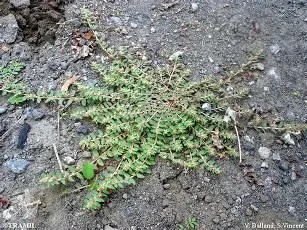
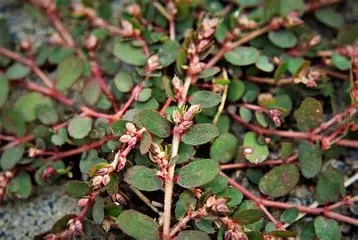
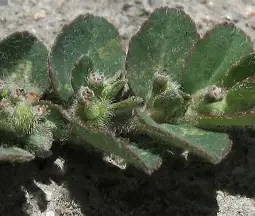
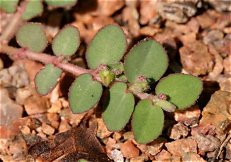
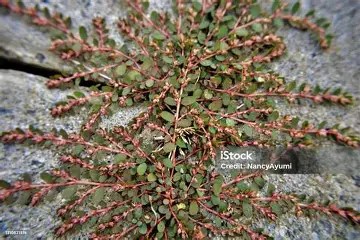
Description: Annual low growing, prostrate plant with opposite stem toothed, pubescent leaves. Leaves oval or oblong,3-8 mm long. The leaves are green to purplish, and simple. Grows up to 20 cm or longer forming circular mats. Glands appendaged. The flowers are white to pinkish, tiny, cup-shaped with white petal-like structures surrounding the actual flowers. The fruit is a greenish to pinkish capsule. Ovary and capsule spreading hairs.
Field Identification: Circle forming plant low to ground with wiry, reddish or pinkish-purple, covered in fine hairs; may be light green, pale red, or nearly white. With opposite pairs of small, oval leaves (3–11 mm long) with a dark purple spot in the center; margins may be red-tinted. Flowers in small clusters (1–4) from leaf axils; each has a cup-like cyathium with 4 staminate flowers and 1 pistillate flower. Blooms from mid-summer into fall for about 2 months. Seeds about 1 mm long, oblongoid-rectangular, transversely ridged; dispersed by mechanical ejection.
Plant Trivia: Milky, latex-like, irritating skin and toxic to pets. Can cause skin irritation or blisters. Its seed pods “pop” when dry, launching seeds several feet away to colonize new patches.
Occurrence: Native to parts of the southwestern U.S. Common on clay and heavier sands or caliche in openings and waste places.
Bloom Period: Mar-Dec
Plant Use: Extended bloom period (April–October) may provide nectar for small native bees and other beneficial insects.
Dichotomous Key to the Genus Chamesyce: May be found in Plants of the Texas Coastal Bend by Roy L. Lehman, Ruth O’Brien & Tamm White under “Euphorbia.”
 stxflora