Lactuca serriola
Family: Asteraceae
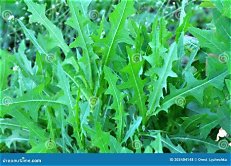
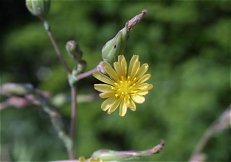
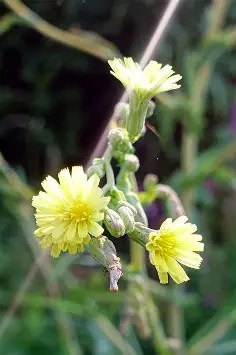
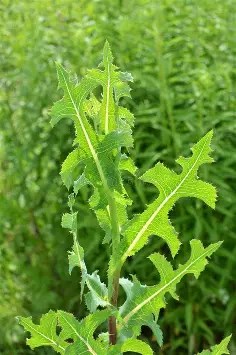
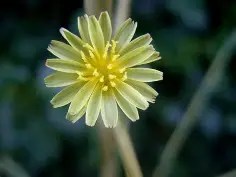
Description: Annual to 120 cm high with pinnately lobed leaves 4-16 cm long, prickly beneath on midvein. Heads in loose panicles, about 1 cm wide, ligulate. Rays yellow to light reddish orange. pale yellow, often tinged purple, with 12–20 ray flowers but no disc flowers. The bracts are also often tinged purpleIthas a spineless reddish stem, containing a milky latex.
Field Identification: The leaves get progressively smaller as they reach their top. They are oblong or lanceolate, often pinnately lobed waxy grey green and (especially for the lower leaves), Fine spines are present along the veins and leaf edges. The undersides have whitish veins.
Plant Trivia: It is known as the compass plant because in the sun the upper leaves twist round to hold their margins upright, pointing roughly south or north from the stem. The Egyptian god Min is associated with this species of lettuce. Also, archaeobotanical evidence in Greek archaeological contexts is scanty, although uncarbonized seeds have been retrieved from a 7th-century BC deposit in a sanctuary of Hera on Samos. It is also described by Theophrastus. In mythology, Aphrodite is said to have laid Adonis in a lettuce bed, leading to the vegetable’s association with food for the dead
Occurrence: Frequent on various soils in waste places, fallow fields, and along roads. Native of Europe and north Africa.
Bloom Period: Apr-July
Plant Use: Young leaves can be eaten raw although slightly bitter, older leaves are steamed for consumption.
Dichotomous Key to the Genus Lactuca:
- Upper leaves near clasping, narrow to base…..L. hirsute
Upper leaves usually clasping………………………..…….………2
2. Achene body 2.5-3 mm long………………………..L. serriola
Achene body 4.5-5 mm long……..……L. ludoviciana

