Polypremum procumbens
Family: Buddlejaceae
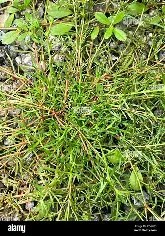
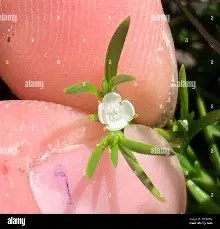
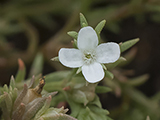


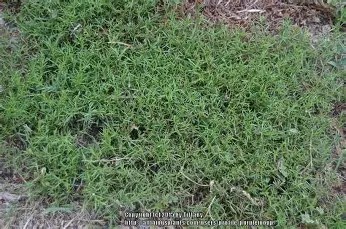
Description: Perennial to 15 cm or higher. Leaves linear; 5-25 mm long. Flowers solitary and axillary, the corolla 2-3 mm long, white, with four rounded petals and a tuft of white hairs in the center. Is a low-growing perennial or annual herb. This plant is a prostrate or ascending herb that typically grows between 5 to 15 cm tall, forming dense mats from a central crown. The leaves are opposite, narrow, and sessile, ranging from 1 to 2.5 cm long, with a smooth surface and pointed tips. The plant produces small flowers, usually white, solitary or in small clusters in leaf axils,
Field Identification: Often forms small mounds. Its stems are much-branched, often orange near the crown, and spread radially. The foliage turns rust-colored in autumn, giving the plant its common name.
Plant Trivia: Rustweed is considered a ruderal species, meaning it colonizes open ground and tolerates drought. Its seeds are tiny, long-lived, and easily dispersed by lawn equipment, making it a persistent weed in landscapes. Seeds can remain viable in soil for over a century, and the plant can reproduce without cross-pollination.
Occurrence: Frequent on sandy open grounds in pastures, woods, and dune areas of the barrier islands. Native to southeastern United States and parts of S. America. Pond margins, sand prairie swales, wheel ruts, crop field margins, open disturbed areas, usually in sandy substrate.
Bloom Period: Apr-Nov
Plant Use: Provides ground cover and habitat for small wildlife.

