Astrolochia gicantica; Giant Pelican Flower; Brazilian Dutchman’s Pipe
Family: Astrolochiaceae
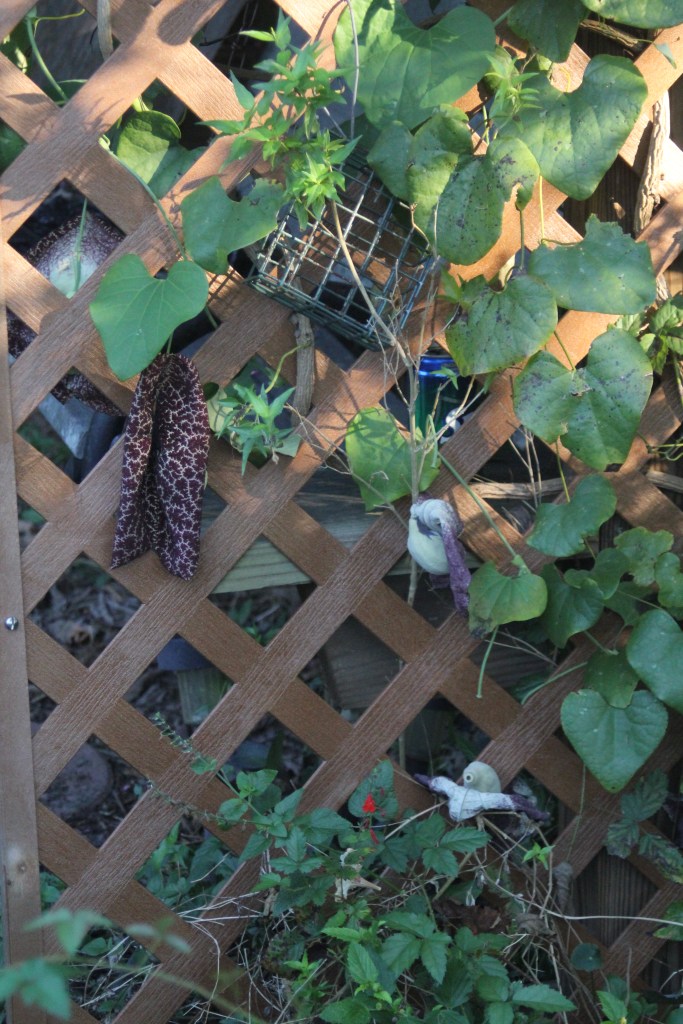
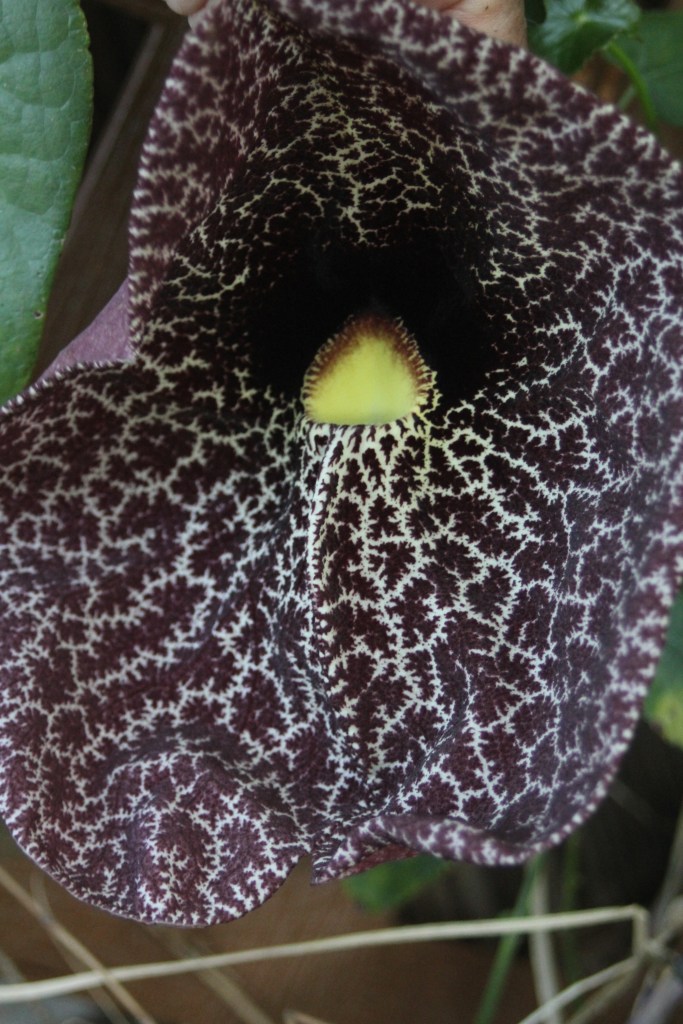
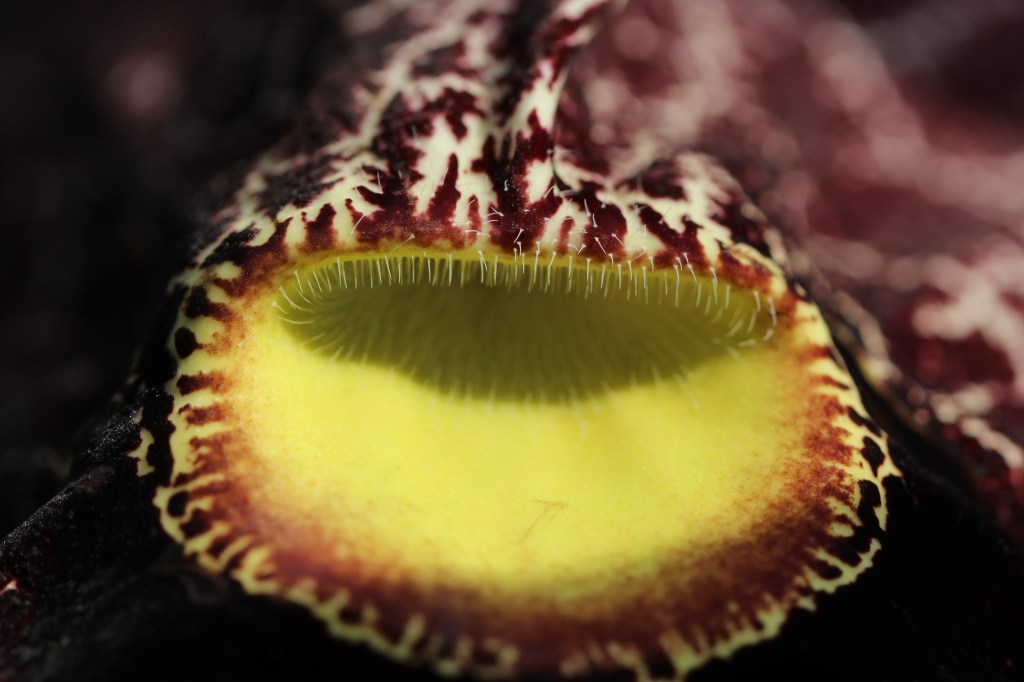
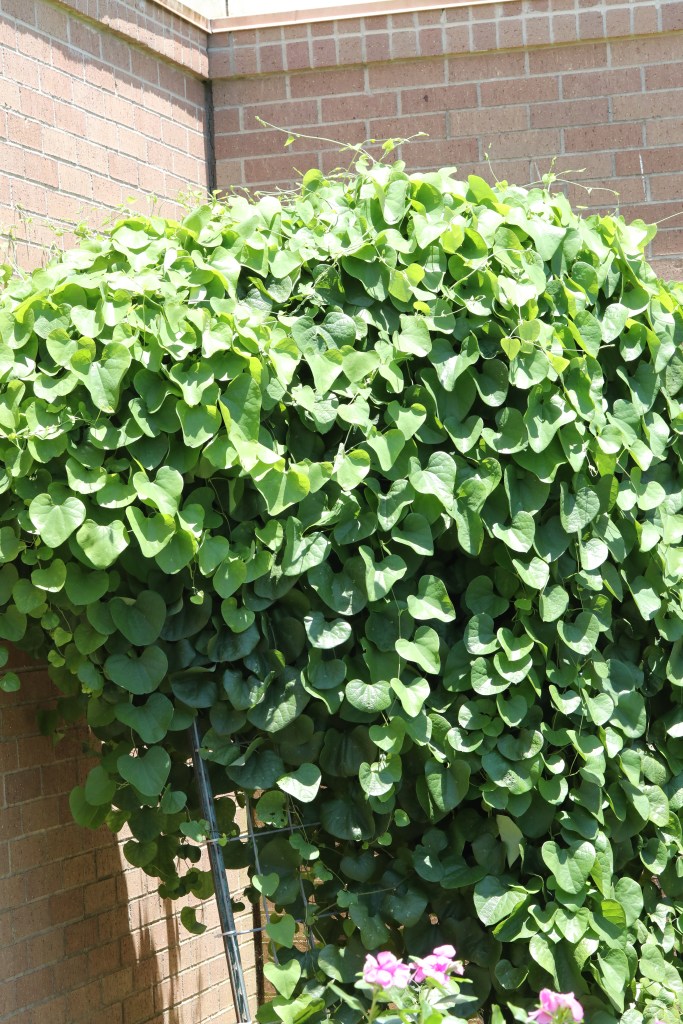
Plant Description: Inflorescence has a single zygomorphic (bilateral) flower that is bisexual. Contains 6 stamens that are fused to form a gynostemium. There is a syncarpous gynoecium present.
Field Identification: Woody vine with cordate leaves reaching 10 cm wide. Large, single flower variegated in colors of white and purple. Flower background is purple with irregular lines traversing the surface of the petals. Petals united making a double curve toward petiole attachment to vine. At the base of the flower a chamber is formed bearing copious hairs. This resembles the corn cob “smoking pipe” of yesteryear. The fruits are papery capsules containing more than 20 seeds that are dispersed by the wind.
Plant Trivia: Non-native. The flower’s pouch resembles a human fetus, leading to its name from Greek aristos (“best”) and locheia (“childbirth”). Pollination primarily by flies, which are lured by a strong scent and temporarily trapped inside the pouch for pollination. The plant’s scent and appearance are so strong that it can be malodorous to some
Occurrence: Foujnd in Nature gardens. Native of entral and South America tropical regions.
Bloom Period: Spring – Fall
Plant Use: Host plant for a number of butterfly larvae. Toxic to pipevine swallowtail butterfly larvae; caterpillars die within 3 days after feeding. The butterfly confuses A. gigantea with its native host plant and will lay eggs on it although pipevine swallowtail caterpillars cannot survive on the foliage because the leaves are toxic to the larvae.
Key to Genera if needed:
 stxflora