Chenopodium album
Family: Amaranthaceae (Chenopodiaceae)
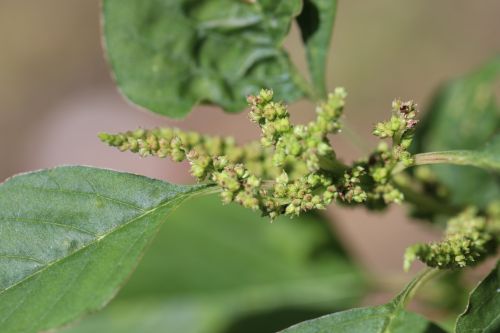
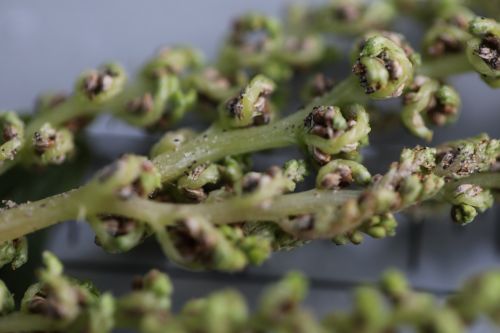
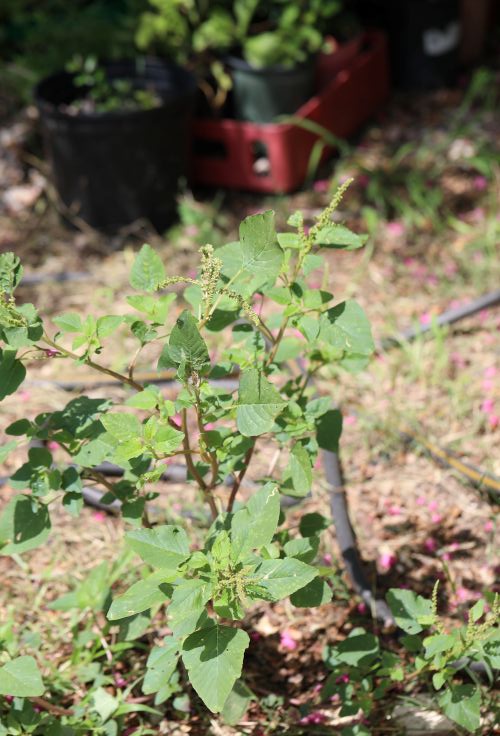
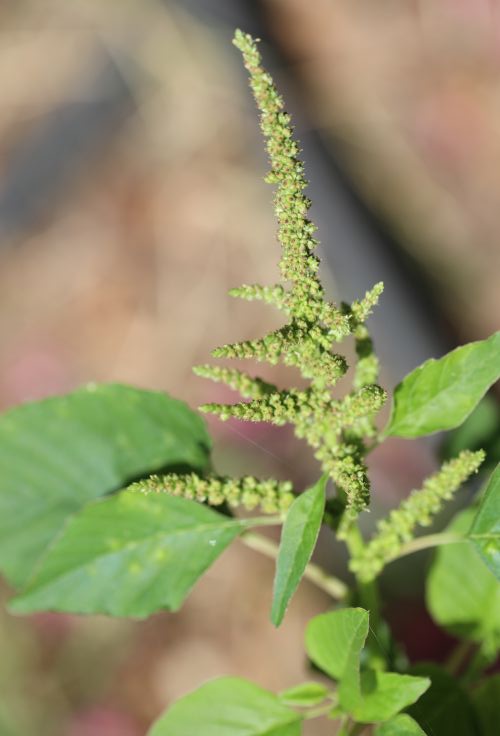
Plant Description: Annual to 1 m or higher with red-striped stems. Leaves broadly rhombic, 6-10 cm long, violet or reddish when young, alternate, simple, and irregularly dentate or toothed. Flowers in spicate panicles. Minute, unstalked flowers, green to brown.
Field Identification: Grayish-green, diamond-shaped leaves with a meal white coating; grows 1-6 ft tall. FACU.
Plant Trivia: Larval host to western pigmy-blue butterfly and common sootywing. Wind-pollenated.
Occurrence: Occasionally found in disturbed areas. Native of Europe.
Bloom period: Summer – Fall
Plant Use: Fast growing edible “weed” related to quinoa and spinach. Often eaten as a cooked green. Has high protein, vitamins A and C and minerals such as potassium, calcium, phosphorus. (CAUTION: consume in moderation due to oxalic acid). Leaves and roots taste like mild spinach; seeds can be ground to flour and used like quinoa.
Historically, the plant has been used as a blood purifier, diuretic, sedative, hepatoprotective, antiscorbutic laxative and as an anthelmintic against round and hookworms. Pharmacological studies have revealed that the plant possesses anthelmintic, sperm immobilizing, and contraceptive properties.
Dichotomous Key (if needed)
 stxflora