Amaranthus palmeri
Family: Amaranthaceae
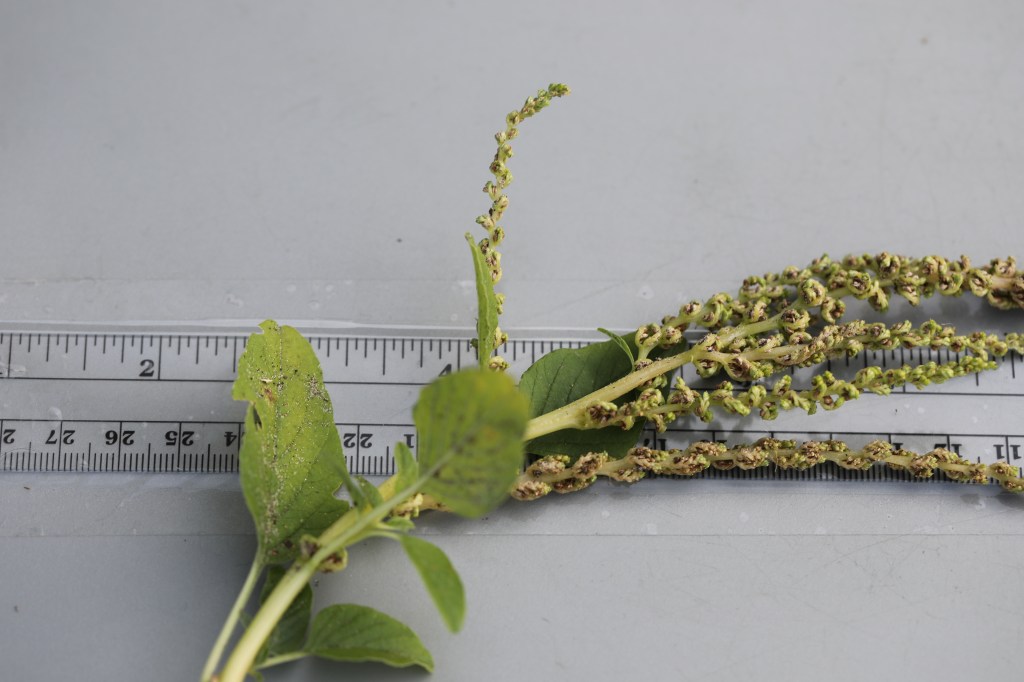
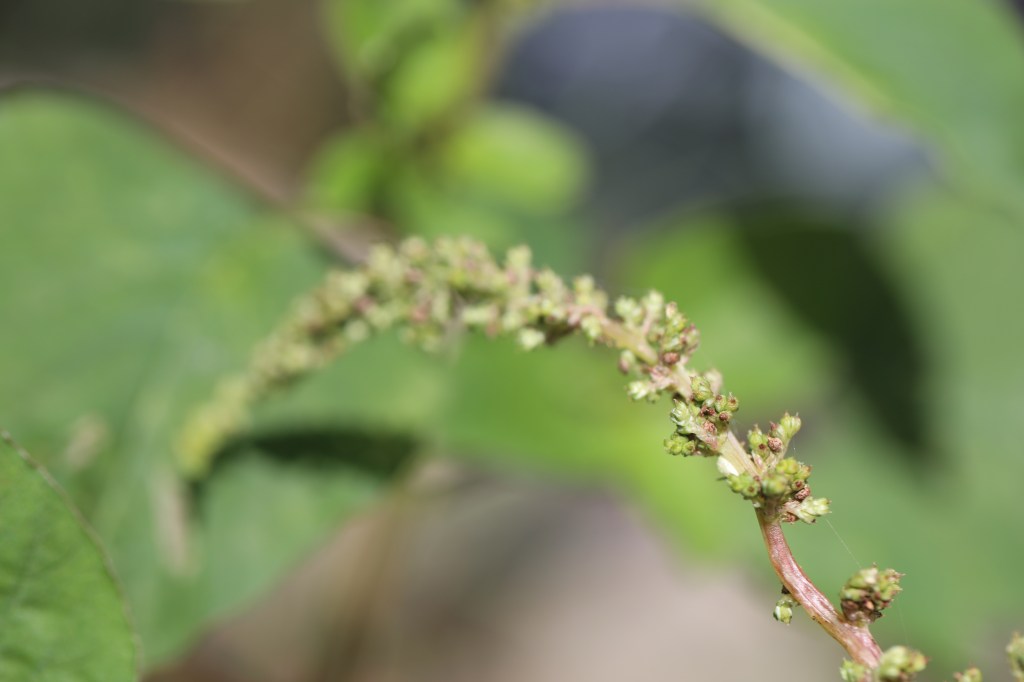
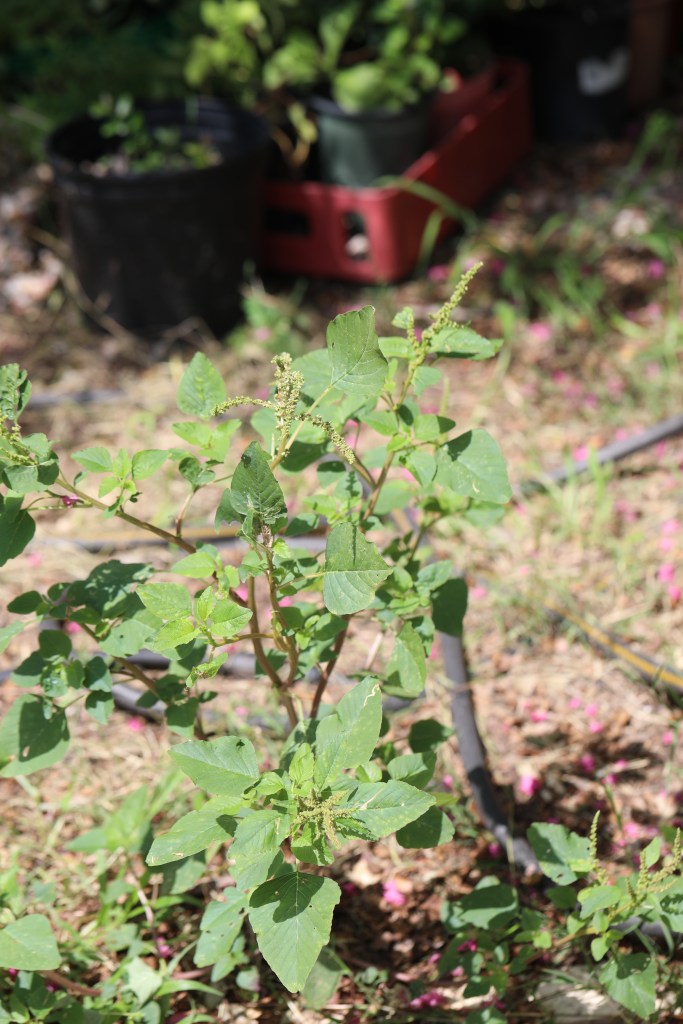
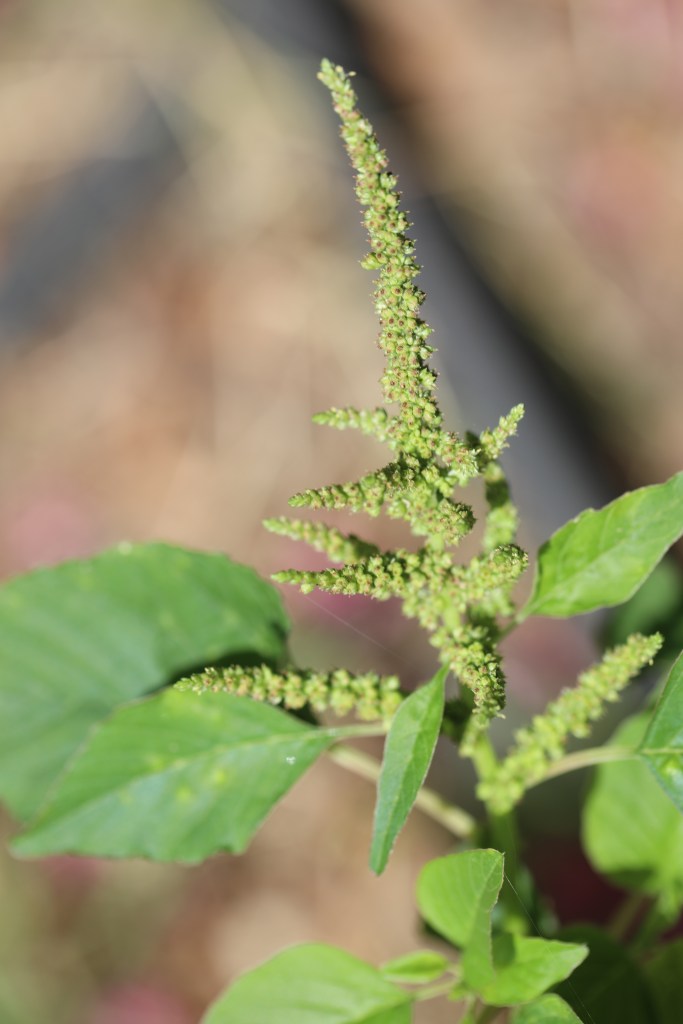
Plant Description: Annual to 1.8 m high with ovate, ovate-rhombic, or lanceolate leaves 3-17 cm long, alternate, usually with gray markings. Male and female flowers on separate plants in slender terminal spikes, or in clusters along the stem; bracts twice as long as the sepals; sepals 5, scalelike; no petals. Male tepals 3.5-4 mm long, pointed.
Plant Trivia: Collectively this genus is called carelessweed or pigweed.
Field Identification: Many species of Amaranths and are difficult to identify without optic aid and using keys. A. palmeri is stout with petioles as long as blades. Flowers tiny, scalelike in slender terminal bloom stalks or in clusters along the stem.
Occurrence: Common weed of cultivated fields, pastures, and waste places.
Bloom Period: Year-round.
Plant Use: Seeds and leaves of Amaranthus species have been important food items for ancient cultures in N. and S. America. Seed heads of A. palmeri are used for cage bird food.
Key to the species of Amaranthus requires detailed analysis: Suggested resources is Plants of the Texas Coastal Bend by Roy L. Lehman, Ruth O’Brien & Tamm White.
 stxflora