Catharathus roseus
Family: Apocynaceae

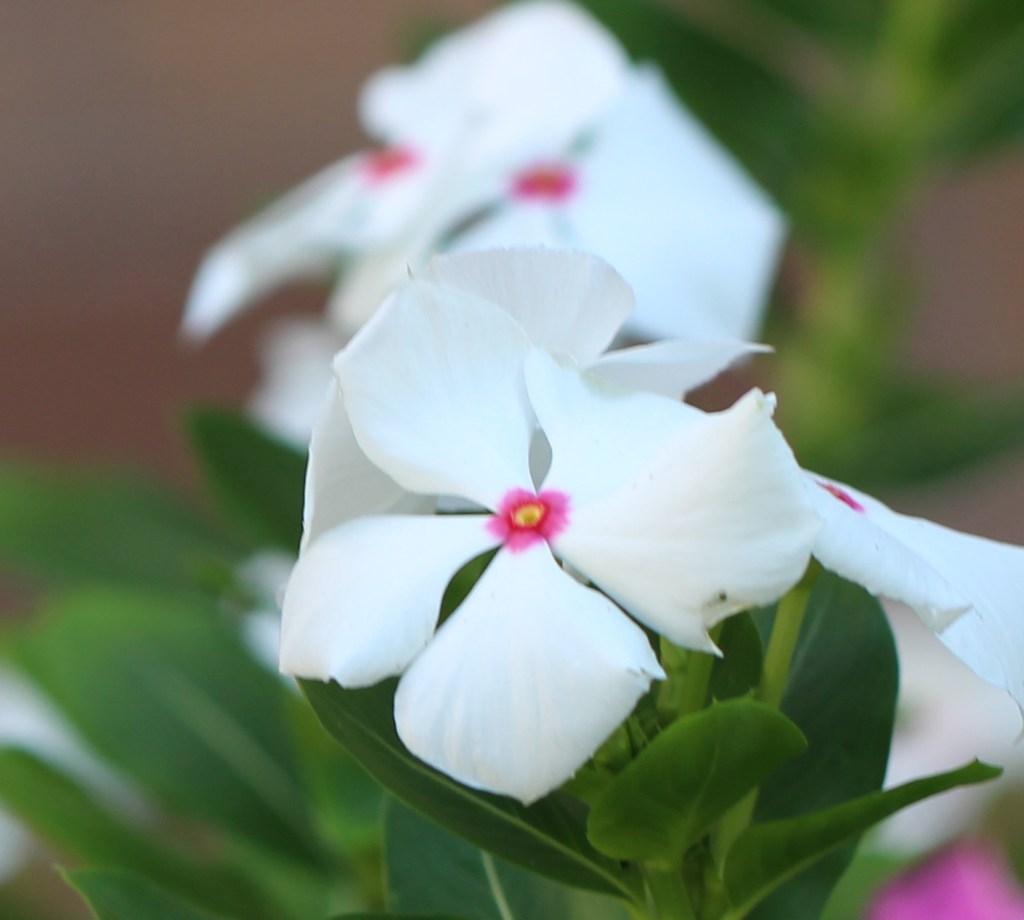
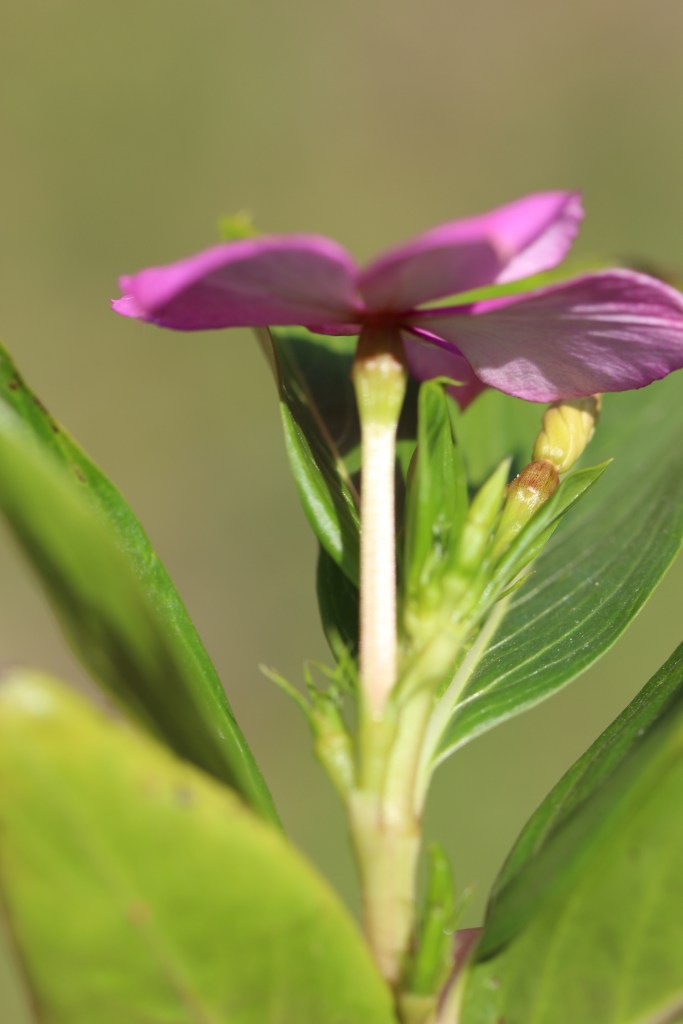
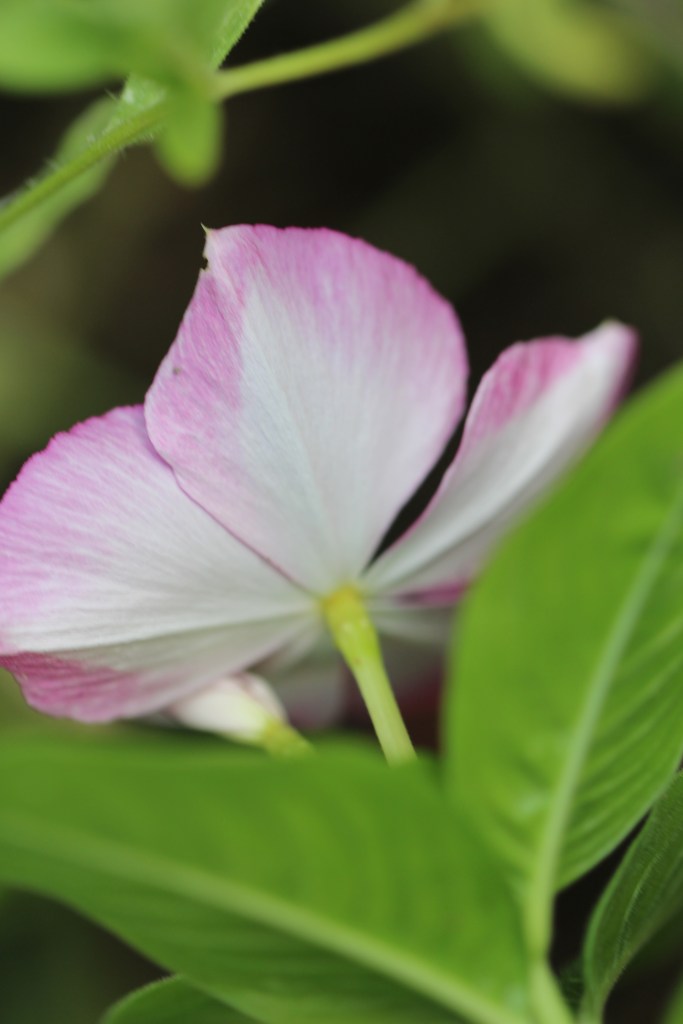

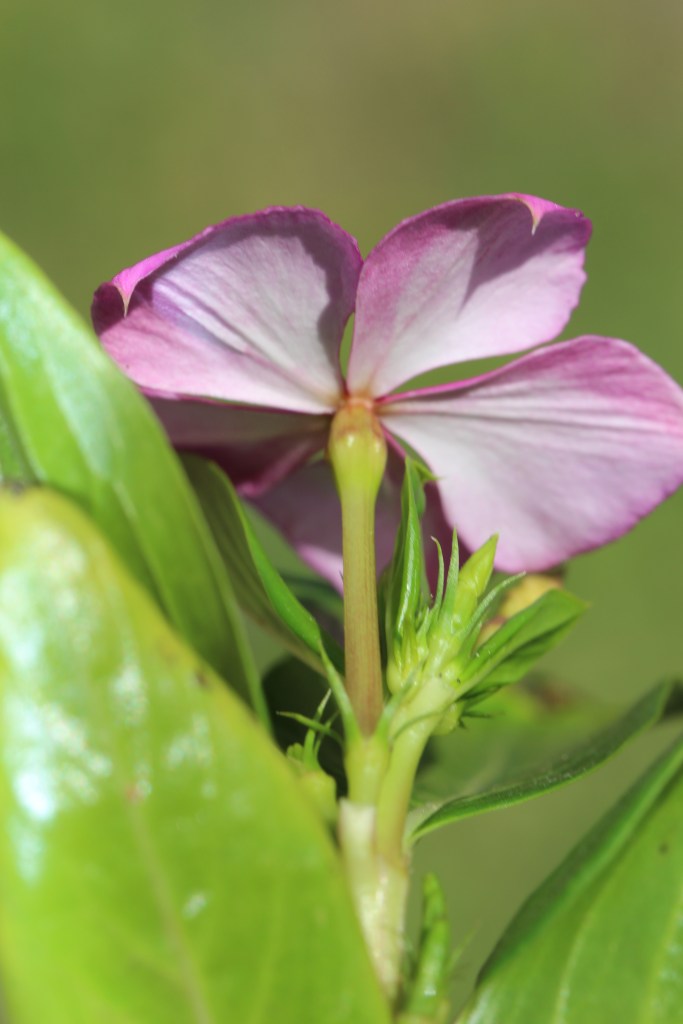
Plant Description: Is a perennial subshrub growing up to 1 meter tall. Its leaves are glossy, oval to oblong, 2.5–9 cm long, arranged in opposite pairs, with a pale midrib and short petiole. The flowers vary from white with yellow or red centers to dark pink with darker red centers, featuring a basal tube 2.5–3 cm long and a corolla 2–5 cm in diameter with five petal-like lobes. The fruit consists of a pair of slender follicles 2–4 cm long and 3 mm wide.
Plant Trivia: The plant contains toxic compounds, so ingestion should be avoided, especially by children and pets. This plant is toxic to humans and pets. It is naturalized through the world.
Field Identification: From a distance the flowers look flat, but upon closer examination they are tubular, flattened at the terminal end. Multicolored. Leaves are oblong, waxy looking.
Occurrence: Perennial flowering plant native to Madagascar. Naturalized to invasive worldwide.
Bloom Period: Year Round
Plant Use: : In Ayurveda (Indian traditional medicine) the extracts of its roots and shoots, although poisonous, are used against several diseases. In traditional Chinese medicine, extracts from it have been used against numerous diseases, including diabetes, malaria, and Hodgkin’s lymphoma. In the 1950s, vinca alkaloids, including vinblastine and vincristine, were isolated from Catharanthus roseus while screening for anti-diabetic drugs. This chance discovery led to increased research into the chemotherapeutic effects of vinblastine and vincristine. Conflict between historical indigenous use, and a patent from 2001 on C. roseus-derived drugs by western pharmaceutical companies, without compensation, has led to accusations of biopiracy. Vinblastine and vincristine, chemotherapy medications used to treat several types of cancers, are found in the plant and are biosynthesized from the coupling of the alkaloids catharanthine and vindoline. The newer semi-synthetic chemotherapeutic agent vinorelbine, used in the treatment of non-small-cell lung cancer, can be prepared either from vindoline and catharanthine or from the vinca alkaloid leurosine, in both cases via anhydrovinblastine. The insulin-stimulating vincoline has been isolated from the plant.
 stxflora