Parkinsonia texana
Family: Fabaceae
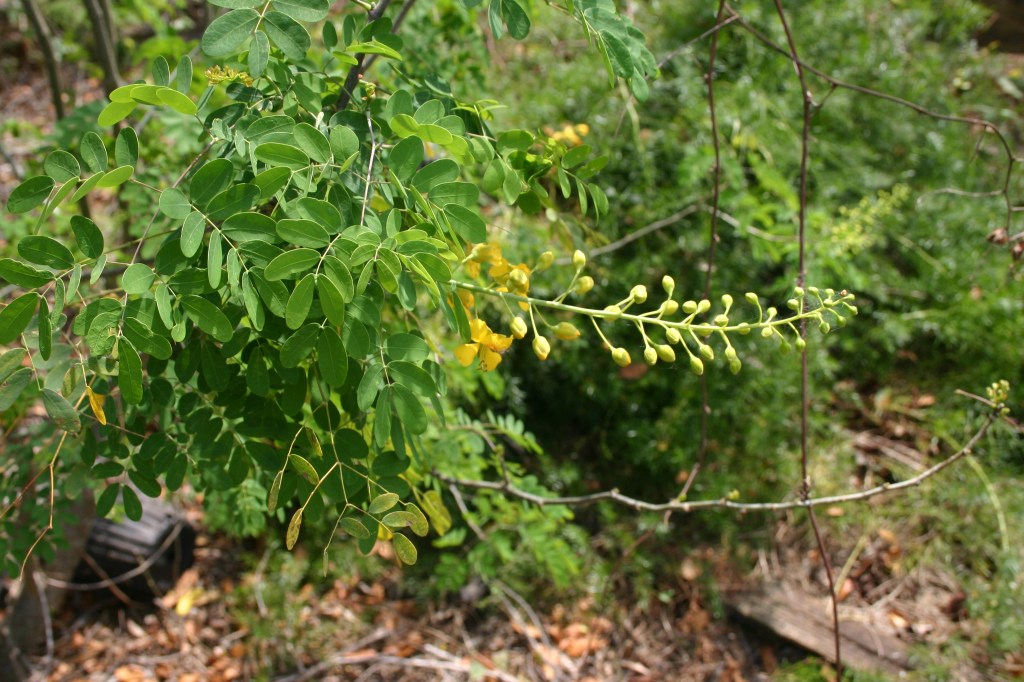
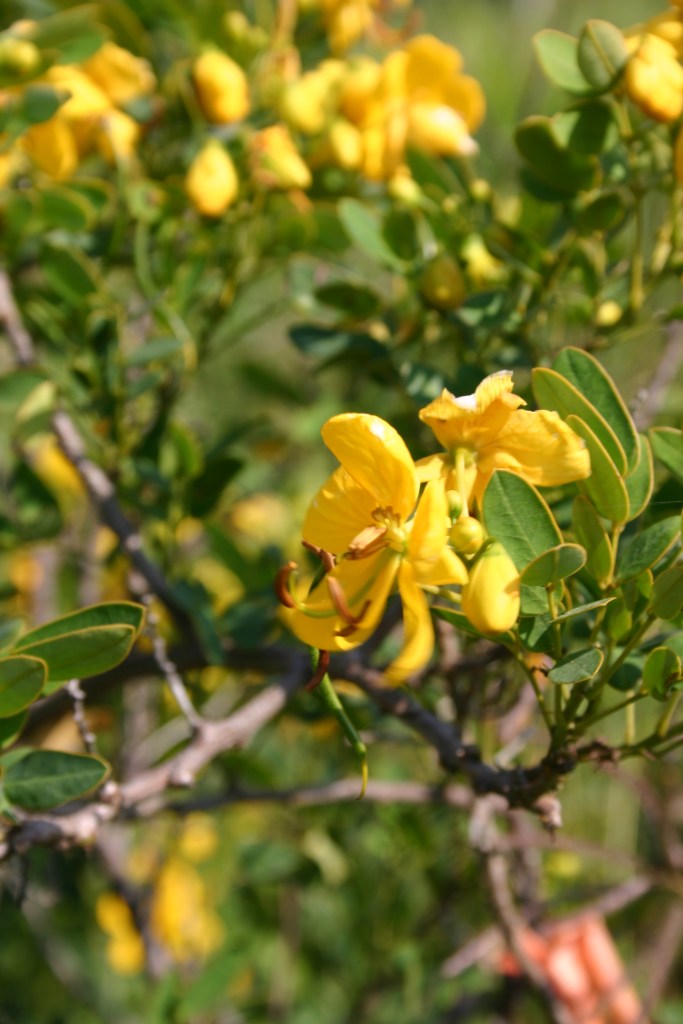
Plant Description: Spiny, deciduous shrub or tree to 5 m high. Leaves bipinnate, alternate, the leaflets 4-10 mm long. Flowers in racemes, slightly bilateral. Petals 8-12 mm long, yellow, one of which with red marks. Small compact tree with short, straight, paired spines at the nodes. Branches can be green.
Field Identification: Often appears semi-leafless.
Plant Trivia: Palo Verde (paloverde) translates to “green stick”. Like Retama, it may shed all or most leaves in a drought and conduct photosynthesis with its green bark.
Occurrence: Occasional in brushy pastures on better-drained soils.
Bloom Period: March – September
Plant Use: White-tailed deer, jackrabbits, and other small mammals browse on it. Seeds are utilized by many mammals including deer, javelina, feral hogs, rodents such as the kangaroo rat and by birds. Hummingbirds, butterflies and bees often seek the flower nectar. Cattle eat the legumes. Used as ornamental in landscaping. The legumes can be made into a palatable flour and bees make honey from the flowers. Wood can be used for fuel.
Key to the Genus Parkinsonia:
- Pinnae 10-30 cm long, leaflets numerous………..P. aculeata
Pinnae 1-3 cm long, leaflets few pairs…….P. texana macra

