Aristida oliganatha
Family:Poaceae
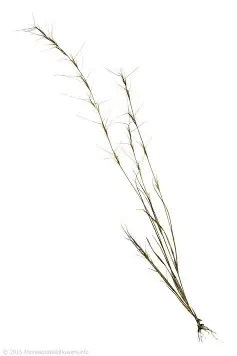
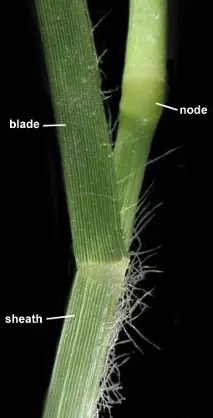
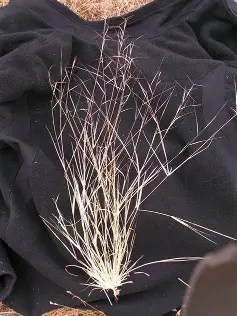
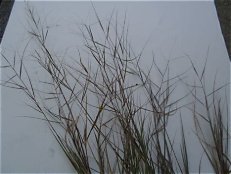
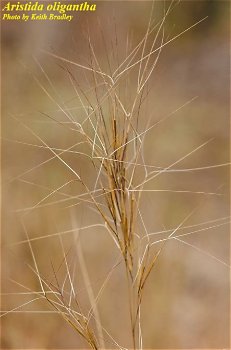
Description: Annual with highly branched culms. It forms clumps of branching gray-green and purple-tinted stems about 30 to 70 centimeters tall. The inflorescence is an open array of spikelets. The grain has three spreading awns, the central one reaching up to 7 centimeters long and the other two slightly shorter. Branching at nodes. Hairs at junction of blade and sheath. Large seed has with 3 long awns per floret. Ligule ciliate, membranous; leaves cauline. Inflorescence is a panicle.
Location: Occurs in fallow or abandoned fields, along roadsides and railroads, and in other waste places. Native of US and Canada and Northern Mexico.
Soil Type: Sand
Trivia: Reportedly has allelopathic effects on other plants; often found on harvester ant mounds.
Bloom: Summer
Importance: Has little wildlife or livestock value. Awans get caught in wool and lower its value. Both wildlife and livestock eyes may be injured by awns.

