Vitis mustangensis
Family: Vitaceae
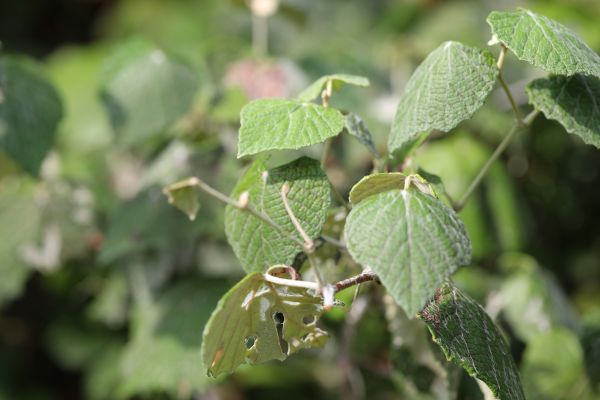
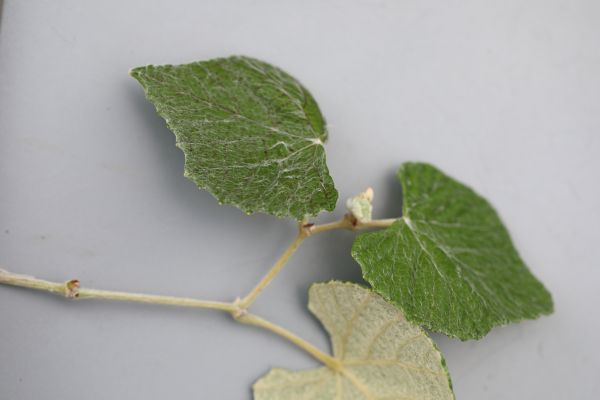
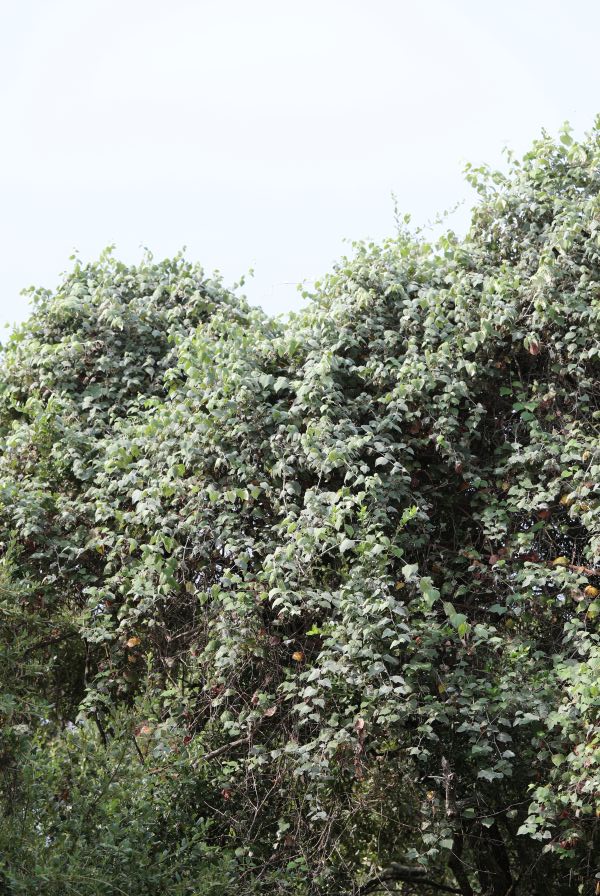
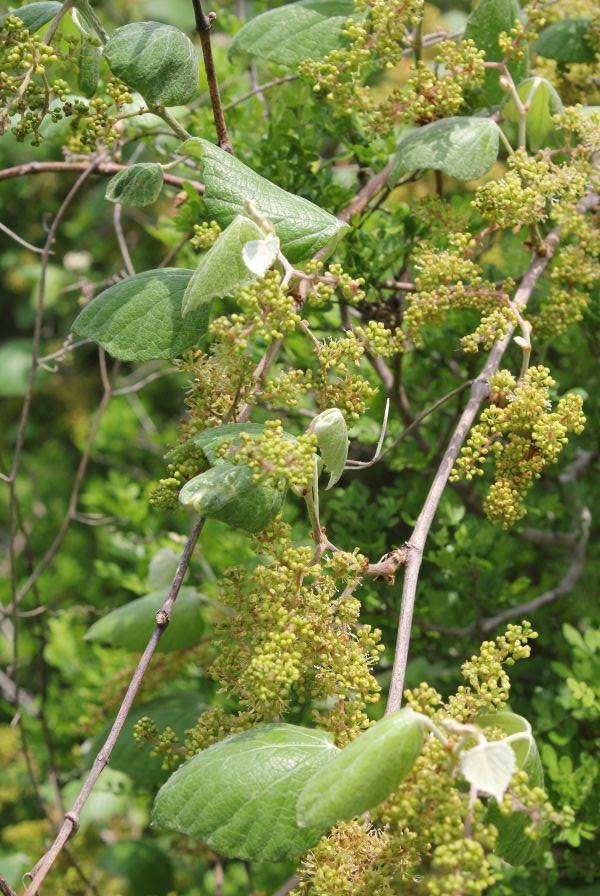
Description: Deciduous woody vine with stems to 13 m or longer. Leaves 5-19 cm wide, subentire or lobed. Flowers in panicles, the greenish petals about 2 mm long. Fruits are about 15 mm wide, purple-black.
Field Identification: Two forms of leaves— shallowly lobed or unlobed, and less commonly deeply lobed on fast-growing shoots. The underside is white and velvety. The round, fleshy, dark purple fruit is produced only on female vines.
Plant Trivia: Susceptible to honey fungus; avoid handling raw fruit to prevent skin irritation.
Occurrence: Frequent along streams, in coastal oak woods, and in inland motts. This is a is a native climbing vine in the grape family (Vitaceae) found in the southern United States, including parts of Texas, Oklahoma, Louisiana, Alabama, Mississippi, and Texas.
Bloom Period: Mar-Apr
Plant Use: The fruit is bitter and can irritate the skin, but the sweet inner flesh is eaten, often cooked or processed into jelly, pie filling, wine, or juice. Mustang wine has been made since before the Civil War.
 stxflora