Pseudogynoxys chenopodioides
Family: Asteraceae
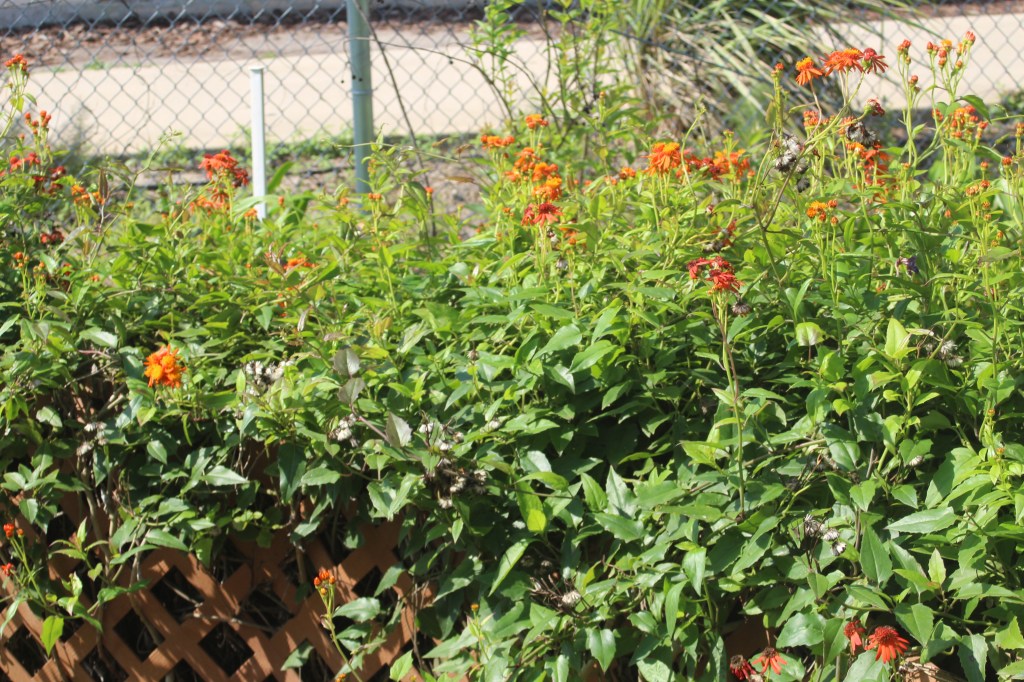
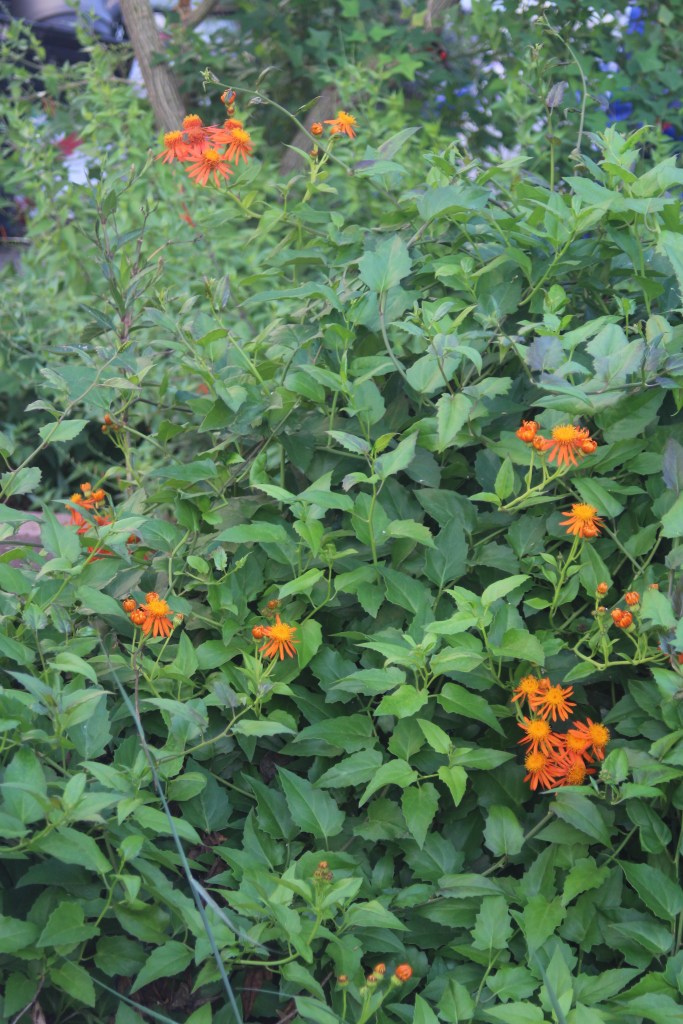
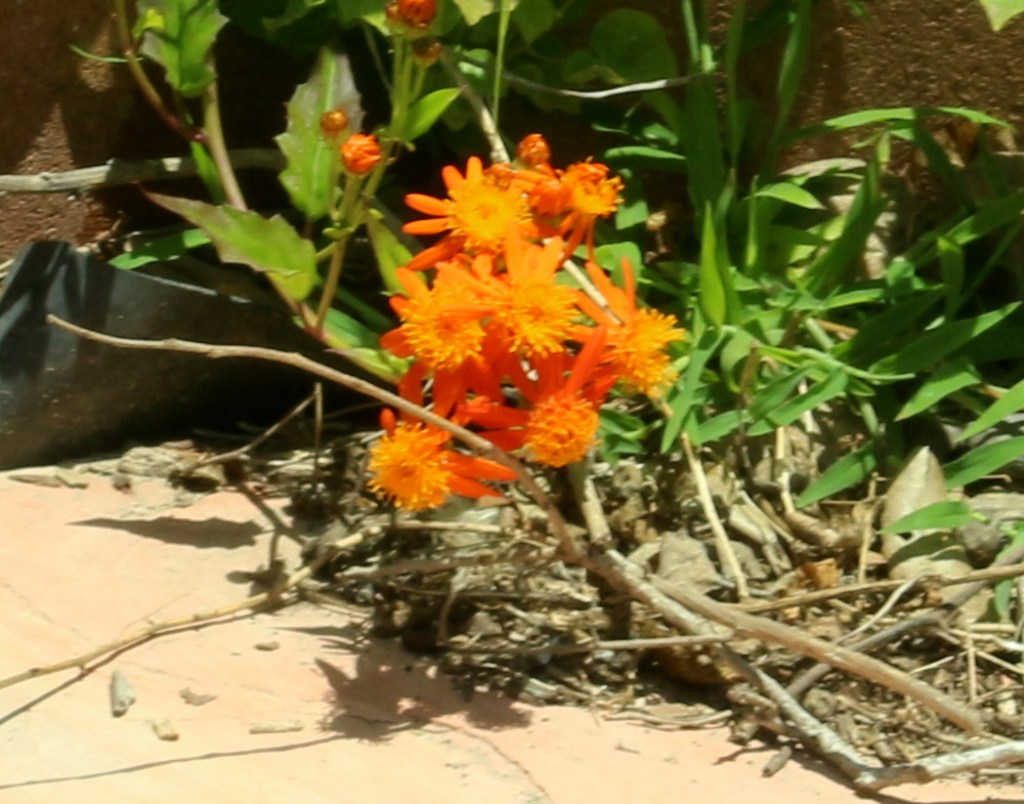
Plant Description: Herbaceous vine, fast-growing, twining vine with bright orange daisy-like flowers and lush evergreen foliage. Reaches height of 5–10 meters (16–33 ft) in height, with smooth, slightly woody stems as it matures. Its evergreen leaves are arrowhead-shaped or lance-like, 2–4 inches long, slightly fleshy, and often display serrated edges.
Field Identification: This is a nursery plant found in formal gardens and yard gardens. This rare aster is a vine with dense foliage and copious blooms.
Plant Trivia: Can cause mild skin irritation. Pseudogynoxys chenopodioides refer to its “pseudo” resemblance to some of the species within the gynoxys and Chenopodiaceae genus. ‘Gynoxys’ is derived from Greek terms of ‘gyne’ (female) and ‘oxys’ (spiny), which refers to the shape of the plant’s female flower parts. ‘Chenopodioides’ means ‘resembling goosefoot’ in Greek (chen: goose, pous: foot), which describes the leaf shape. Due to its distribution ability by wind-dispersed seeds and stem fragments (which can root readily), it has become an escaped plant that is naturalized along roadsides, forest edges, moist Thickets and disturbed sites.
Occurrence: Native to Central America and northern South America, including Mexico, Guatemala, Honduras, Nicaragua, Colombia, and Venezuela, and it has naturalized in parts of Florida and Puerto Rico.
Bloom Period: Summer-Fall
Plant Use: Pollinator, nectar source, landscape plant. Repotting is recommended every 1–2 years or when the plant outgrows its container. The plant also has environmental and medicinal uses in its native range.

