Fraxinus berlandieriana
Family: Oleaceae
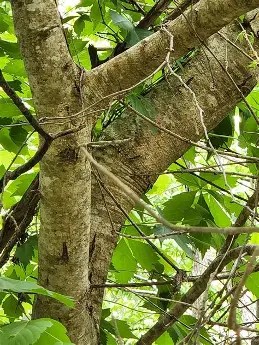
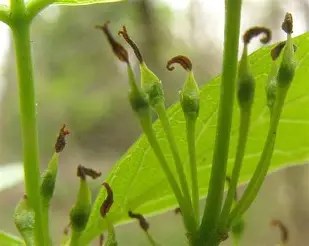
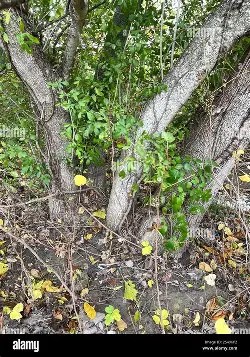
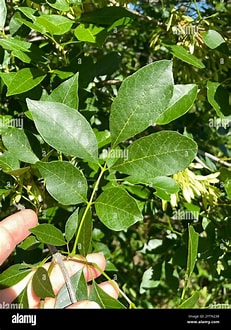
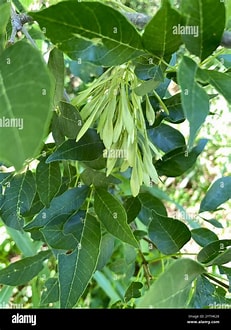
Description: Deciduous, male and female flowers on separate trees; female in loose white clusters, male in tight dark purple clusters or semi-evergreen tree about 13 m tall Leaves pinnate, the 3-5 leaflets mostly lanceolate or elliptic, 3-12 cm long Fowers form clusters appearing before the leaves. Calyx small corolla lacking Fruits are mostly 3-4 cm long, winged.
Field Identification: Short trunk, rounded crown with spreading branches. Light brown when young, becoming darker and more furrowed with age.
Plant Trivia: First described by André Michaux in 1844. Short lifespan, susceptibility to pests/disease; sometimes considered a “weed tree” in Texas.
Occurrence: Native from Louisiana through Texas into New Mexico and adjacent Mexico, also reported from Tamaulipas, Veracruz, Oklahoma, Louisiana, and Mississippi. In Texas, it occurs in multiple ecoregions including the Gulf Coastal Plains, Cross Timbers, and Chihuahuan Desert. Common along streams and extensively planted for shade throughout the area.
Bloom Period: Feb-Mar
Plant Use: Ornamental and landscape tree for shade. Food and habitat for wildlife. Larval host for Two-tailed Tiger Swallowtail, Tiger Swallow-tail, Orange Sulphur, Sleepy Orange, Cloudless Giant Sulphur.
Dichotomous Key to the Genus Fraxinus:
- Leaflets 3-5……………………………………….… F. berlandieriana
Leaflets 7-9………………………………………..…..F. pennsylvanica

