Prosopis glandulosa
Family: Fabaceae
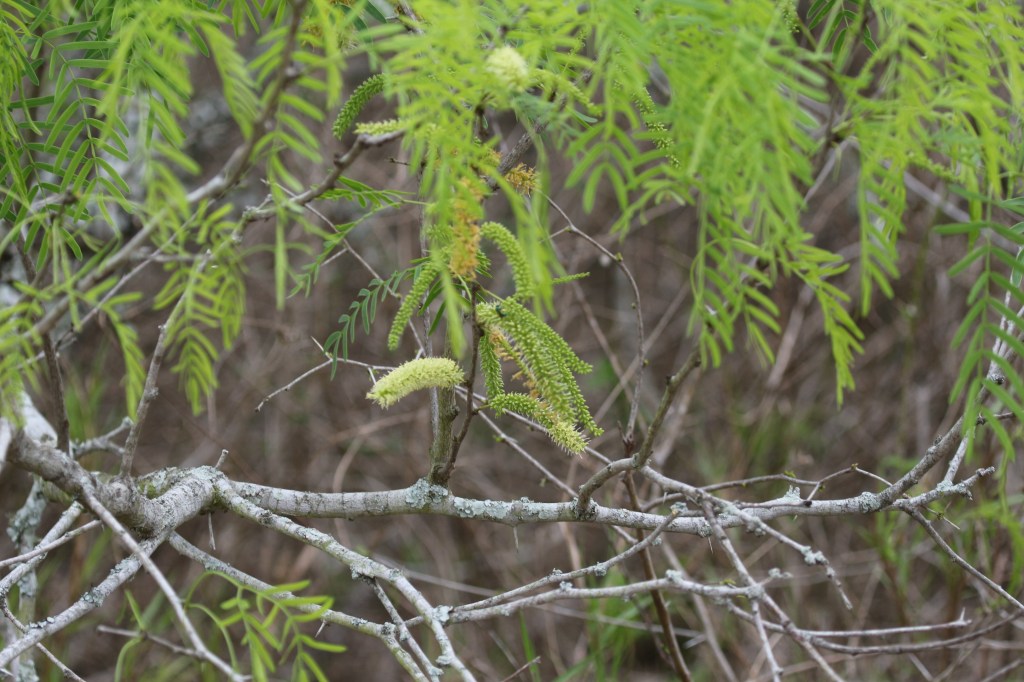
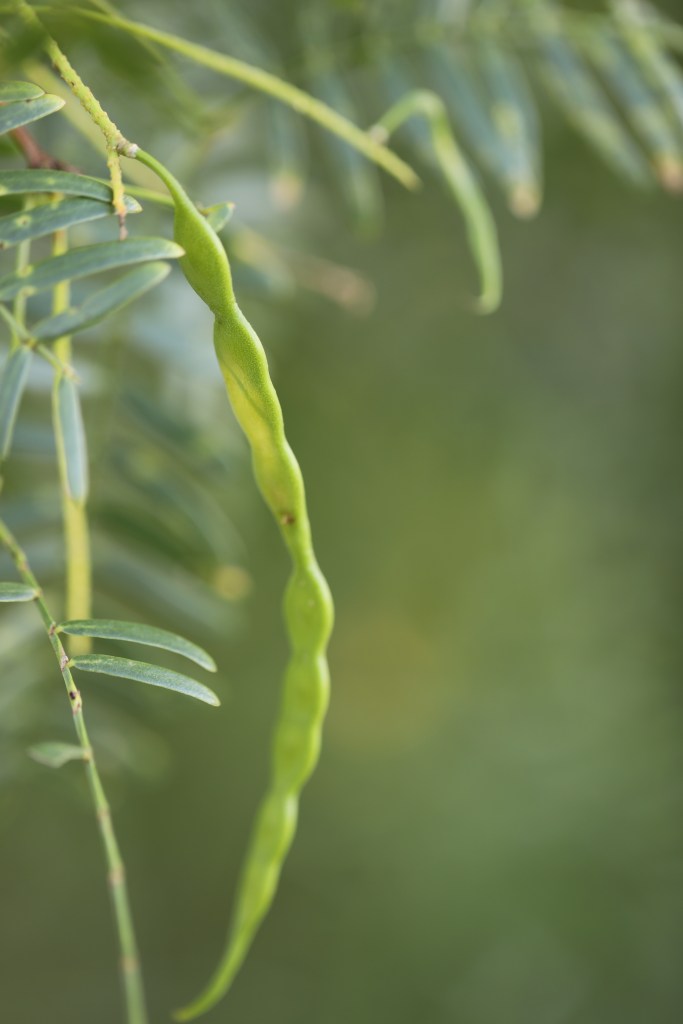
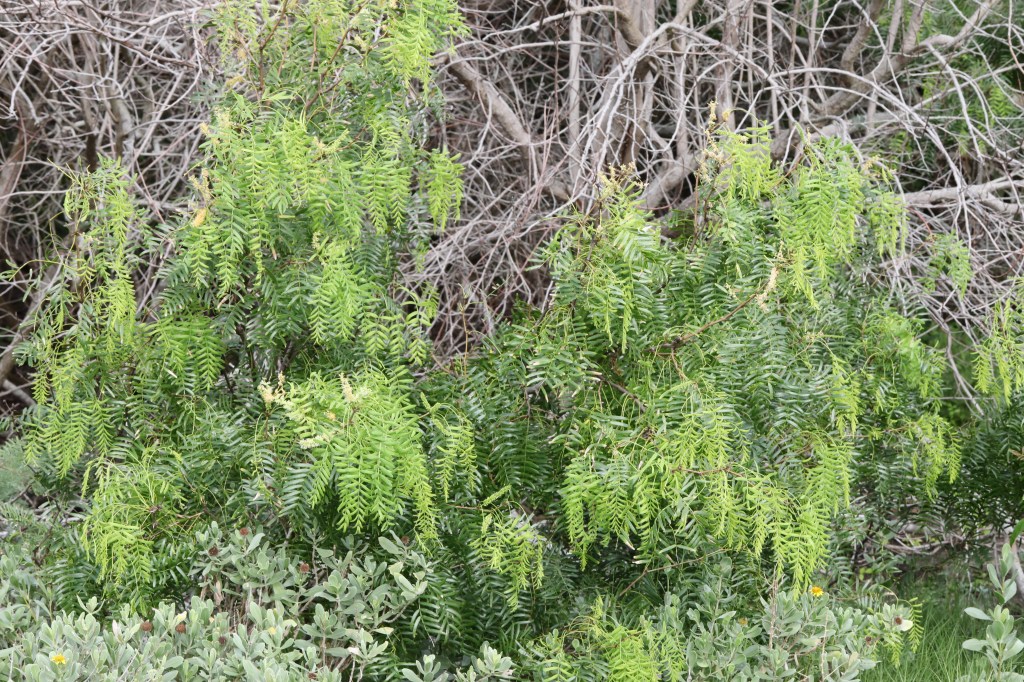
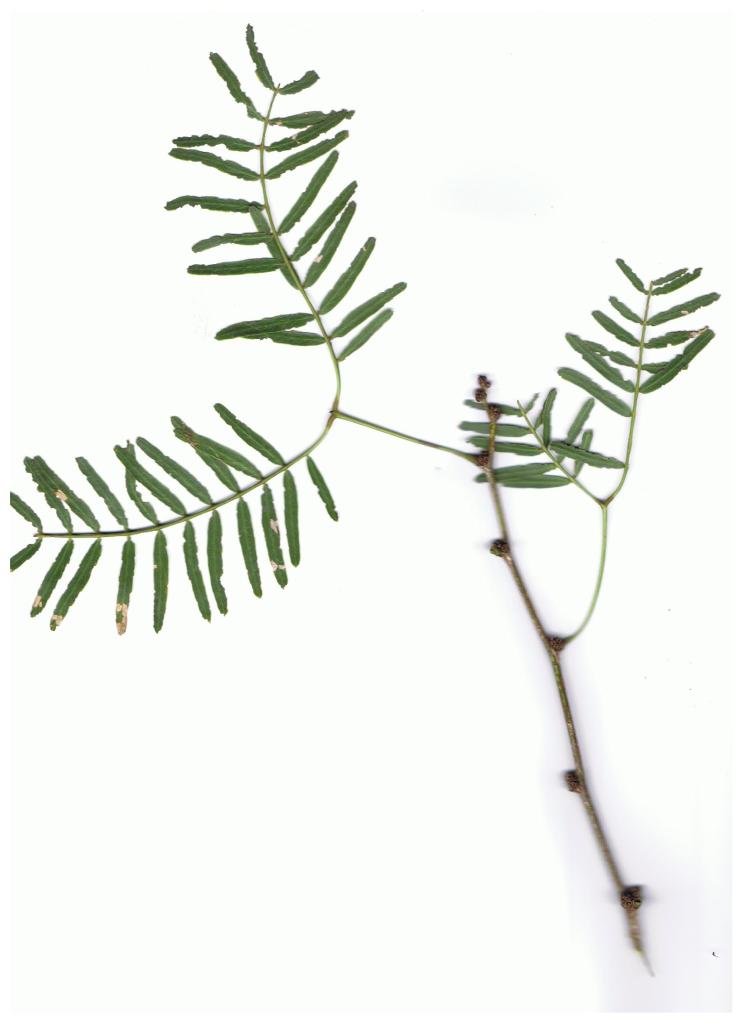

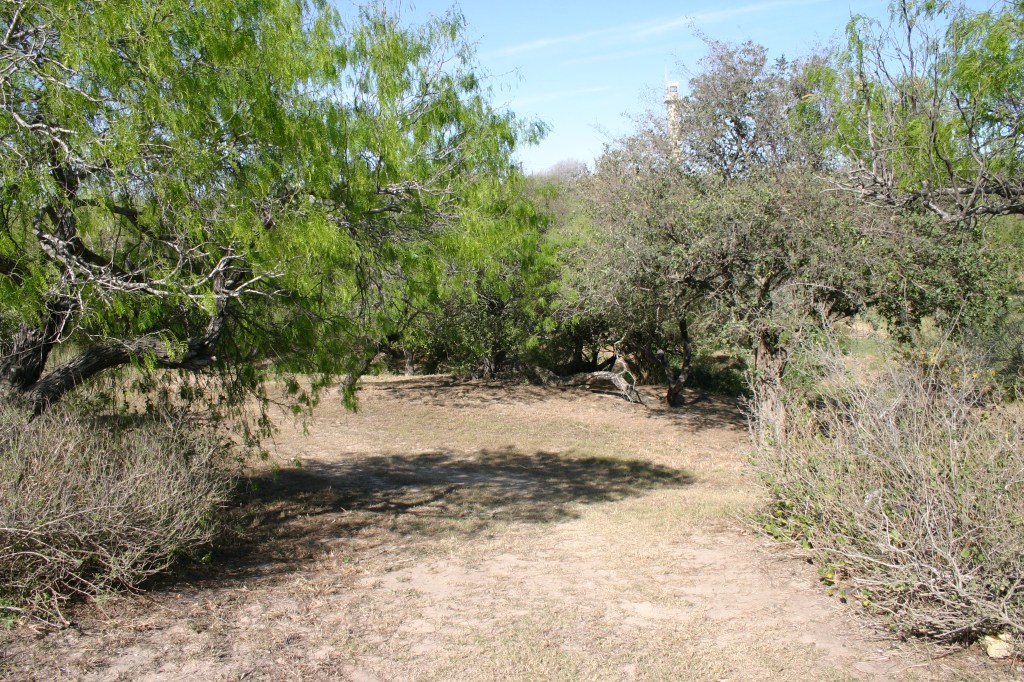
Plant Description: Spiny deciduous shrub or tree to about 11 m high with crooked, grayish branches and drooping foliage that forms a roundish crown. Smooth, green, alternate leaves are bipinnate (twice compound) with long leaflets (usually 2-3 cm long). Flowers in cylindrical spikes about 1.5 cm wide, greenish white aging to yellow or orange. Trunk on older trees have rough, deep-cracked, sap-staining bark, a twisted appearance and reddish-brown heartwood.
Plant Trivia: Most common tree in South Texas. Considered to be a “nursery tree” because it provides shade, fertilizer (root fungi, Rhizosolenia, take inert nitrogen gas and convert it to nitrate, nitrogen fixation-acharacter of most members of the Pea Family, Fabaceae), and bird perching platform for seed dropping from birds and cattle. Historically the legumes were an important source of food for Native Americans, who ground them into a flour to make bread. By fermenting the seeds, they also made an intoxicating beverage. Ground seeds also produces a black dye and a cement for mending pottery. Medicinally, gum from the bark was eaten like candy or dissolved in water to treat dysentery, sore throats, and open wounds.
Field Identification: Tree often with multi trunks, branches often thorned, bipinnate leaves, flowers creamy yellow cylinder. Tree is airy(no dense foliage. Bark of tree often covered in suckers .
Occurrence: Common to most soils, but infrequent on coastal sands (not salt tolerant).
Bloom Period: Spr-Sum
Plant Use: Very important to wildlife. Provides browse for white-tailed deer and the beans are eaten by many mammals. Trees provide nesting, roosting and loafing cover for a variety of birds. Flowers provide good bee food and honey. Is a good food plant for butterfly larvae and nectar source for adult butterflies. Livestock browse on the foliage and legumes. Learn about “cow patty ecology” at Welder Wildlife Intern Training or Plant Classes. Mesquite wood is widely for a variety of purposes, including as firewood, furniture, fenceposts, and flooring.
Key to the species of Prosopis:
- Flowers in globose heads…………………………………………………………….P. reptans
Flowers in spikes (cylinders)………………………………………………………………………2
2. Leaves with 2 pinnae……………………………………………………………..P. glandulosa
Leaves with 4 pinnae……………………………………………………………….P. laevigata
 stxflora