Paspalum denticulatum (Syn: Paspalum lividum)
Family: Poaceae

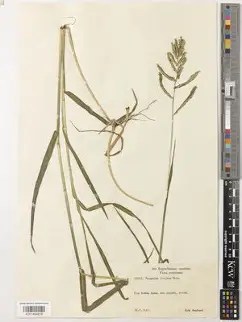
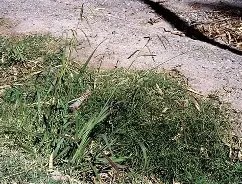

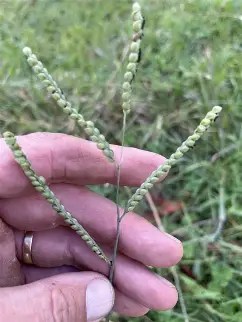
Description: Perennial. Culms to 1 m long, erect. Ligules 2-5 m long, membranous. Leaves 17–26 cm long, 3–4 mm wide, scabrous surface. Racemes terminal10–12 along a central axis, 1–3 cm long; spikelets 1.7–2.1 mm long, elliptic, dorsally compressed, with 1 fertile floret and 1 basal sterile floret. Panicles terminal with 3-11 racemosely arranged branches. Flowers basal sterile florets barren; fertile florets with membranous lemmas.
Location: Found in brackish and freshwater marshes, ditches, and wet disturbed sites. Mainly coastal. Southeastern U.S. (Florida, Alabama, Louisiana, Texas) south through Mexico to Central America, the Caribbean (including Cuba), and into northern Argentina. Southeast region and coastal Rio Grande Plains.
Soil Type: Prefers moist to semi-wet conditions and tight clay loam soils.
Trivia: Stoloniferous perennial; apomictic (produces seed without fertilization).
Bloom: May-Nov
Importance: Valued as a native range plant for grazing animals; one of the top four species in cattle diets on mid-successional rangelands along the central Texas Gulf Coast. Effective as ground cover in wet, disturbed areas. Seeds provide food for birds.

