Clematis pitcheri
Family Ranunculaceae


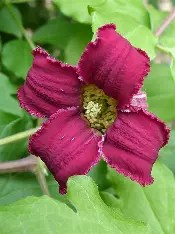
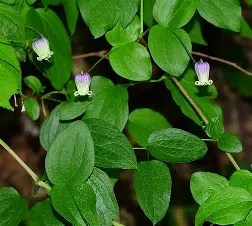
Description: Perennial or subshrubby vine with stems to 3 m or longer. Leaves pinnate with leaflets 1-6 cm long, variously lobed. Leaves are variable, oppositely arranged along the stems, and can be simple or compound Flowers solitary, the sexes on separate plants. Tepals 2-2.5 cm long, leathery, dark purple within.
Field Identification: Lance-shaped leaves are divided into 3-5 pairs of leaflets that are marked on the underside by a prominent, raised network of veins. solitary, nodding, bell-shaped blooms that are deep purple to pale lavender. The tips of the four thick petals (sepals) recurve or “flip” outward, revealing a lighter interior Flowers are nodding, on long, slender stems from the leaf axil. They are dull-purple to brick-red on the outside; dark purple, red, or greenish white on the inside. Lacking petals, the 4 sepals are thick, and united at the base; they are lightly spreading near the tip. Like Old Man’s Beard, C. drummondii, after the flowers fade, the plant produces distinctive, feathery seed clusters. These silky, “old man’s beard” plumes stay on the vine for weeks, adding architectural interest.
Plant Trivia: The “petals” of Clematis pitcheri aren’t actually petals at all! They are technically thickened sepals, which explains why they feel so sturdy and “leathery” to the touch compared to the fragile petals of a rose or lily.
Occurrence: Frequent along creeks and rivers or around lakes. Habitats are woodlands’ edge, thickets, bluff ledges, slopes, dry or moist woods. Occurs in the south-central United States and northern Mexico.
Bloom Period: Mar-Oct
Plant Use: Because of the flower’s unique shape, it is a primary destination for bumblebees and hummingbirds, who are strong enough to push inside the “pitcher” for nectar.
Dichotomous Key to the Genus Clematis:
- Tepals thin, greenish white……………C. drummondii
Tepals leathery, dark purple within…….. C. pitcheri

