Rhynchosia minima texana
Family: Fabaceae
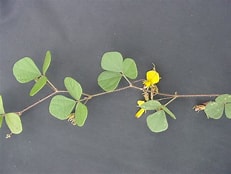
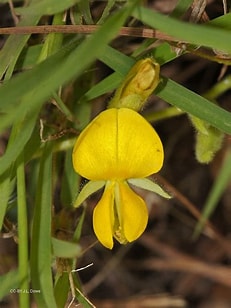
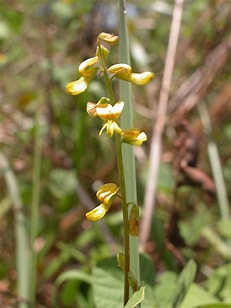
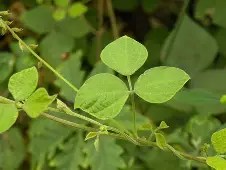
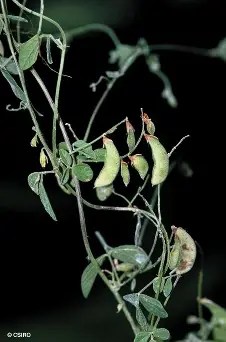
Description: Perennial vine with trailing or twining stems to 2 m or longer. Leaves trifoliate with leaflets 1.5-5 cm long. The leaves are compound, typically with three leaflets arranged pinnately, ovate to rhombic or nearly circular, measuring 0.8–3.5 cm long, and often gland-dotted on the lower surface. Flowers in racemes, the upper petal 5-6 mm long., yellow.
Field Identification:
Plant Trivia: The name Rhynchosia comes from the Greek word rhynchos, which means “beak.” If you look very closely at the flower, the internal petals (the keel) are shaped exactly like a tiny bird’s beak.
Occurrence: Frequent on various soils in pastures and woods, along ravines, and in stream lowlands.
Bloom Period: Spring-Fall
Plant Use: It is commonly used as animal feed due to its palatability and growth habit. Traditional uses include treatment of unspecified disorders, and it has been studied for natural products and flavonoids. It can be used for soil stabilization and other ecological purposes.
Dichotomous Key the Genus Rhynchosia:
- Leaves simple………………………………………………………..…R. americana
Leaves compound………………………………………………….………………..….2
2. Flowers 1-3 per leaf axil…………………………………..………..…..R. senna
Flowers in spikelike racemes…………………………..…….…..R. minima
 stxflora