Sorghum halepense
Family: Poaceae
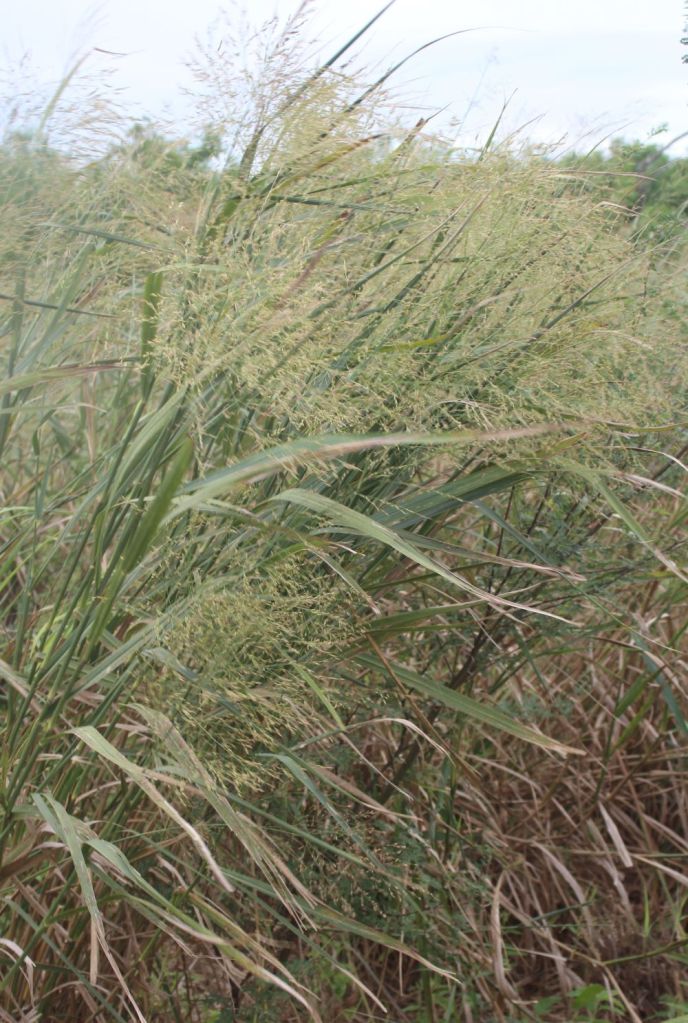
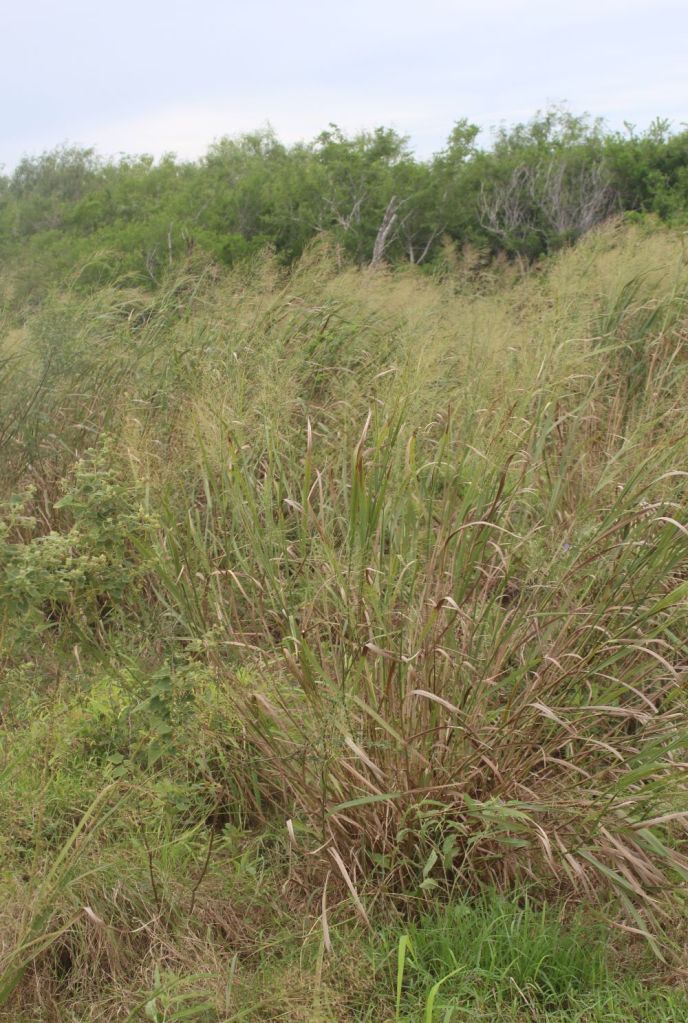
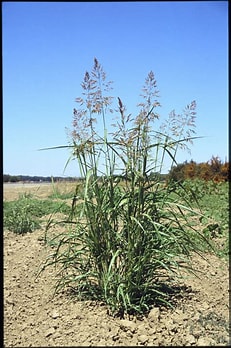
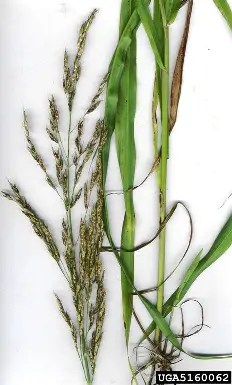
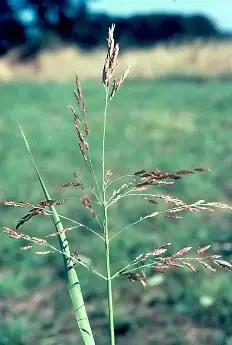
Description: Perennial, rhizomatous, invasive, propagates from seed and scaly roots. Culms 60-200 cm, glabrous, nodes appressed, pubescent. Blades 15-65 cm long, 1.5-2.5 cm wide, glabrous, midvein conspicuous & white with tips often dipping. Ligules 2-3.5 mm, membranous, apices (end of ligule furthest from attachment with a line of hairs. Sheaths 1/2-3/4 length of internodes, loose, glabrous. Panicles 20-40 cm long, 10-20 cm wide, branches racemelike, spikelets sessile and subsessile; sessile spikelets flanked by 2 pedicellate spikelets; pedicels pubescent; pyramidal shape. Slender plant with numerous erect stems up to 2 m high and 3-9 mm thick. The leaf sheaths are essentially glabrous (hairless) and ribbed. The leaves are narrow, alternate, simple, smooth and are 30-60 cm long and 2 cm wide, with a prominent white midvein and hairs at the base of the upper surface, otherwise the leaves remain smooth and hairless. At the base of the leaf blade is also a prominent membranous ligule that is 1-3mm long with hairs to 2mm long.
Location: Found statewide.
Soil Type: Most soils.
Trivia: This plant can accumulate cyanide and be toxic to livestock; can cause “sorghum cystitis” and nitrate intoxication (from prussic acid). Seeds are a reliable seed source for game and songbirds. This is an invasive grass from the Mediterranean region. Considered one of the world’s most invasive weeds.
Economic, Environmental Importance: Invasive from Mediterranean region. Fair for wildlife and good for livestock.

