Nama jamaicnese
Family: Hydrophyllaceae
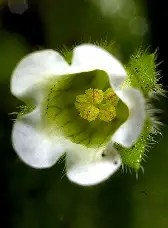
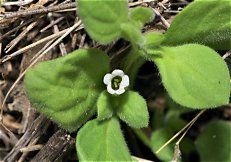
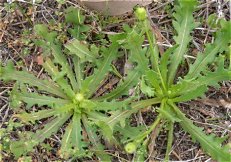
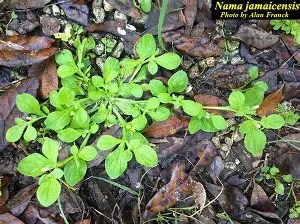
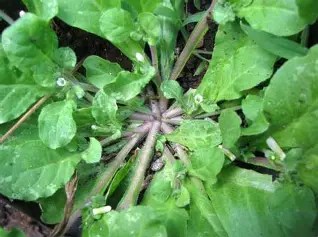
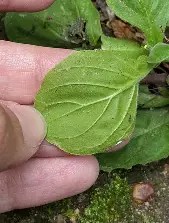
Description: Annual with usually prostrate stems s10-50 cm long. Leaves obovate-spatulate, 1-7 cm long, alternate, petiolate, dull, with entire or wavy margins that may turn purple-red; margins conspicuously decurrent; petioles 2–4 mm wide. Flowers axillary, with one flower per node, the corolla 6-7 mm long, white. Small (2.5–3 mm across), bisexual, radial, with 5–lobed corolla in a bell or funnel shape; colors range from white to pale pink or lavender; stamens fused to the corolla tube. Stems winged, short–hairy, ascending to reclining; wings up to 1.5 mm wide.
Field Identification: Pioneer species, often the first to colonize dry, rocky, or sandy patches, forming dense mats. Can be distinguished from other species of Nama in this area by its white flowers
Plant Trivia: Tiny leaf hairs may irritate sensitive skin if handled frequently.
Occurrence: Common on various soils in prairies, openings, fields, and waste places. Native to tropical America. Habit is a taprooted, rosetted, several-stemmed at base, prostrate with basal branches appressed to the ground. Found in southern Florida and parts of Texas
Bloom Period: Feb- June sometimes Oct.
Plant Use: Wild groundcover in xeriscapes, rock gardens, or naturalized areas; not typically cultivated for ornamental value.
Dichotomous Key of the Genus Nama:
- Calyx tube 2-4 mm long……………………N stenocarpum
Calyx not tubular…………………………….……………………2
2. Corolla white………………………………..……N. jamaiense
Corolla purple……………………………..………………………3
3. Leaves roughish…………………………….……N. hispidium
Leaves smooth……………………….………..N. Parvifolium
 stxflora