Vachellia farnesiana (formerly Acacia farnesiana , Mimosa farnesiana, Acacia minuata)
Family: Fabaceae
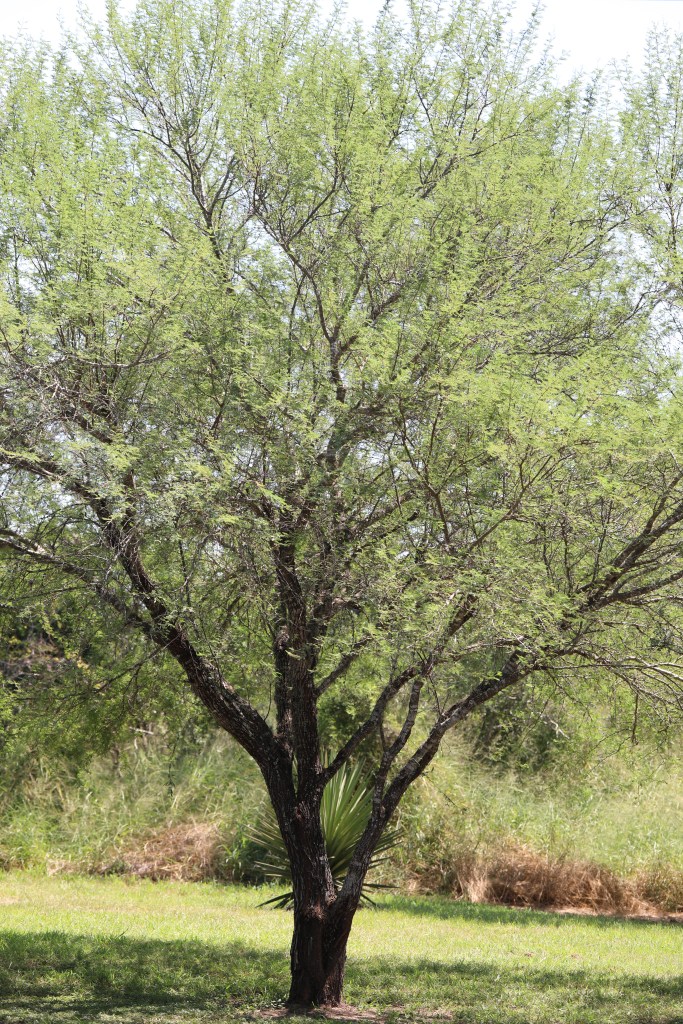
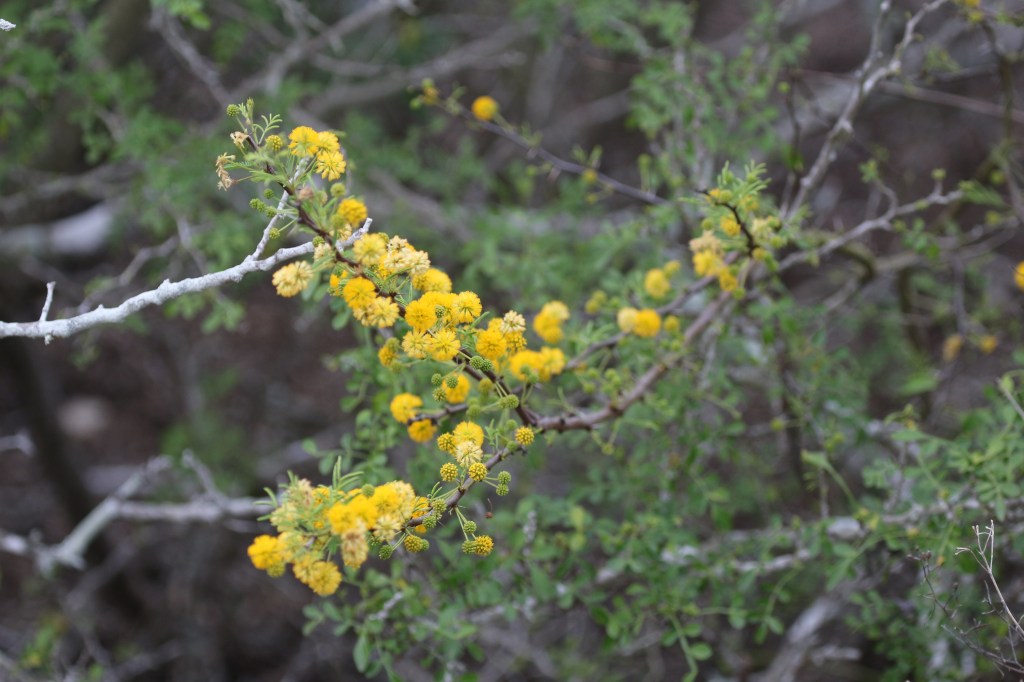

Plant Description: Fast growing deciduous spiny evergreen shrub or tree to 6 meter or higher. Leaves bipinnate, the leaflets 2-4 mm long. Heads about 1 cm wide, orange-yellow to orange.
Plant Trivia: One of the earliest nectar sources in late winter. Tobias Aldini in 1625 from seed collected in Santo Domingo.
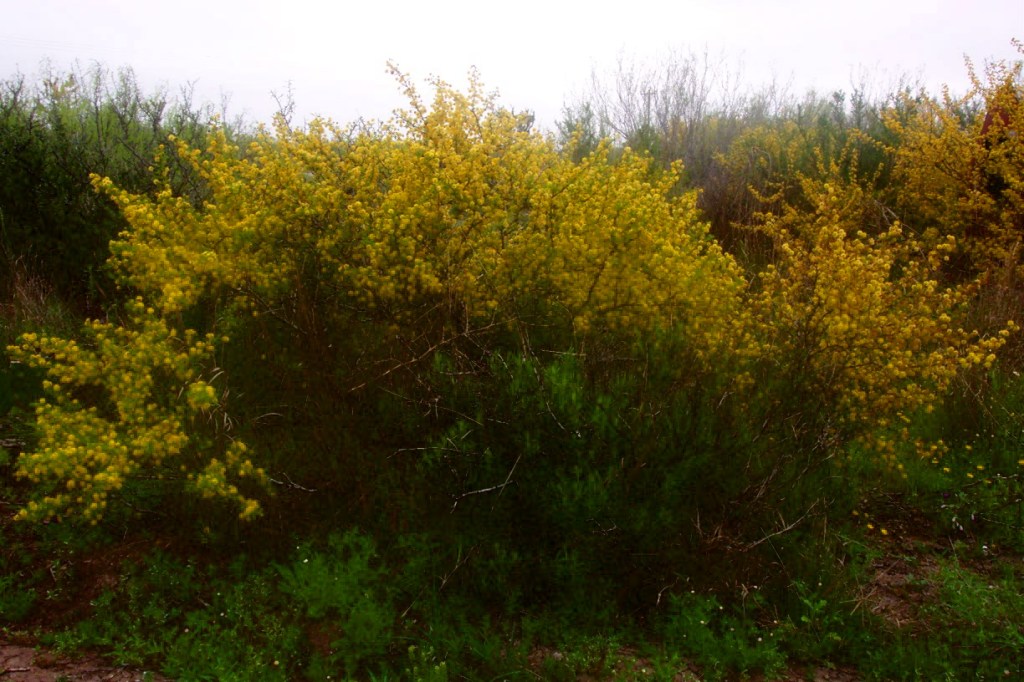
Field Identification: Often found in large groups in pastures. During latte winter plants are covered with yellow puff ball flowers prior to the budding of leaves. Flattened crown. Usually with multiple basal stems. Branches have straight, paired spines at the node or leaf base.
Occurrence: : Common on poorly drained or low grounds, mostly in pastures and woods, and along streams. Southern Mexico, Central America, Baja California, northern Australia, and southern Asia
Bloom Period: Jan-April
Plant Use: Browsed by White-tailed deer and small rodents. The mast is eaten by white-tailed deer, javelina, feral hogs, racoons, skunks and rodents. Bobwhite quail, scaled quail, and many other birds feed on the seeds. Many birds, including mourning dove, use huisache for nesting, loafing and cover. Produces excellent honey. Medicinally, the leaves and bark have been used in various concoctions to dress wounds and to treat rashes and skin abrasions, skin disease, influenza, and dysentery. Hard wood is used as firewood, posts, hand tools. Pods have been used in various processes for tanning and dying leather, and for making ink and glue. In France it was cultivated to make a highly valuable perfume. Also used for landscaping and xeriscaping.
Key to Genera if needed: Plants of the Texas Coastal Bend by Roy L Lehman, Ruth O’Brien & Tammy White
 stxflora