Xanthoxylum clava-herculis
Family: Rutaeae
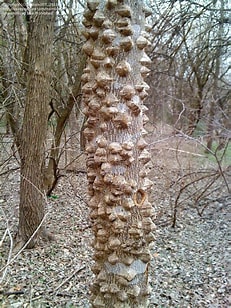
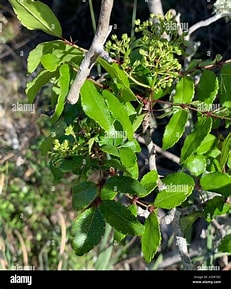
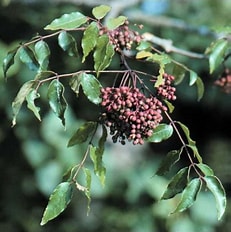

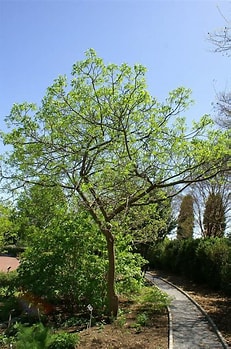
Description: Prickly deciduous shrub or small tree to 5 m or higher with a rounded crown; often grows as a thicket-forming shrub. Crushed leaves are aromatic. Leaves pinnate with hairless leaflets 3.5- 8 cm long. Flowers in terminal panicles, unisexual with male and female on separate plants. Petals about 2 mm long, yellow-green.
Field Identification: Bark is gray-brown, smooth, with large, spine-tipped corky projections. Crushed leaves are aromatic. Chewing the leaf will cause a temporary numbing sensation in the mouth.
Plant Trivia: The common and Latin species names both refer to the spiny branches. As the alternate names indicate, the bitter aromatic bark is a home remedy for toothache; chewing bark or foliage numbs the pain. Aromatic, spiny, round-crowned tree with spreading branches and tiny gland-dots on foliage, flowers, and fruit.
Occurrence: Occurring mostly along ravines and streams in eastern half of this area. Native to the coastal plains from southern Virginia to mid-Florida, west to Texas. Found in sandy soils of maritime forests, dunes, riverbanks, and island bluffs
Bloom Period: April
Plant Use: Birds at the fruit; disperse seeds. Larval host for the giant swallowtail (Papilio cresphontes). Leaves browsed by deer. Native Americans and early settlers chewed bark, leaves, or twigs for toothache relief due to a tingling/numbing effect in the mouth. Contains chelerythrine, a benzophenanthridine alkaloid with antibacterial activity against Staphylococcus aureus. Used in native gardens for its aromatic foliage, showy flowers, and wildlife value.
Dichotomous Key to the Genus Zanthoxylum:
- Leaf rachis winged…………………………….…Z. fagara
Leaf rachis not winged…………………………….……….2
2. Leaflets tapered to end or at least pointed ………………………………………………………..….Z. clava-herculis
Leaflets mostly blunt or rounded.…….Z. hirsutum
 stxflora