Guajacum augustifolium
Family: Zygophyllaceae
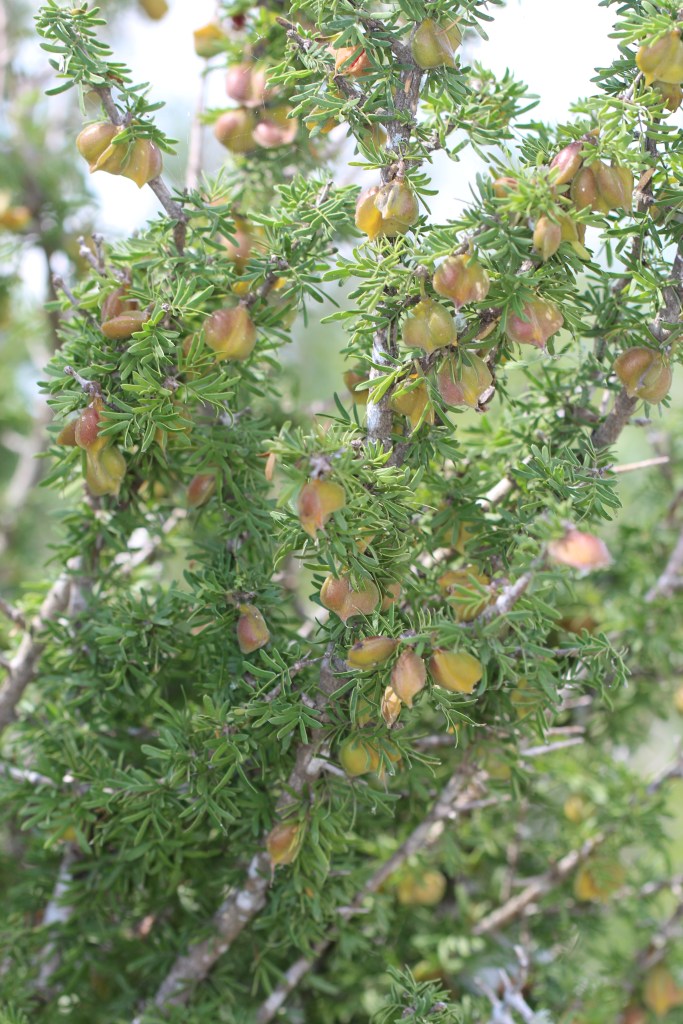
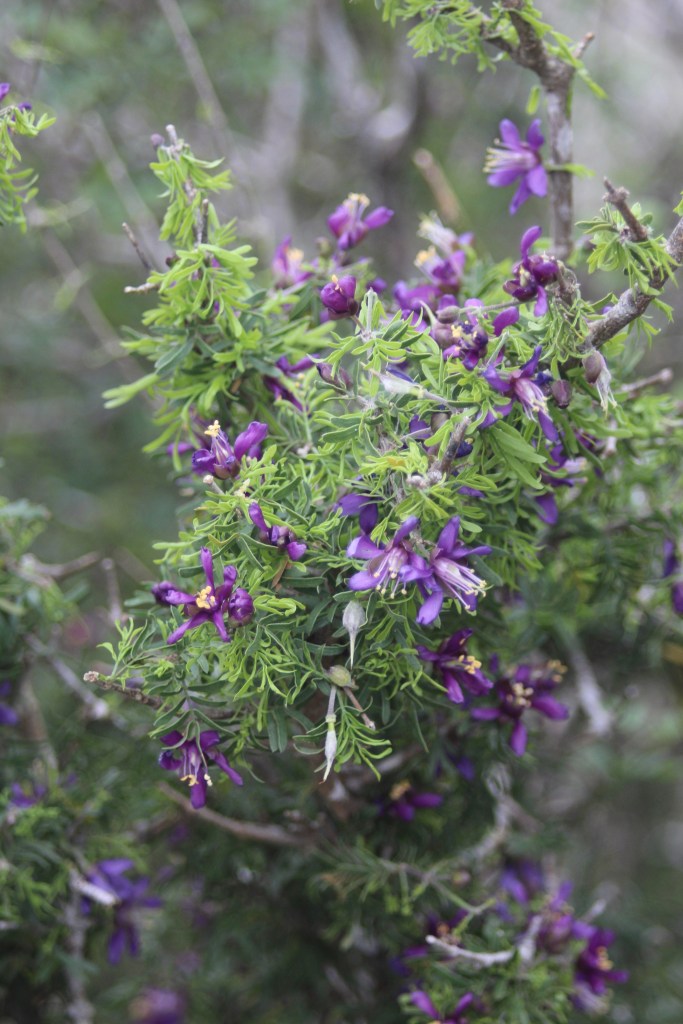
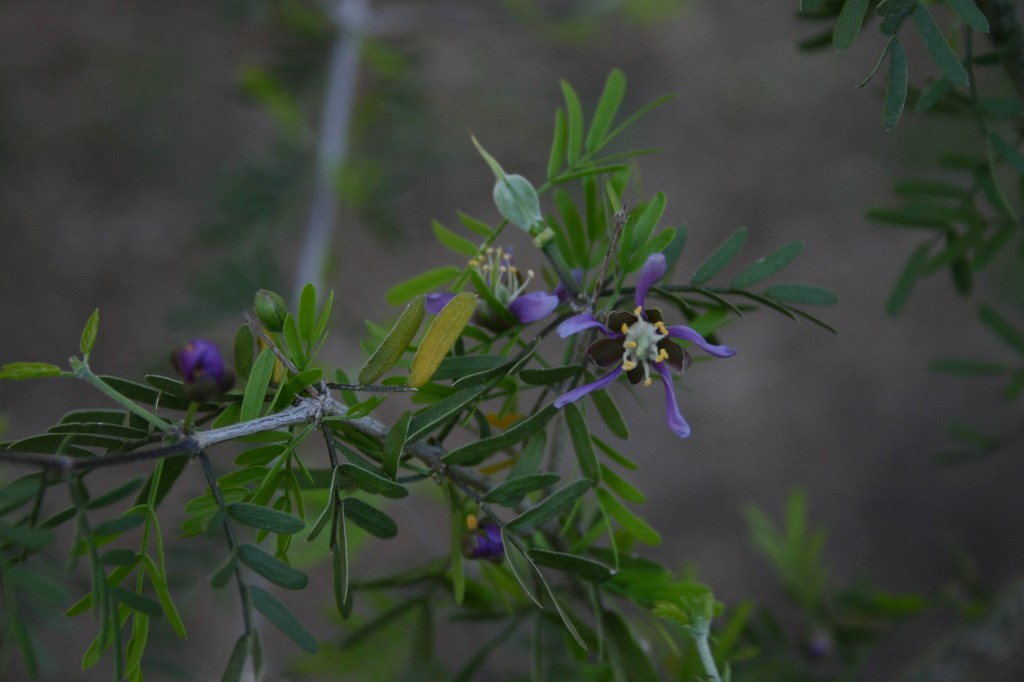
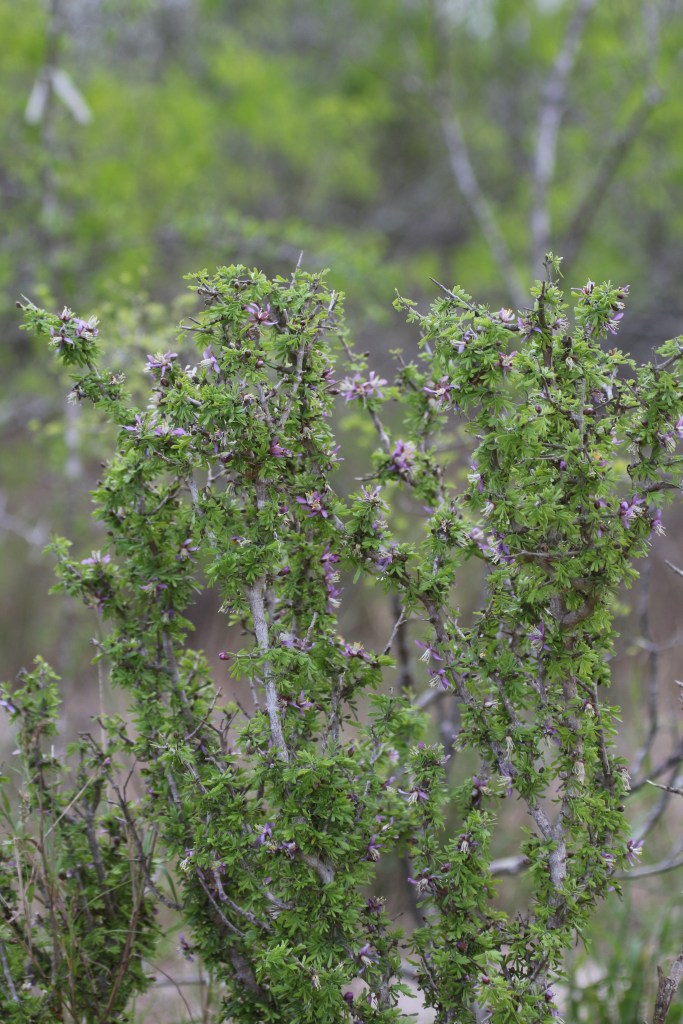
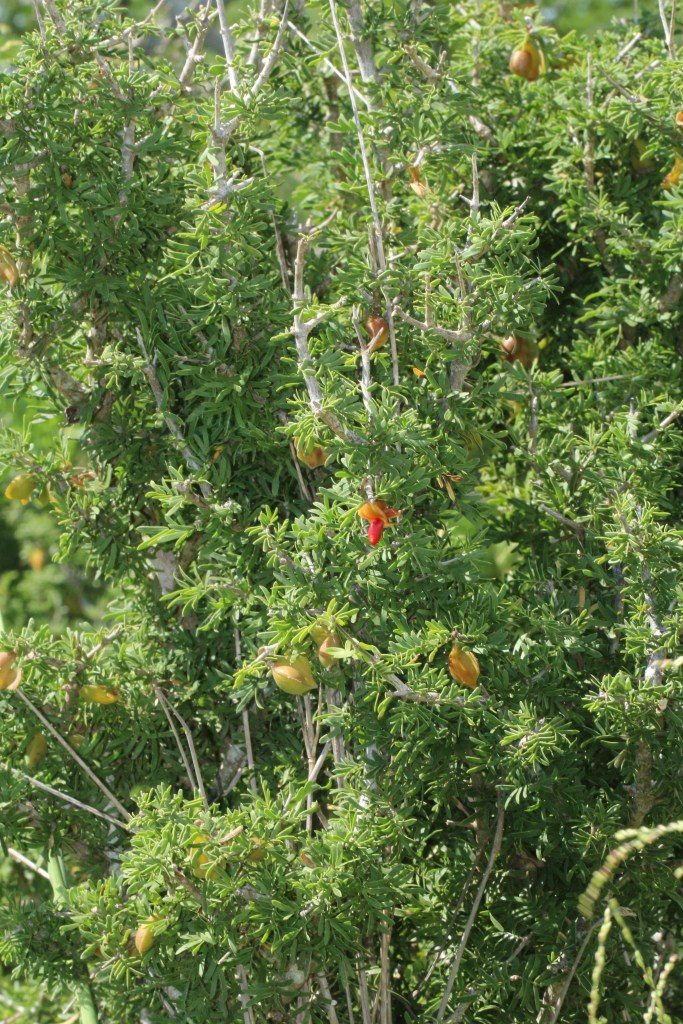
Plant Description: Stout evergreen shrub or narrow tree to 3.3 m high. Short irregular, knotty branches that appear as if the leaves are growing directly from the stems. Leaves are thick, dark green, pinnate with oblong leaflets 5-14 mm long, and appear to be crowded at the nodes, opposite or crowded in fascicles at nodes. Flowers on slender peduncles, the petals 9-12 mm long, blue-violet or purplish with noticeable yellow anthers, and are frequently found in small clusters, fragrant. Fruit is somewhat heart shaped, at a glance looks like a horseshoe crab. Large reddish seed.
Plant Trivia: Formerly Porlieria angustifolia). Wood is green, dense, and sinks in water.
Field Identification: Short irregular, knotty branches that appear as if the leaves are growing directly from the stems. Usually, this plant looks damaged.
Occurrence: Frequent on sandy or clayey loams and caliche, often on slopes or along bluff and ravines.
Bloom Period: February-Mat
Plant Use: Birds and small mammals utilize it to a minor extent for roosting, hiding, nesting and cover. Grazed by sheep, goats and white-tailed deer. Soap can be made from the bark of the root, and root extracts are reportedly used to teat rheumatism and venereal disease. This is a good xeriscape plant. Host plant for Lyside Sulphur butterfly.
 stxflora