Euthamia leptocephali
Family Asteraceae
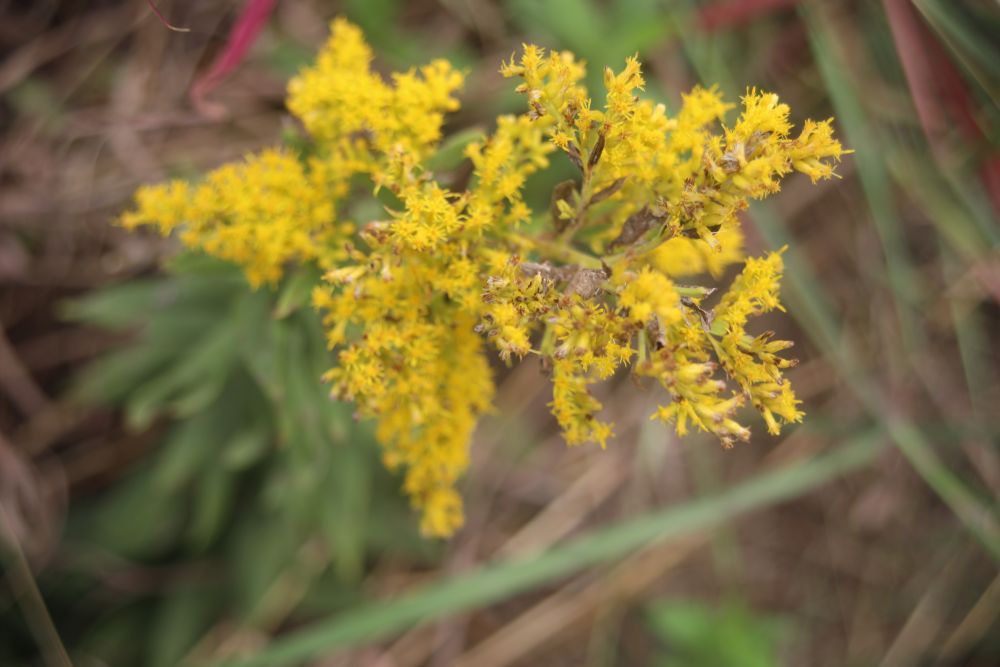
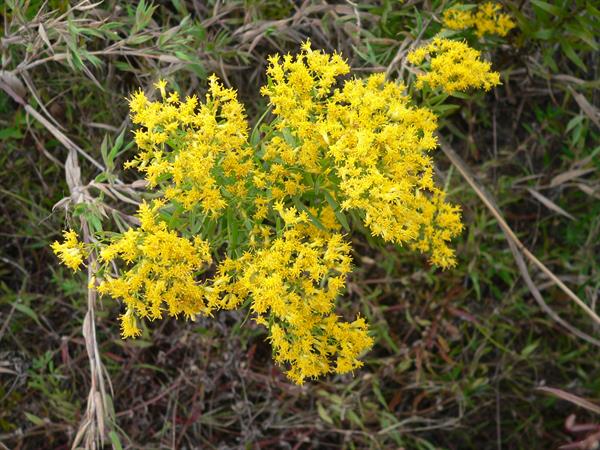
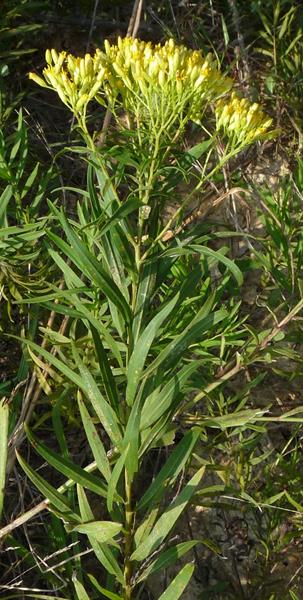
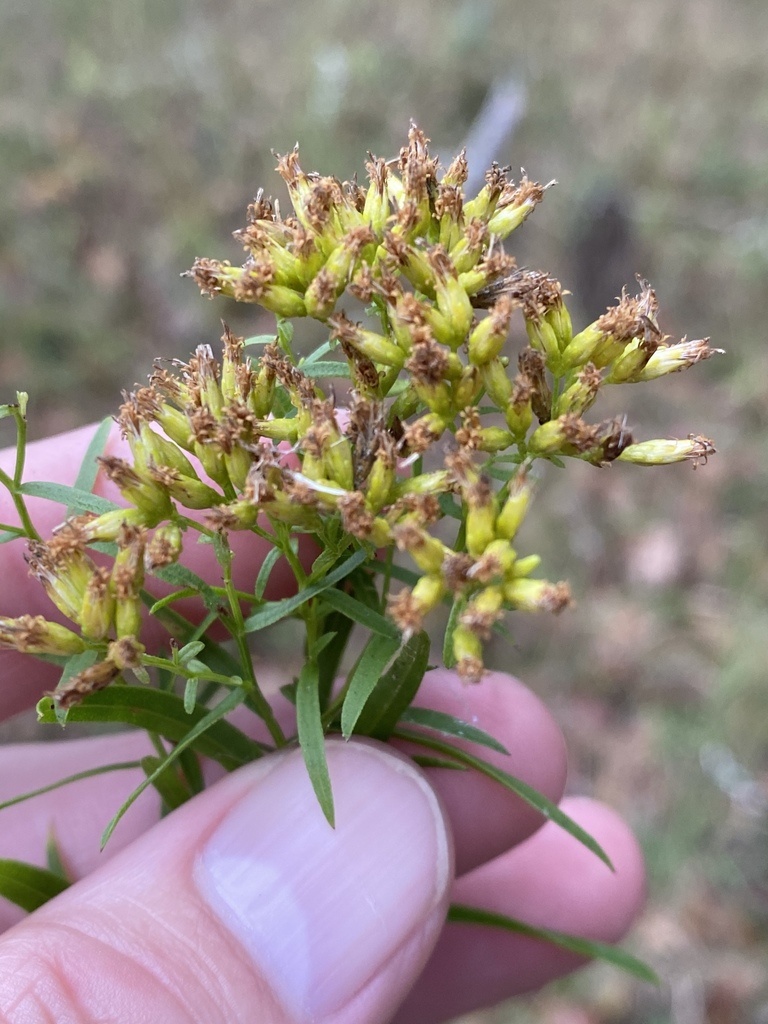
Description: Perennial to 75 cm high with narrow leaves 2-6 cm long, forming colonies. Heads in corymbs, 5-6 mm wide. Disks and rays yellow. Rhizomatous perennial forb/herb. Leaves alternate, simple, long and narrow (up to 8 cm), 2–5 mm wide, 3–5 nerved, dull-surfaced.
Field Identification: Erect, long narrow leaves, forming a stair-like appearance. When in bloom, the inflorescence is broad, yellow and somewhat flattened.
Plant Trivia: Formerly classified as a Goldenrod.
Occurrence: Frequent on deep coastal sands from Aransas Refuge to Flour Bluff and Padre Island. Native to the south-central and southeastern United States, especially the lower Mississippi Valley and Gulf Coastal Plain from Texas to west-central Georgia, and north to southern Illinois, Kentucky, and Missouri.
Bloom Period: Sept-Dec
Plant Use: Provides nectar and pollen for native bees and other pollinators. Host to insect-induced galls such as Asteromyia euthamiae (leaf spots) and Epiblema desertana (stem swelling).
Propagation: Seed (requires cold stratification) and rhizomes; spreads readily .
Dichotomous Key to the Genus Euthamia:
- Upper leaves 0.5-2 mm wide…………….E. gymnospermoides
Upper leaves 2-4 mm wide……………..………….E. leptocephala

