Ibervillea lindheimeri
Family: Convolvulaceae
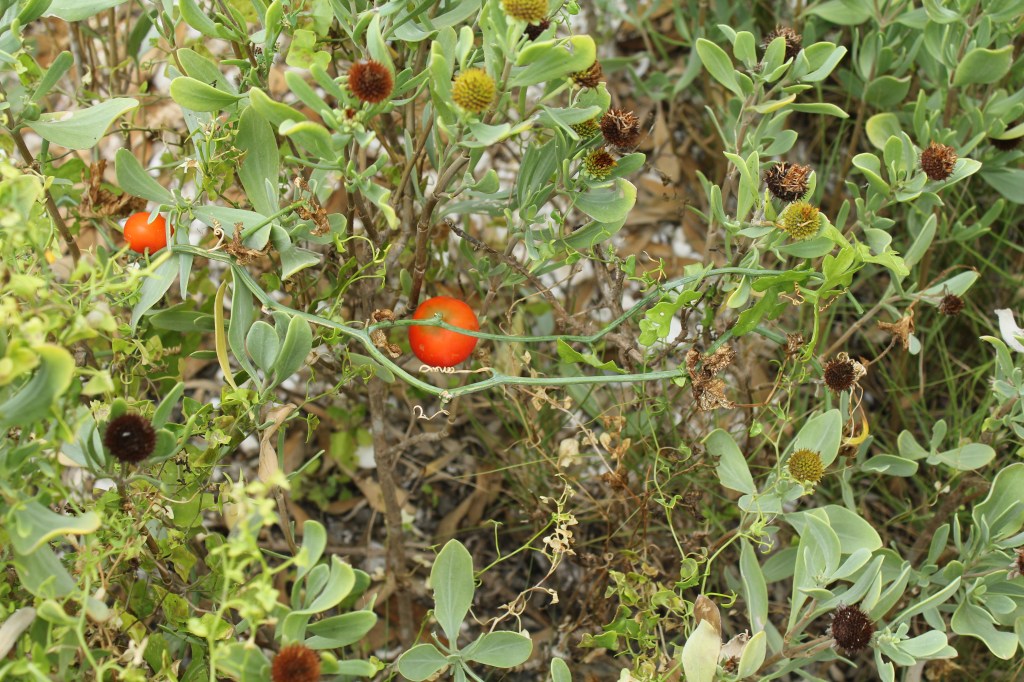
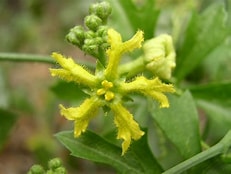
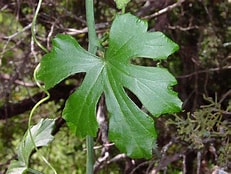
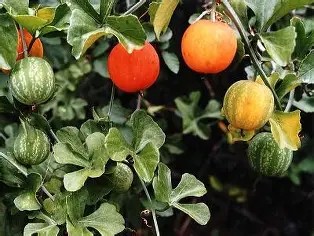
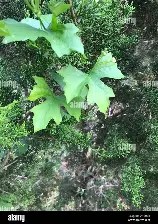
Plant Description: Perennial trailing or climbing vine with tendrils. Leaves 2-8 cm wide, often wider than long, triangular to deeply lobed variable but mostly 3-lobes, alternate. Flowers axillary, unisexual, male and female flowers growing on separate plants, the male flowers mostly in clusters while female flowers are not. Corolla 12-25 mm wide, yellow. Fruits 2-5 cm wide, globose, red when ripe but green with pale mottled stripes early.
Plant Trivia: Ibervilleas are often grown in containers with the swollen roots exposed. . Injured swollen roots release the odor of horseradish.
Field Identification:
Occurrence: Frequent on sandy soils, mostly in coastal oak woods. Native to Texas, Oklahoma and New Mexico in the United States as well as Northern Mexico.
Bloom Period: March – November
Plant Use: Pollen source for insects; landscaping.
Key to species of Ibervillea:
- Calyx tube of male flowers cylindric, 8-10 mm long………..I. lindheimeri
Calyx tube campanulate, 3-7 mm long……………….I. tenuisecta
 stxflora