Salicornia bigelovii & S. virginica
Family: Chenopodiaceae

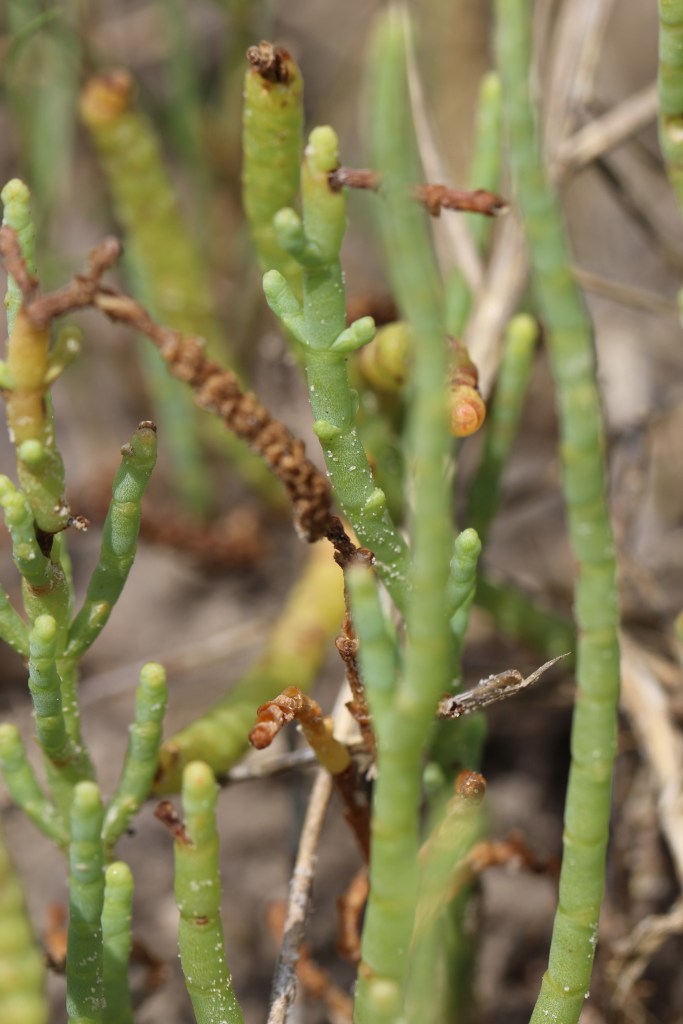
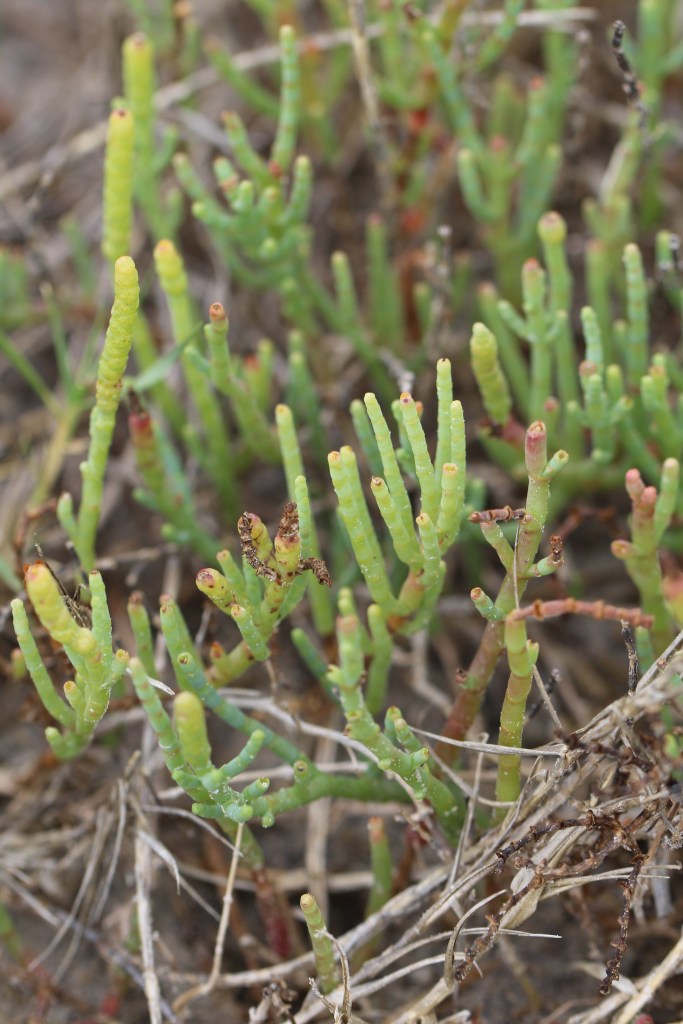
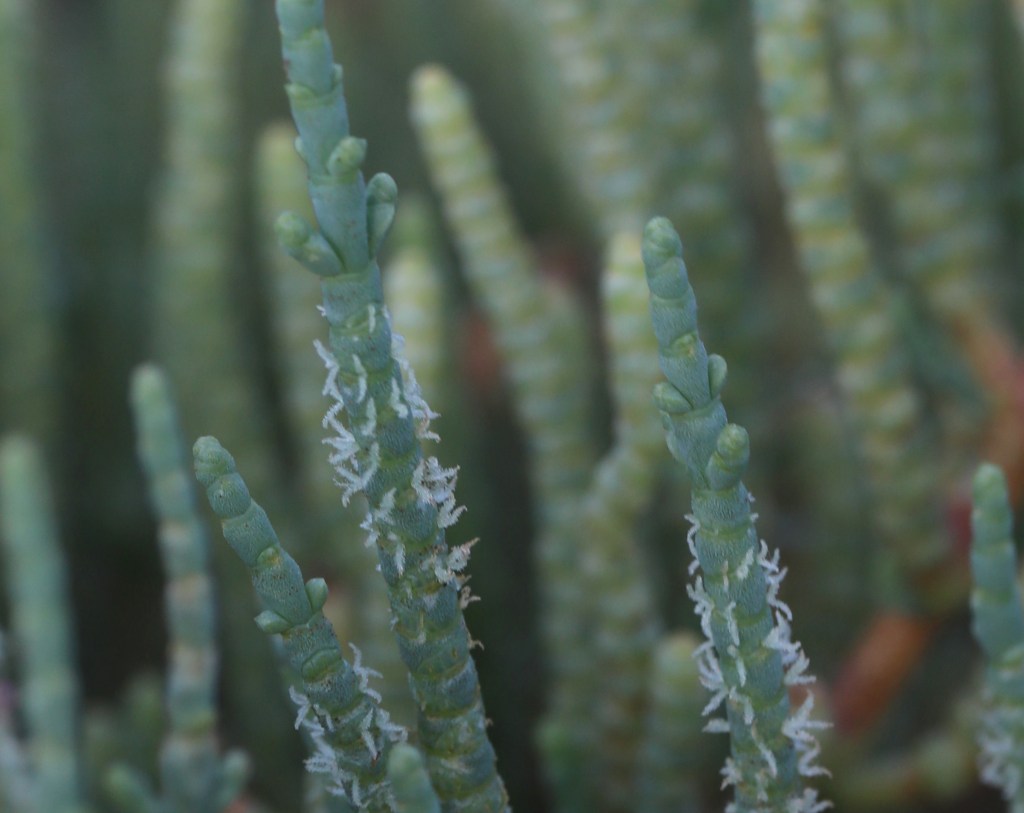

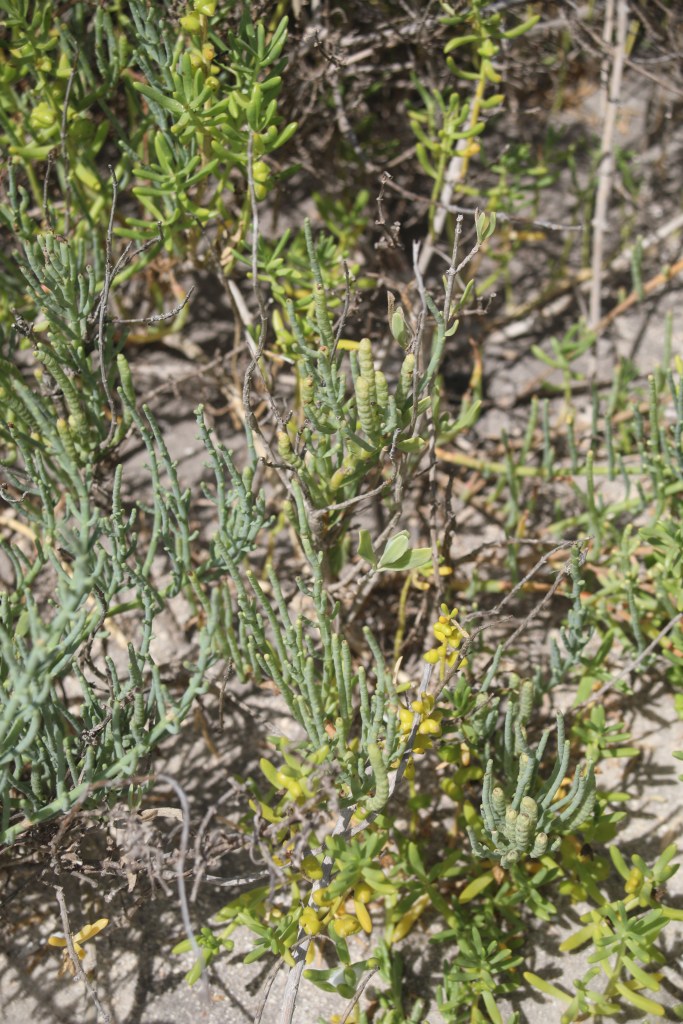
Plant Description: Annual to 60 cm high with fleshy jointed stems. Spikes fleshy; 2-12 cm long and 4-7 mm wide, the minute flowers sunken in the spike.
Plant Trivia: Bothe species of Salicornia (glasswort) are halophytic plants exhibiting thick, succulent type of leave anatomy. Ovaries are superior. Seeds germinate best in fresh water environmental conditions. While similar in habitat, the two have distinct morphological differences besides the scale patter introduced in the key below. This species has a salinity range of about 3.1%. Oppositely arranged leaf blades are reduced to minute scales. The fleshy leaf petiole base is altered to wrap around the stem, forma a bulbous shape. Old stems loose these petioles and appear segmented and woody looking like cans of soda stacked on top of one another.
S. virginica is generally with more slender and more abundant branching but is similar in habitat and appearance. This species is perennial. It is more likely to form prostrate mats as well as clumps.
Field Identification: Common only found in the tidal zone of bays in the moistest soil. Clusters of erect structures are key to identification. They have no visible leaves.,
Occurrence: Common in salt marshes and tidal flats and along bay and island beaches.
Bloom Period: May-October
Plant Use: Historically the plants were burned for their stored salts (potash) which was then utilized in early glass evolution.
Key to species of Salicornia:
- Scales of spike abruptly pointed…………………………………….S. bigelovii
Scales blunt or rounded………………………………………………….S. virginica
 stxflora