Sporobolus wrightii
Family: Poaceae
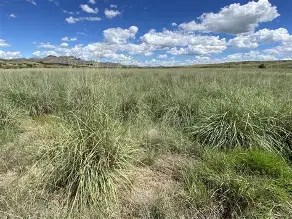
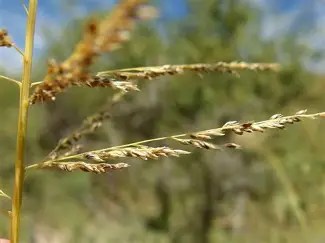


Description: Robust, erect, perennial. Numerous culms, up to2.5 m long, arising from a hard, densely cespitose base. Panicles open, broadly lanceolate, exserted. Spikelets 1.5-2.5 mm long. Leaves are 20–70 cm long, narrow, forming dense clumps
Field Identification: Typically, one of the largest grasses found on clay soils.
Plant Trivia: This type of grassland has been reduced to a fraction of its pristine range by forces such as overgrazing and the channelization of water. The species name of this plant is for Charles Wright, 1811-1885, world-wide botanical collector but mainly in Texas (1837-1852), Cuba and his native Connecticut.
Should be trimmed to ground level in the Spring.
Occurrence: Found on moist clay flats and on borders of alkaline and saline areas, playas, and swales. Found mostly in coastal S. Texas and the Rio Grande Valey. Native to the southwestern United States and northern Mexico. Native to plains, desert grasslands, shrub, steppe, and desert wetlands including marshes, floodplains, and seasonal lakes.
Bloom Period: Apr -Oct
Plant Use: Fair foliage grass. Important for erosion control, sediment trapping, and stabilizing watershed structures. Landscaping, wind breaks and erosion control.