Arundo donax
Family: Poaceae
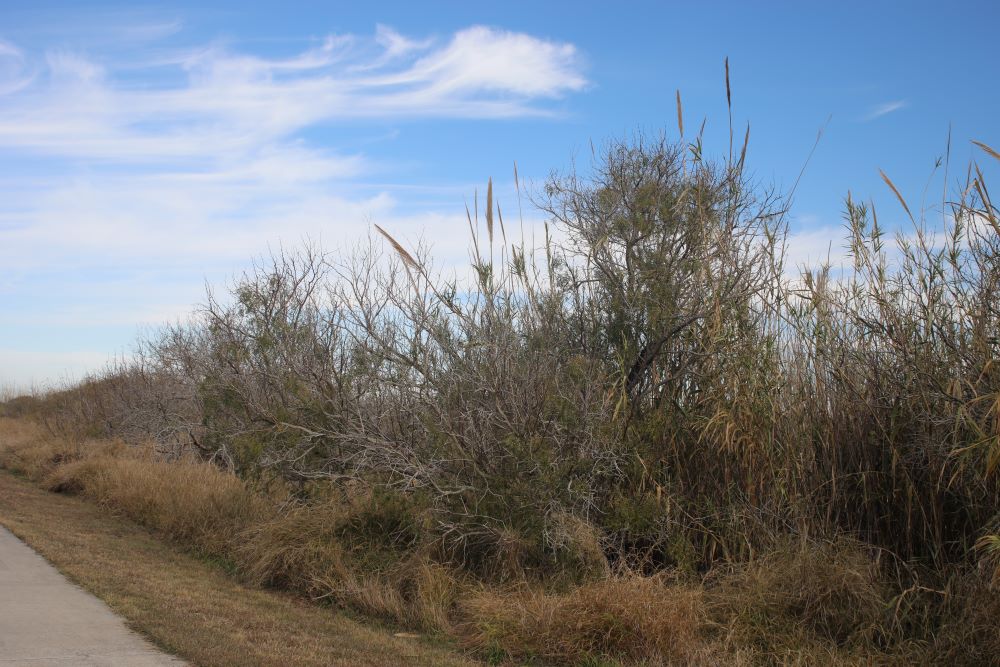
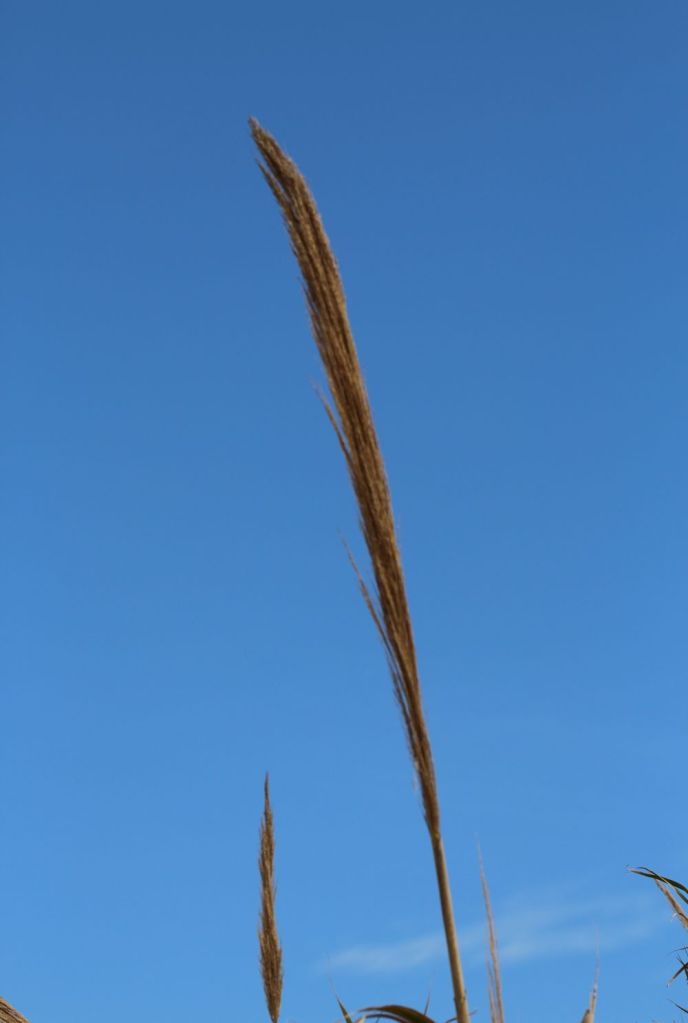
Description: A rhizomatous perennial with culms up to 10 m tall that are topped by large, whitish inflorescence. Clones typically grow in large, conspicuous clumps.
Location: Usually found in ditches, around culverts, and along roadsides, rivers, and steams. Predominantly found in a band going across the middle of Texas and throughout the Rio Grande Valley.
Soil Type: Most soils.
Trivia: It is an invasive grass. Brought to North America by early Spanish settlers because of its usefulness, cane was cut for animal forages, used as building and roofing material, woven into mats and used for piping to transport water. when stands of this plant are disturbed by plowing, bulldozing or other physical attacks, even small pieces carried by water currents will reestablish.
Economic, Environmental Importance: Has potential as a biofuel. Culms are used for many of the same purposes as bamboo. Palatable to livestock and wildlife and provides nesting habitat and cover for wildlife. Reeds for woodwind instruments are made from dried Arundo culms.

