Ipomeae imperati
Family: Convolvulaceae
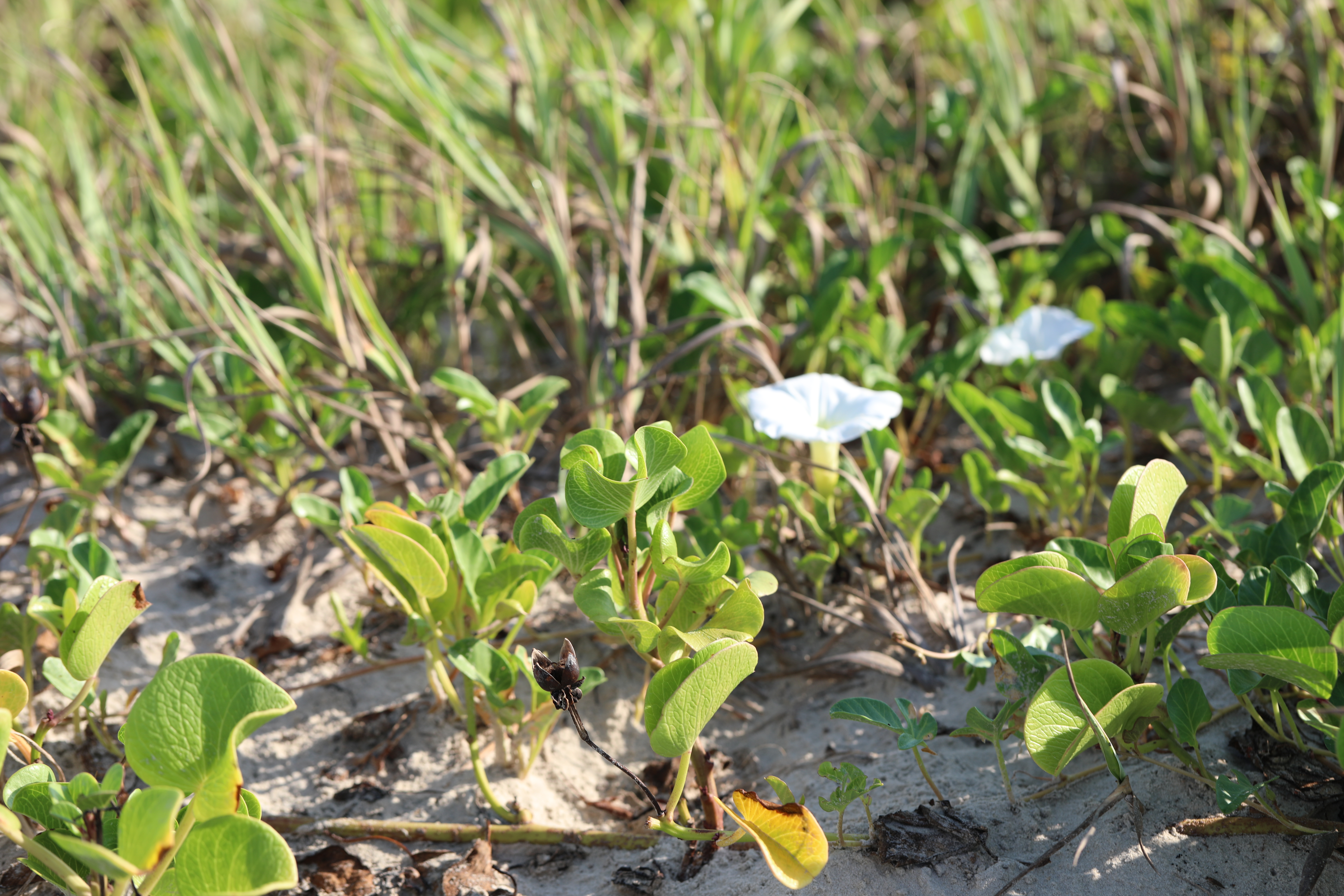
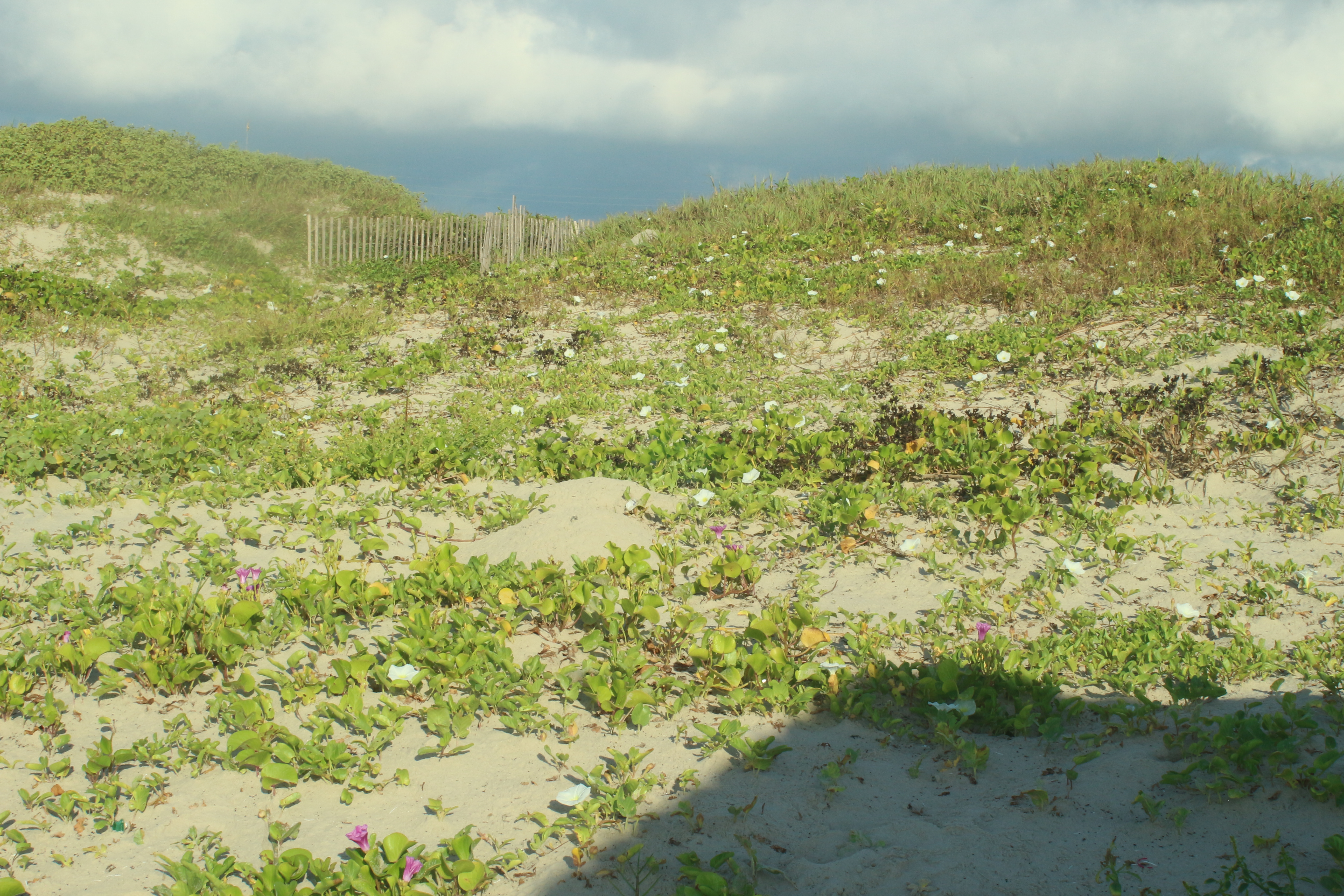

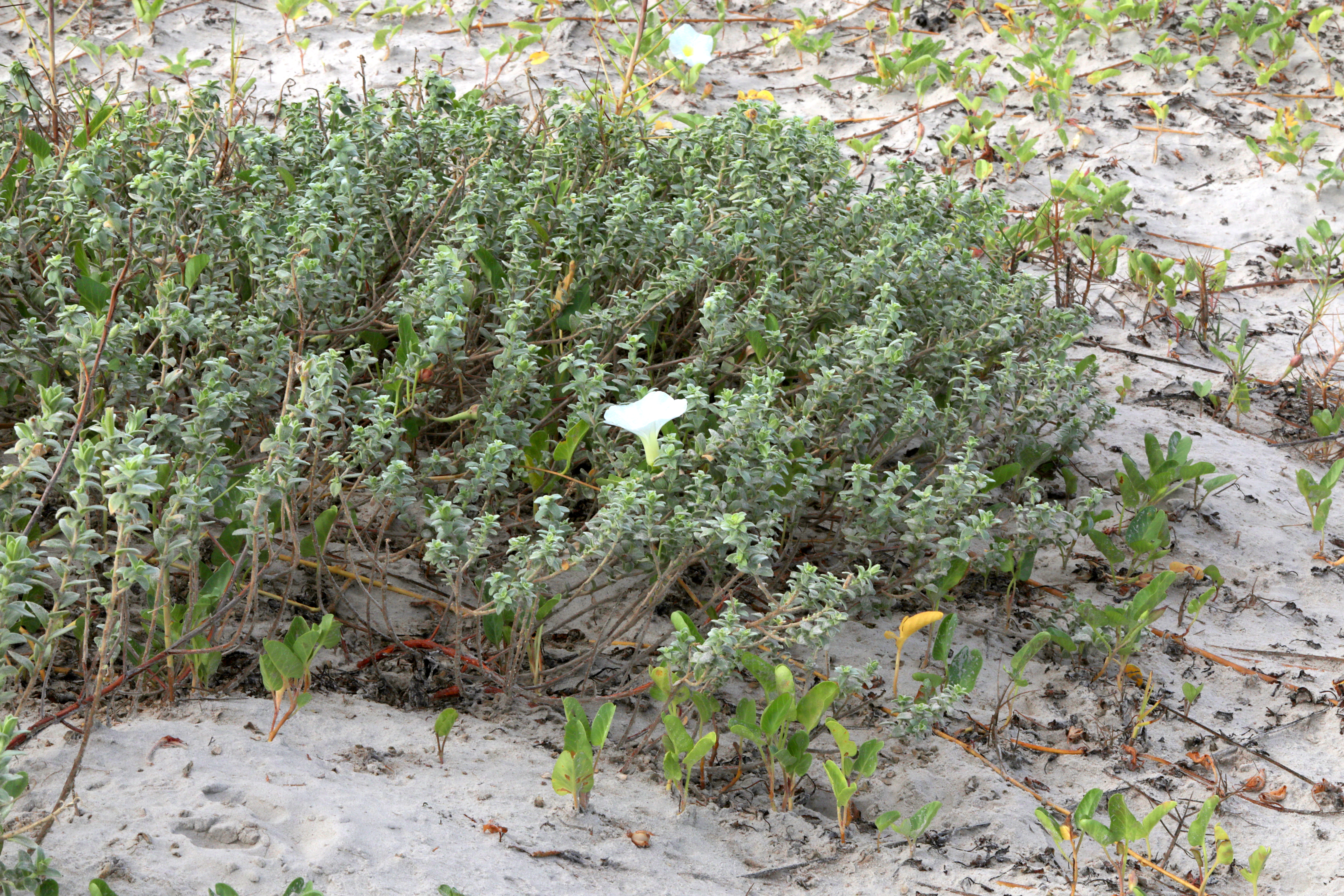
Plant Description: Perennial with trailing stems to 6 m or longer, roots at the nodes. Leaves 2-6 cm long, entire to variously lobed, thick, leathery, alternate. Leaf blades notched apically or palmately, 3-5 lobed. Flowers radial, funnel shaped, corolla 4-6 cm long, white with yellow throat, petals united.
Plant Trivia: Beach morning-glory is tolerant of heat, drought, and wind, as well as salt spray.
Field Identification: Scrambling, creeping vine that can spread up to 30 feet wide but is typically under 6 inches tall. Simple, alternate, fleshy, elliptical to lanceolate, with a notched apex; dark green and succulent, helping retain moisture in sandy, arid conditions. Large, funnel-shaped, white with a yellow center (sometimes with a purple throat), opening in the morning and closing by afternoon; bloom from early summer to fall. Root at nodes, stabilizing sandy dunes and forming dense mats.
Occurrence: Common on barrier islands, occasionally found along bay beaches.
Bloom Period: April – December
Plant Use: Dune stabilization plant. Nectar source for birds, butterflies and other insects, small mammals eat seeds. Used as coastal landscaping. Environmental ground cover and small animal habitat.
Propagation: Propagate this plant by seed or division.
Key to the species of Ipomeae: Identification of species within this genus may be found in Plants of the Texas Coastal Bend by Roy L. Lehman, Ruth O’Brien & Tammy White.
 stxflora