Foeniculum vulgare
Family: Apiaceae
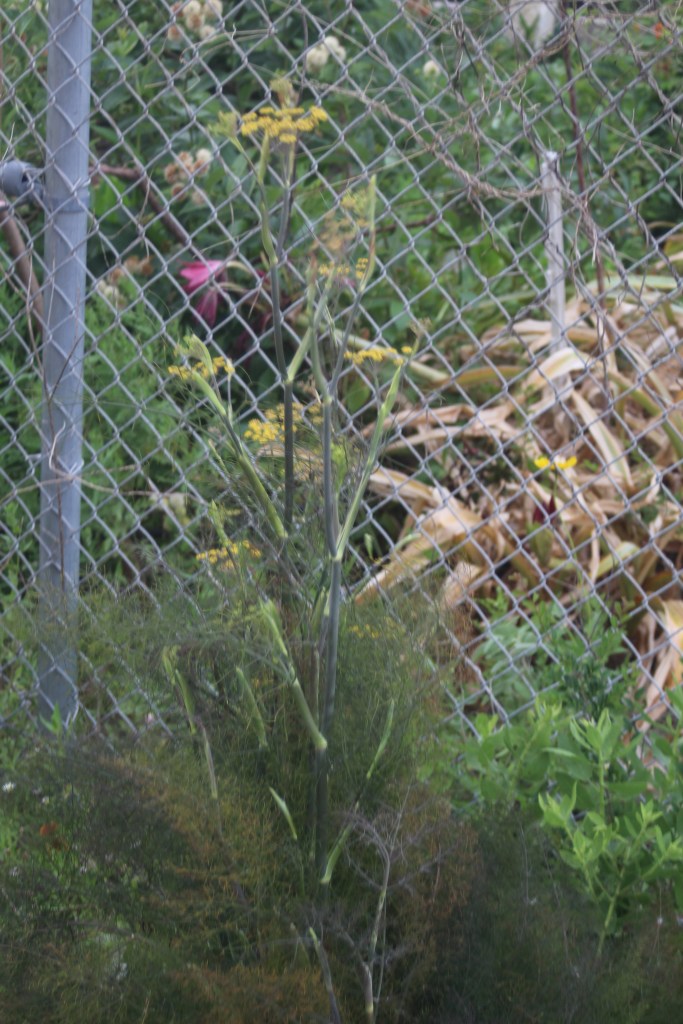
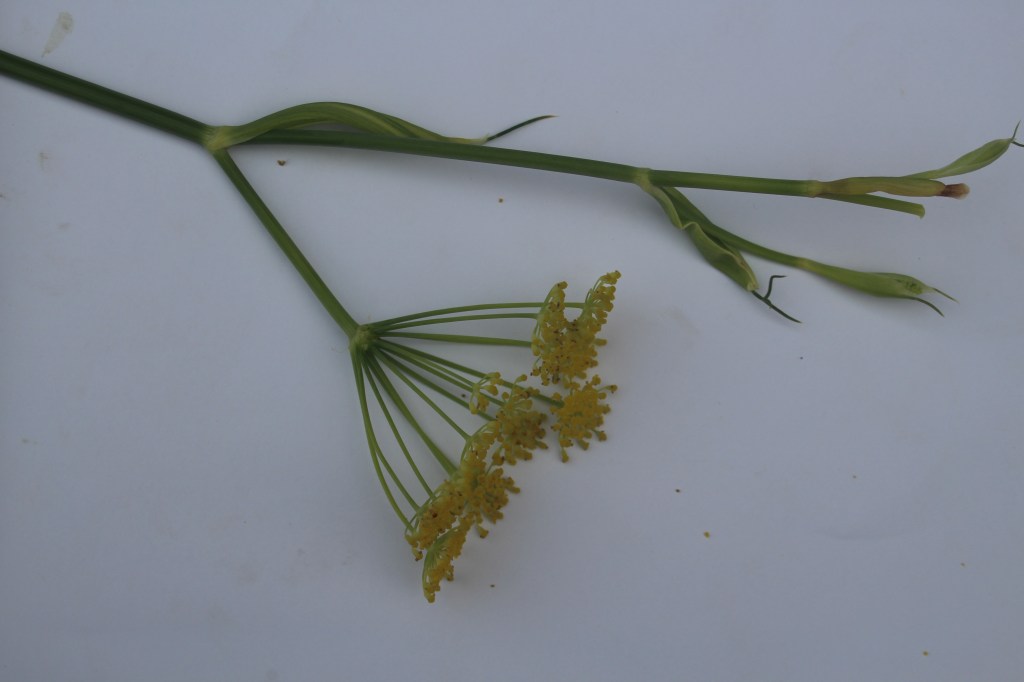
Plant Description: The stem is hollow, erect, and glaucous green, and it can grow up to 2.1 meters (7 feet) tall. The leaves grow up to 40 centimeters (16 inches) long; they are finely dissected, with the ultimate segments filiform (threadlike), about 0.5 millimeters (1⁄64 in) wide. Its leaves are similar to those of dill, but thinner.
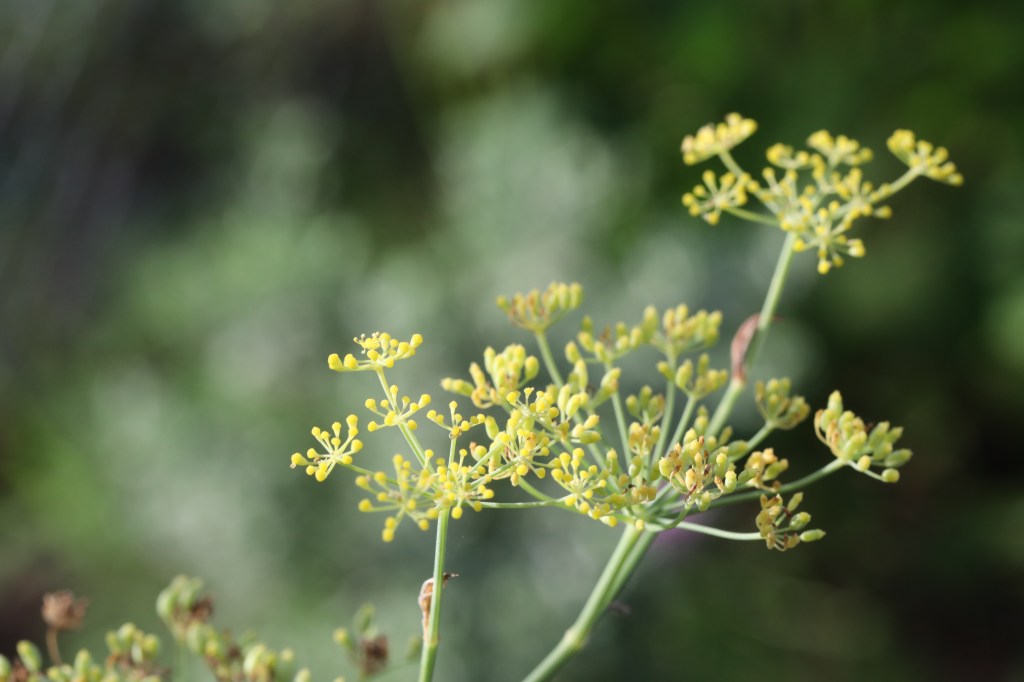
The flowers are produced in terminal compound umbels 5–17.5 cm (2–7 in) wide, each umbel section having 20–50 tiny yellow flowers on short pedicels. The fruit is a dry schizocarp from 4–10 mm (3⁄16–3⁄8 in) long, half as wide or less, and grooved.
Plant Trivia: Florence fennel is one of the three main herbs used in the preparation of absinthe, an alcoholic mixture which originated as a medicinal elixir in Europe and became, by the late 19th century, a popular alcoholic drink in France and other countries. Fennel fruit is a common and traditional spice in flavored Scandinavian brännvin (a loosely defined group of distilled spirits, which include akvavit). Fennel is also featured in the 16th-century Chinese Materia Medica for its use in traditional medicine.
Field Identification: It is a hardy, perennial herb with yellow flowers and feathery leaves.
Occurrence: It is indigenous to the shores of the Mediterranean but has become widely naturalized in many parts of the world, especially on dry soils near the seacoast and on riverbanks.
Bloom Period: Spring – Fall
Plant Use: Used as a herb in cooking; has a licorice-like taste.
 stxflora